Submit Portfolios For The Geothermal Design Challenge Deadline by April 10 (Utah FORGE)
The U.S. Department of Energy (DOE) Geothermal Technologies Office (GTO), in partnership with the Frontier Observatory for Research in Geothermal Energy (FORGE) and the Idaho National Laboratory (INL), invites both high school and university (undergraduate & graduate) teams to explore the future of geothermal energy and visualize the world of geothermal energy by participating in the 2019 Geothermal Design Challenge™.
Teams of 2 or 3 members will research data, interpret information and create a data visualization portfolio that will tell a compelling story about geothermal energy.
Timeline
• Submit portfolios: April 10, 2019 (10 pm ET)
• Winners announced: April 22, 2019.
Prizes
The top 3 winning teams will be awarded as follows: $5,000 for 1st place team / $3,500 for 2nd place team / $2,500 for 3rd place team.
More Information..........
Wednesday, April 3, 2019
Tuesday, April 2, 2019
Germany: One Year Research on Optimization of Model Based Parameter Estimation for Geothermal Reservoirs
Vacancy - Research Assistant/Associate - Applied Geophysics and Geothermal Energy (RWTH Aachen University)
Application deadline: 23rd April
The Institute of Applied Geophysics and Geothermal Energy (GGE) at RWTH Aachen University is searching for a computational scientist.
The position is for one year within the EU Horizon 2020 funded "Energy Oriented Centre of Excellence for computing applications" (EoCoE-II). GGE participates as "linked third party" of Forschungszentrum Jülich.
The GGE work packages focus on optimization of model based parameter estimation for geothermal reservoirs.
More Information and Apply.........
Application deadline: 23rd April
The Institute of Applied Geophysics and Geothermal Energy (GGE) at RWTH Aachen University is searching for a computational scientist.
The position is for one year within the EU Horizon 2020 funded "Energy Oriented Centre of Excellence for computing applications" (EoCoE-II). GGE participates as "linked third party" of Forschungszentrum Jülich.
The GGE work packages focus on optimization of model based parameter estimation for geothermal reservoirs.
More Information and Apply.........
USA, California: Next Meeting of the SoCal Section of the Geothermal Resources Council is Next Week
SoCal GRC Meeting
9 April, 3:30 pm, Stockmen's Club, Brawley, California
Sponsored by CGE Services and Sinclair Well Products and Services.
Agenda Highlights:
Appetizers will be served and include Tri Tip Sliders, Hot Wings, Guacamole and Chips! And the No Host Bar will open all night.
9 April, 3:30 pm, Stockmen's Club, Brawley, California
Sponsored by CGE Services and Sinclair Well Products and Services.
Agenda Highlights:
- Imperial Valley Desert Museum – Geothermal Exhibit
- Industry Showcase:
Please remember to RSVP with Mary Mann (mary@geothermalresourcegroup.com).
- CGE Services
- Sinclair Well Products
- Ormat
- Nalco
- Geothermal Resource Group (GRG)
Appetizers will be served and include Tri Tip Sliders, Hot Wings, Guacamole and Chips! And the No Host Bar will open all night.
Global: Geothermal Energy Increased by 539 MW in 2018 - IRENA
Renewable Energy Now Accounts for a Third of Global Power Capacity (IRENA)
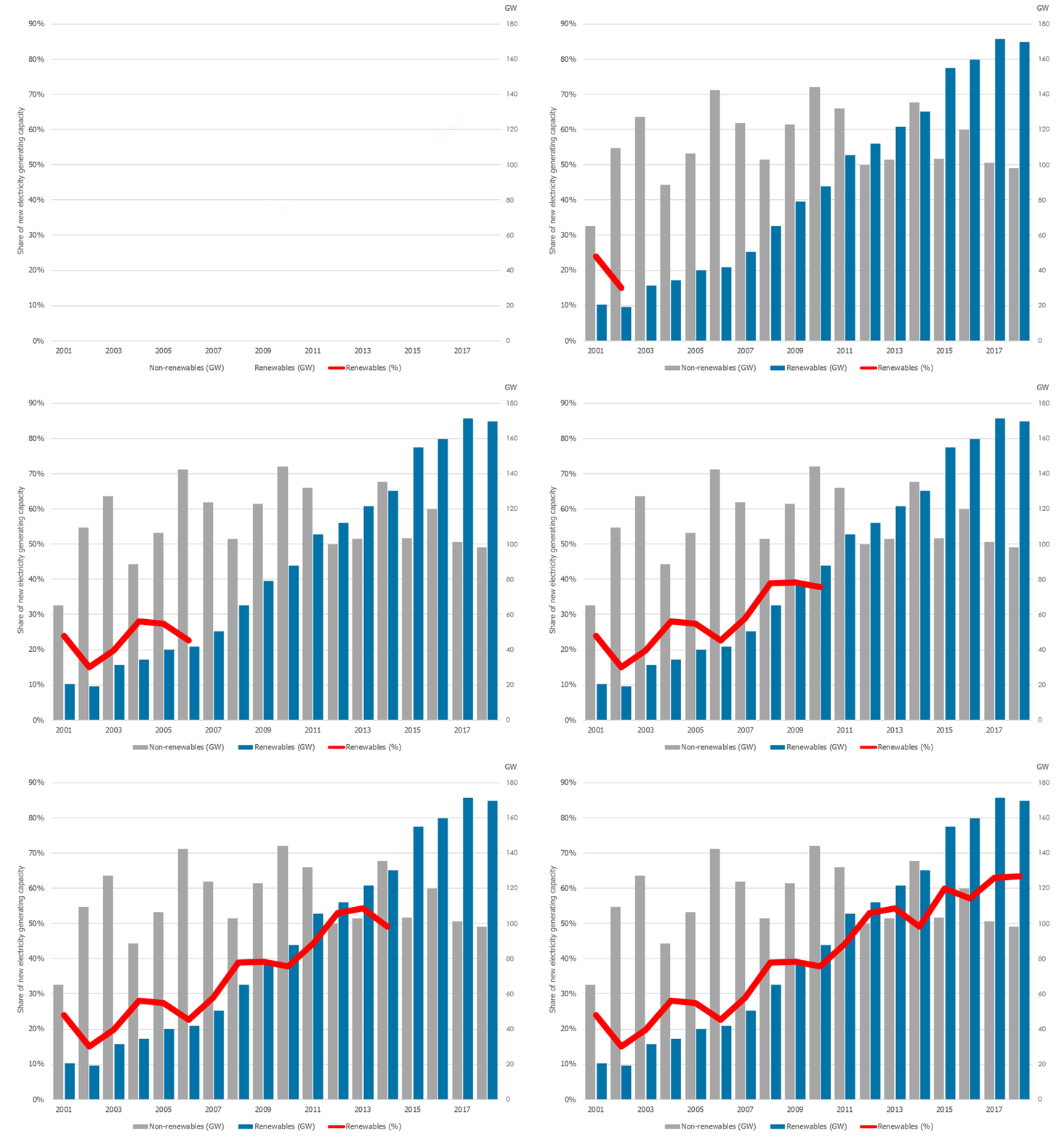
Sector adds 171 GW of generating capacity in 2018
The decade-long trend of strong growth in renewable energy capacity continued in 2018 with global additions of 171 gigawatts (GW), according to new data released by the International Renewable Energy Agency (IRENA) today. The annual increase of 7.9 per cent was bolstered by new additions from solar and wind energy, which accounted for 84 per cent of the growth. A third of global power capacity is now based on renewable energy.
IRENA’s annual Renewable Capacity Statistics 2019, the most comprehensive, up-to-date and accessible figures on renewable energy capacity indicates growth in all regions of the world, although at varying speeds.
The decade-long trend of strong growth in renewable energy capacity continued in 2018 with global additions of 171 gigawatts (GW), according to new data released by the International Renewable Energy Agency (IRENA) today. The annual increase of 7.9 per cent was bolstered by new additions from solar and wind energy, which accounted for 84 per cent of the growth. A third of global power capacity is now based on renewable energy.
IRENA’s annual Renewable Capacity Statistics 2019, the most comprehensive, up-to-date and accessible figures on renewable energy capacity indicates growth in all regions of the world, although at varying speeds.
Geothermal energy increased by 539 MW in 2018 - an increase of 4.2%, with most of the expansion taking place in Turkey (+219 MW) and Indonesia (+137 MW), followed by the USA, Mexico and New Zealand. The total capacity at the end of 2018 is 13,329 MW.
Monday, April 1, 2019
Preview of the Next Geothermal Energy Magazine from the GRC
Coming Soon - GRC Bulletin - Vol. 48, No. 2, March/April 2019
The March/April issue of the GRC Bulletin will be published very shortly. Produced by the Geothermal Resources Council since 1972, the Bulletin is the voice of the international geothermal energy community.
In the next jam-packed issue:
- President’s Message, by Andy Sabin
- Executive Director's Message, by William Pettitt
- Inside Geothermal: Geothermal energy news from around the world
- FORGE Ahead - Roadmap Released, by Alexis M.W. McKittrick
- The Utah Frontier Observatory for Geothermal Research (FORGE): Results of Recent Drilling and Geoscientific Surveys, by Joseph Moore
- First Field Scale Test of Closed Loop Geothermal to be Conducted at Coso California, by John R. Muir
- GeoCoat – High Performance Coatings For Aggressive Geothermal Environments, by Geo-Coat consortium
- Geothermal History in the Making - A Single Wellhead Generator on the Big Island of Hawai'i
- Corporate Profile - Ormat Technologies
- Publications, Websites, Video & Maps
- Calendar of Events
The GRC Bulletin is only available online to GRC members. To make sure of your copy join the GRC today!
Finance: Geothermal Energy Among Least-Cost Generating Options
The Economic Thicket of Generating Cost Comparisons (Power Magazine)
How much does it cost? Seems like a simple question. But when it comes to competing electric generating technologies, it’s an extremely gnarly proposition.
Despite the difficulties, cross-generation cost comparisons are playing a significant role in public decisions at the international, national, and local levels about choices of generating technologies. Advocates for various technologies and businesses with vested interests all claim that they—mirror, mirror on the wall—are the least-cost generating option of all.
Each technology has a valid claim. Hydro, the oldest, has a no-cost, renewable fuel: water. Geothermal, one of the newest, also has a low-cost fuel—steam from the earth. Coal is dirt cheap. Natural gas is cheaper, and is killing coal in competitive markets. Nuclear has low fuel costs and no carbon dioxide (CO2) emissions. Solar and wind have no fuel cost and no air emissions. And so it goes.
Each has cost negatives. Hydro soaks up construction capital, as do geothermal and nuclear. Coal has high conventional and CO2 air emissions, but gas also emits CO2. Solar and wind have high capital costs, take up a lot of land, and are inflexible.
Read More..........
How much does it cost? Seems like a simple question. But when it comes to competing electric generating technologies, it’s an extremely gnarly proposition.Despite the difficulties, cross-generation cost comparisons are playing a significant role in public decisions at the international, national, and local levels about choices of generating technologies. Advocates for various technologies and businesses with vested interests all claim that they—mirror, mirror on the wall—are the least-cost generating option of all.
Each technology has a valid claim. Hydro, the oldest, has a no-cost, renewable fuel: water. Geothermal, one of the newest, also has a low-cost fuel—steam from the earth. Coal is dirt cheap. Natural gas is cheaper, and is killing coal in competitive markets. Nuclear has low fuel costs and no carbon dioxide (CO2) emissions. Solar and wind have no fuel cost and no air emissions. And so it goes.
Each has cost negatives. Hydro soaks up construction capital, as do geothermal and nuclear. Coal has high conventional and CO2 air emissions, but gas also emits CO2. Solar and wind have high capital costs, take up a lot of land, and are inflexible.
Read More..........
USA, New Mexico: GRC Scholarship Winner Conducting Research on the Valles Caldera Geothermal System
UNM student researcher studies hydrogeologic influences of Valles Geothermal System (UNM Newsroom)
![]() |
| Jon Golla |
University of New Mexico (UNM) graduate student Jon Golla (a GRC Member) conducts his research along the Jemez River in the natural laboratory of the Valles Caldera located in northern New Mexico. His scientific interests stem from an unfamiliarity with potable water during his childhood and from early exposure to geothermal energy in the Philippines, so the opportunity to work on the waters associated with the Valles Caldera Geothermal System was part of what drew him to graduate study at UNM.
Golla’s research focuses on his passions involving aqueous geochemistry and geothermal systems. Through this research, Golla is gaining a better understanding of the proximal and distal hydrogeologic influences of Valles Geothermal System on the upper Jemez River.
He received a $6,000 grant to help fund his research titled, Surface Water Quality Implications of Valles Caldera Geothermal Fluids on Jemez Watershed: A Holistic Hydrogeochemical Investigation as part of the Student Water Research Grants program through the New Mexico Water Resources Research Institute (NM WRRI). He was also a 2017 GRC Scholarship Award winner.
Finland: Oil Company is Behind 40 MWth Espoo Geothermal District Heating Project
Mika Anttonen: The Green Oilman (Barron's)
![]() |
| Mika Anttonen |
Fifteen miles from Helsinki, a massive drill plunges into the granite bedrock that is abundant across Scandinavia. Such contraptions typically stop at 2,000 meters in the search for hot water and geothermal heat. But this drill extends four miles down, into a substrate of Earth’s core so hot that the idea of trying to access it, and pull energy from it, was once unthinkable.
The team of scientists and engineers behind the St1 Deep Heat project believes this geothermal well can produce enough heat to warm a small city. The emissions-free project is estimated to produce a constant output of 40 megawatts of power. It’s an ambitious green-energy project. And it’s the brainchild of an oilman.
From the Global Geothermal News archives:
- Friday, February 15, 2019 - Finland: How the 15,000 Foot Deep Wells At the Espoo Geothermal District Heating Project Were Drilled
- Tuesday, July 24, 2018 - Finland: Stimulation Begins at at the Espoo Geothermal Deep Heat Project
- Monday, April 23, 2018 - Finland: Drilling at 40 MWth Espoo Geothermal District Heating Project Reaches Final Depth of 6,400 Meters
- Tuesday, May 10, 2016 - Finland: Drilling Starts for 40 MWth Espoo Geothermal District Heating Project
- Monday, December 1, 2014 - Finland: Large Scale Geothermal Energy District Heating Project to be Built in Helsinki Suburbs
Labels:
direct use,
district heating,
energy,
geothermal,
GRC
Location:
Espoo, Finland
India: Dholera ORC Geothermal Power Plant will Start Operating this Month
PDPU to rope in oil companies to harness geothermal energy (Times of India)
10-20 kW Dholera geothermal power plant will start operating this month.
After finding success in its pilot project at Dholera, Pandit Deendayal Petroleum University (PDPU) is planning to tap a large geothermal source for commercially viable production of electricity. For this, it is planning to rope in oil companies to carry out deep well drilling and exploration at various locations in Gujarat, said officials involved in the project. The state is now exploring geothermal renewable energy and it is ready to set up its first geothermal power plant of 10-20 kilowatt capacity.
The plant will start operating next month at Dholera, where medium enthalpy heat in the form of hot springs has been found under the earth. This is ideal for generating electricity, PDPU officials said.
Initially, six sites including Dholera, Unai, Gandhar, Tuwa, Chabsar and Tulsishyam were identified by CEGE. However, CEGE is currently focusing on three sites — Dholera, Gandhar and Unai for exploration activities. Two geothermal borewells were drilled at Dholera where the temperature of water was found to be 47-60 degrees celsius. The hot water of the well will be used for power generation using a technique termed as Organic Rankine Cycle (ORC).
CEGE has also joined hands with French firm ENOGIA to arrange the ORC unit to be brought to India this month. Plans are also afoot to tap abandoned Oil and Natural Gas Corporation (ONGC) wells in Gandhar region where the temperatures are very high and suitable to generate megawatt scale geothermal power, said Manan Shah, faculty – School of Petroleum Technology and scientist at CEGE.
Read More.........
From the Global Geothermal News archives:
10-20 kW Dholera geothermal power plant will start operating this month.
After finding success in its pilot project at Dholera, Pandit Deendayal Petroleum University (PDPU) is planning to tap a large geothermal source for commercially viable production of electricity. For this, it is planning to rope in oil companies to carry out deep well drilling and exploration at various locations in Gujarat, said officials involved in the project. The state is now exploring geothermal renewable energy and it is ready to set up its first geothermal power plant of 10-20 kilowatt capacity.
The plant will start operating next month at Dholera, where medium enthalpy heat in the form of hot springs has been found under the earth. This is ideal for generating electricity, PDPU officials said.
Initially, six sites including Dholera, Unai, Gandhar, Tuwa, Chabsar and Tulsishyam were identified by CEGE. However, CEGE is currently focusing on three sites — Dholera, Gandhar and Unai for exploration activities. Two geothermal borewells were drilled at Dholera where the temperature of water was found to be 47-60 degrees celsius. The hot water of the well will be used for power generation using a technique termed as Organic Rankine Cycle (ORC).
CEGE has also joined hands with French firm ENOGIA to arrange the ORC unit to be brought to India this month. Plans are also afoot to tap abandoned Oil and Natural Gas Corporation (ONGC) wells in Gandhar region where the temperatures are very high and suitable to generate megawatt scale geothermal power, said Manan Shah, faculty – School of Petroleum Technology and scientist at CEGE.
Read More.........
From the Global Geothermal News archives:
- Wednesday, March 6, 2019 - India: First Geothermal Power Plant Reportedly About to Start Generating Electricity
- Monday, December 10, 2018 - India: The Potential for Geothermal energy in Maharashtra State
- Friday, February 10, 2017 - India: Geological Survey Has Identified About 340 Geothermal Hot Springs
Labels:
energy,
geothermal power,
GRC,
renewable
Location:
Dholera, Gujarat 382455, India
Japan: Newly-Merged Company Plans More Investment in Geothermal Power
Oil wholesalers Idemitsu, Showa Shell merge (NHK World)
Leading Japanese oil wholesalers Idemitsu Kosan and Showa Shell Sekiyu merged their businesses on Monday, effectively reorganizing the country's industry into three major groups.
With sales of 5.8 trillion yen, or about 52 billion dollars, the company becomes the second-largest oil wholesaler in Japan.
The company says it plans to develop oil refineries abroad, invest in renewable energy sources such as solar, wind and geothermal power, and develop new chemical products.
Read More........
From the Global Geothermal News archives:
Leading Japanese oil wholesalers Idemitsu Kosan and Showa Shell Sekiyu merged their businesses on Monday, effectively reorganizing the country's industry into three major groups.
With sales of 5.8 trillion yen, or about 52 billion dollars, the company becomes the second-largest oil wholesaler in Japan.
The company says it plans to develop oil refineries abroad, invest in renewable energy sources such as solar, wind and geothermal power, and develop new chemical products.
From the Global Geothermal News archives:
- Monday, December 10, 2018 - Japan: Geothermal Power Plant Start-Up Slated for 2024
- Tuesday, November 7, 2017 - Japan: Short-Term Flow Tests at Akita Geothermal Energy Project Carried Out
- Tuesday, March 7, 2017 - Japan: 5 MW Geothermal Plant in Oita Prefecture Starts Up
Labels:
energy,
geothermal,
geothermal power,
GRC,
renewable
Location:
Japan
New Zealand: Magnetotellurics Survey for New Geothermal Energy Resources Below Rotoroa Lakes
Researchers mapping geothermal systems under Rotorua lakes for first time (New Zealand Herald)
Initial results are expected at the end of this year.
A survey of lakes in the Rotorua region will help scientists build a more complete picture of geothermal resources and volcanic hazards under the Bay of Plenty.
The electromagnetic survey involves a technique called magnetotellurics, or MT, which helps scientists identify where geothermal fluids may be present deep within the earth. It's the first time this technique, which measures low-frequency electromagnetic waves in the Earth's crust, has been used in New Zealand lakes.
The survey is a joint project involving GNS Science and Bay of Plenty Regional Council and will collect data at Lakes Rotorua, Tarawera, Okataina, and Rotoiti.
The findings will complement existing data which has already been used for the sustainable management of geothermal fields, for exploration of new deep geothermal resources, and for management of volcanic hazards.
Labels:
energy,
geothermal,
geothermal power,
GRC,
renewable
Location:
Tarawera, New Zealand
USA, California: Employment Opportunity as Environmental Health & Safety Manager at The Geysers Geothermal Field
Vacancy - Environmental Health & Safety (EHS) Manager - Calpine
Location: Middletown, California (The Geysers)
Responsible for complex, technical work in a wide range of environmental and safety disciplines to achieve compliance with federal and state regulatory requirements and with Calpine Environmental and Safety standards; reviews, interprets and advises management on complex environmental and safety compliance and environmental and safety policy matters. Has complete understanding of environmental and safety principles, concepts, practices, standards and regulations.
Reviews plant procedures and make recommendations for updates according to laws, regulations, and good power plant practices and environmental and safety standards. Investigates environmental and safety incidents as necessary.
More Information........ Apply Online.........
Location: Middletown, California (The Geysers)
Responsible for complex, technical work in a wide range of environmental and safety disciplines to achieve compliance with federal and state regulatory requirements and with Calpine Environmental and Safety standards; reviews, interprets and advises management on complex environmental and safety compliance and environmental and safety policy matters. Has complete understanding of environmental and safety principles, concepts, practices, standards and regulations.
Reviews plant procedures and make recommendations for updates according to laws, regulations, and good power plant practices and environmental and safety standards. Investigates environmental and safety incidents as necessary.
More Information........ Apply Online.........
Labels:
energy,
geothermal,
geothermal power,
GRC,
renewable
Location:
Middletown, CA 95461, USA
San Serriffe: Local Geothermal Association to Bid to Host the World Geothermal Congress
San Serriffe Geothermal Association to Bid to Host the World Geothermal Congress (Mutley Fool)
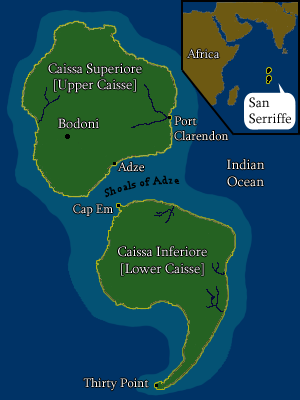
In 2016, Global Geothermal News reported on new geothermal resource on San Serriffe, a remote island in the Indian Ocean. In an update on the project last year local environmentalists said that oil & gas wells could be repurposed for geothermal energy.
In an attempt to jump-start the geothermal energy industry on the islands, the San Serriffe Geothermal Association has announced it will bid to host the World Geothermal Congress in 2023. Already a destination for the jet-set, San Serriffe offers cheap flights with the discount airline "Gosh!" from every continent except Australia (a dispute over ownership of the vegemite mines on the island has led to the breaking of relations with the Aussies).
The republic of San Serriffe is located on the seismically active mid-indian ocean ridge near the Seychelle Islands. The potential capacity of the renewable resource has been estimated as upwards of 500 MWe.
San Serriffe comprises of two islands, Upper Caisse and Lower Caisse, shaped curiously like a semi-colon. Since it's first exposure to the outside world on April 1, 1977, the island has struggled for acceptance but now with the discovery of geothermal energy it could become a powerhouse for the southern Indian Ocean.
More information......
In 2016, Global Geothermal News reported on new geothermal resource on San Serriffe, a remote island in the Indian Ocean. In an update on the project last year local environmentalists said that oil & gas wells could be repurposed for geothermal energy.
In an attempt to jump-start the geothermal energy industry on the islands, the San Serriffe Geothermal Association has announced it will bid to host the World Geothermal Congress in 2023. Already a destination for the jet-set, San Serriffe offers cheap flights with the discount airline "Gosh!" from every continent except Australia (a dispute over ownership of the vegemite mines on the island has led to the breaking of relations with the Aussies).
The republic of San Serriffe is located on the seismically active mid-indian ocean ridge near the Seychelle Islands. The potential capacity of the renewable resource has been estimated as upwards of 500 MWe.
San Serriffe comprises of two islands, Upper Caisse and Lower Caisse, shaped curiously like a semi-colon. Since it's first exposure to the outside world on April 1, 1977, the island has struggled for acceptance but now with the discovery of geothermal energy it could become a powerhouse for the southern Indian Ocean.
More information......
Labels:
april fools,
energy,
geothermal,
GRC,
renewable
Location:
San Serriffe
Global: Calendar of Geothermal Energy Events
Geothermal Energy Calendar from the Geothermal Resources Council

International Geothermal Workshop (IEA Geothermal and Geoplat)
8-9 April, Gran Canaria, Spain
http://iea-gia.org/gran-canaria-geothermal-workshop/
SoCal Section of the Geothermal Resources Council - Meeting
9 April, 3:30 pm, Stockmen's Club, Brawley, California
https://geothermalresourcescouncil.blogspot.com/2019/03/usa-california.html
AAPG 3rd Hydrocarbon – Geothermal Cross Over Technology Workshop9-10 April, Geneva, Switzerland
www.aapg.org/
XXVI Mexican Geothermal Association (AGM) Annual Congress

International Geothermal Workshop (IEA Geothermal and Geoplat)
8-9 April, Gran Canaria, Spain
http://iea-gia.org/gran-canaria-geothermal-workshop/
SoCal Section of the Geothermal Resources Council - Meeting
9 April, 3:30 pm, Stockmen's Club, Brawley, California
https://geothermalresourcescouncil.blogspot.com/2019/03/usa-california.html
AAPG 3rd Hydrocarbon – Geothermal Cross Over Technology Workshop9-10 April, Geneva, Switzerland
www.aapg.org/
XXVI Mexican Geothermal Association (AGM) Annual Congress
10-12 April 10, Morelia, Michoacán, Mexico
http://geotermia.org.mx/congreso-agm/
EAGE/DGMK Joint Workshop on Deep Geothermal Energy - Underground Storage of Hydrogen
http://geotermia.org.mx/congreso-agm/
EAGE/DGMK Joint Workshop on Deep Geothermal Energy - Underground Storage of Hydrogen
24 April, Celle, Germany
https://events.eage.org/en/2019/eage-dgmk-joint-workshop-on-deep-geothermal-energy
12th Imperial Valley Renewable Energy Summit (Imperial Valley Economic Development Corporation)
https://events.eage.org/en/2019/eage-dgmk-joint-workshop-on-deep-geothermal-energy
12th Imperial Valley Renewable Energy Summit (Imperial Valley Economic Development Corporation)
24-26 April, Imperial, California, USA
www.ivedc.com/events/imperial-valley-renewable-energy-summit-2019/
39th Euroheat & Power Congress
EAGE Annual Conference & Exhibition 2019
11-14 June, The Hague, Netherlands
http://europeangeothermalcongress.eu/
GeoEnergy Days (Pole Avenia)
http://europeangeothermalcongress.eu/
GeoEnergy Days (Pole Avenia)
6th Geothermal Congress for Latin America and the Caribbean (GEOLAC)
2019 ARMA-CUPB International Geothermal Conference
5-8 August, Beijing, China
http://www.arma-cupb.com/homePage/cupb/index.html
7th Indonesia International Geothermal Convention and Exhibition (IIGCE)
http://www.arma-cupb.com/homePage/cupb/index.html
7th Indonesia International Geothermal Convention and Exhibition (IIGCE)
3rd International Geothermal Conference GEOHEAT
3-6 September, Petropavlovsk-Kamchatsky, Russian Federation
http://www.igc-geoheat.com/
1st Conference on Geophysics for Geothermal and Renewable Energy Storage
http://www.igc-geoheat.com/
1st Conference on Geophysics for Geothermal and Renewable Energy Storage
8-12 September, The Hague, Netherlands
https://events.eage.org/en/2019/near-surface-2019/conferences/1st-conference-on-geophysics-for-geothermal-and-renewable-energy-storage
43rd GRC Annual Meeting & Expo
https://events.eage.org/en/2019/near-surface-2019/conferences/1st-conference-on-geophysics-for-geothermal-and-renewable-energy-storage
43rd GRC Annual Meeting & Expo
Praxisforum Geothermie.Bayern
7-9 October, Munich, Germany
www.praxisforum-geothermie.bayern/en
European Geothermal Workshop 2019 -
Characterization of Deep Geothermal Systems
www.praxisforum-geothermie.bayern/en
European Geothermal Workshop 2019 -
Characterization of Deep Geothermal Systems
9-10 October, Karlsruhe Institute of Technology, Germany
http://www.agw.kit.edu/EGW2019.php
Geothermal Resources in Sedimentary Basins Conference
http://www.agw.kit.edu/EGW2019.php
Geothermal Resources in Sedimentary Basins Conference
1st Canadian Geothermal Students Day
November 2019, Québec City, Québec, Canada
https://canadiangeothermal.wixsite.com/cgsd
IGC Turkey Geothermal Congress & Expo
https://canadiangeothermal.wixsite.com/cgsd
IGC Turkey Geothermal Congress & Expo
19-22 November, Munich, Germany
https://www.der-geothermiekongress.de/kongress-2019/der-geothermiekongress.html
41st New Zealand Geothermal Workshop (NZGW)
https://www.der-geothermiekongress.de/kongress-2019/der-geothermiekongress.html
41st New Zealand Geothermal Workshop (NZGW)
25- 27 November, University of Auckland, Auckland, New Zealand
https://nzgeothermal.org.nz/
World Geothermal Congress 2020
https://nzgeothermal.org.nz/
World Geothermal Congress 2020
18-21 October 2020, Reno, Nevada, USA
www.geothermal.org/meet-new.html
Europe: Geothermal News from EGEC
The EGEC Newsletter March 2019 - The Voice of Geothermal in Europe
The March issue of the European Geothermal Energy Council (EGEC) Newsletter is now available.
Click here to download. In this issue:
Policy
Click here to download. In this issue:
Policy
- European Parliament voted to excluded fossil fuel from EU public moneys
- Consultation on European Investment Bank Energy Lending Criteria
- What level of ambition for the EU long term decarbonisation strategy?
- Dutch government announces investments in geothermal heating projects
- Munich city utility completes third well for geothermal heating project
- European Technology platforms present a statement on Strategic Planning and Missions in Horizon Europe
- ETIP SNET publishes new report on European and international initiatives towards the energy transition
Labels:
energy,
geothermal,
geothermal power,
GRC,
renewable
Location:
Europe
Friday, March 29, 2019
Geothermal Energy News from Around the World
Global Geothermal News - Weekly Update (Geothermal Resources Council)
A round-up of this week's international geothermal energy news.......
Click on the links below to view the whole story and other news on Global Geothermal News.
A round-up of this week's international geothermal energy news.......
Click on the links below to view the whole story and other news on Global Geothermal News.
United Kingdom: Good Explanation of Drilling Trajectories at United Downs Deep Geothermal Power Project
United Downs Deep Geothermal Power Project - Update (UDDGP)
Once the 9 5/8” casing is cemented in place, we will reconfigure the wellhead and BOP and continue drilling, this time at a diameter of 8 ½”. Drilling will continue for another 1,000m approximately, but this will depend on exactly where we intersect the target fault structure. As soon as we are sure we have drilled through it, we will stop, run further geophysical logs and then conduct a short production test. That will complete the activity on UD-1, so then we will move the rig 8m along the site and start drilling UD-2. The slower than expected drilling speeds means that we are behind our original schedule and we now expect to finish UD-2 at the end of June.
A word about depth…
Now that we are getting towards the business end of our first well, we thought it would be worthwhile explaining something about how we report depths.
We always talk about the wells being 2,500m and 4,500m deep but actually that’s a kind of shorthand. They are the target ‘true vertical depths’ (TVD) at which we plan to intersect the eastern edge of the Porthtowan Fault Zone. The wells will continue through the fault zone and therefore finish up being quite a bit deeper.
There is also a difference between TVD and ‘measured depth’ (MD) which is the drilled length of the wells. They are not the same thing because the wells aren’t vertical. All our progress reporting is based on MD. As we get deeper, and the wells get further away from being vertical, there will be an increasing difference between MD and TVD. The TVD will always be less than MD.
The exact final depth of UD-1 will depend on where we hit the fault and how thick it turns out to be but we expect the well to end up with a measured depth of about 5,500m and a true vertical depth of about 5,300m.
Read More.........
From the Global Geothermal News archives:
Once the 9 5/8” casing is cemented in place, we will reconfigure the wellhead and BOP and continue drilling, this time at a diameter of 8 ½”. Drilling will continue for another 1,000m approximately, but this will depend on exactly where we intersect the target fault structure. As soon as we are sure we have drilled through it, we will stop, run further geophysical logs and then conduct a short production test. That will complete the activity on UD-1, so then we will move the rig 8m along the site and start drilling UD-2. The slower than expected drilling speeds means that we are behind our original schedule and we now expect to finish UD-2 at the end of June.
A word about depth…
Now that we are getting towards the business end of our first well, we thought it would be worthwhile explaining something about how we report depths.
We always talk about the wells being 2,500m and 4,500m deep but actually that’s a kind of shorthand. They are the target ‘true vertical depths’ (TVD) at which we plan to intersect the eastern edge of the Porthtowan Fault Zone. The wells will continue through the fault zone and therefore finish up being quite a bit deeper.
There is also a difference between TVD and ‘measured depth’ (MD) which is the drilled length of the wells. They are not the same thing because the wells aren’t vertical. All our progress reporting is based on MD. As we get deeper, and the wells get further away from being vertical, there will be an increasing difference between MD and TVD. The TVD will always be less than MD.
The exact final depth of UD-1 will depend on where we hit the fault and how thick it turns out to be but we expect the well to end up with a measured depth of about 5,500m and a true vertical depth of about 5,300m.
Read More.........
From the Global Geothermal News archives:
- Thursday, January 17, 2019 - United Kingdom: First Well at United Downs Deep Geothermal Power Project to be Production Well
- Tuesday, January 8, 2019 - United Kingdom: Video Overview of United Downs Deep Geothermal Project
- Tuesday, November 6, 2018 - United Kingdom: Drilling Starts This Week at United Downs Geothermal Power Plant
Labels:
energy,
geothermal,
geothermal plant,
geothermal power,
GRC,
renewable
Location:
Redruth TR16 5HU, UK
Science & Technology: Increasing the Heat Extraction Efficiency of Enhanced Geothermal Systems
Effect of different flow schemes on heat recovery from Enhanced Geothermal Systems (EGS) (Science Direct)
By Pranay Asai, Palash Panja, John McLennan and Milind Deo. Department of Chemical Engineering, University of Utah, United States
Operational optimization is the key to maximize the heat extraction efficiency of Enhanced Geothermal Systems (EGS). Injection/production flowrate is one of the operational parameters that can be easily manipulated to produce desired amount of energy.
In this study, the effect of different flow schemes on the rate of heat production is analyzed over a period of 30 years. Seven flow schemes (four continuous functions namely constant flow, linear flow, exponential flow, mirror exponential flow, and three step functions with step sizes of six months, three years and ten years) developed on the basis of mathematical functions were examined.
A doublet EGS model with a single fracture was simulated using a commercial thermal reservoir simulator. The reservoir and well data were obtained from the FORGE (Frontier Observatory for Research in Geothermal Energy) site at Milford Utah. The results were analyzed on the basis of their temperature decline curves for the produced water and the total amount of heat extracted over the entire period.
The exponential flow scheme is the optimum case considering the rise in energy demand over the next 30 years. The amount of heat extracted per unit volume of water decreases with increase in total water volume circulated.
Read More..........
Energy, Volume 175, 15 May 2019, Pages 667-676 https://doi.org/10.1016/j.energy.2019.03.124
By Pranay Asai, Palash Panja, John McLennan and Milind Deo. Department of Chemical Engineering, University of Utah, United States
Operational optimization is the key to maximize the heat extraction efficiency of Enhanced Geothermal Systems (EGS). Injection/production flowrate is one of the operational parameters that can be easily manipulated to produce desired amount of energy.
In this study, the effect of different flow schemes on the rate of heat production is analyzed over a period of 30 years. Seven flow schemes (four continuous functions namely constant flow, linear flow, exponential flow, mirror exponential flow, and three step functions with step sizes of six months, three years and ten years) developed on the basis of mathematical functions were examined.
A doublet EGS model with a single fracture was simulated using a commercial thermal reservoir simulator. The reservoir and well data were obtained from the FORGE (Frontier Observatory for Research in Geothermal Energy) site at Milford Utah. The results were analyzed on the basis of their temperature decline curves for the produced water and the total amount of heat extracted over the entire period.
The exponential flow scheme is the optimum case considering the rise in energy demand over the next 30 years. The amount of heat extracted per unit volume of water decreases with increase in total water volume circulated.
Read More..........
Energy, Volume 175, 15 May 2019, Pages 667-676 https://doi.org/10.1016/j.energy.2019.03.124
New Zealand: Employment Opportunity as Geothermal Reservoir Engineer in Rotorua
Vacancy - Senior Reservoir Engineer (Mercury)
As Senior Reservoir Engineer, based in Rotorua, you'll be responsible for developing, implementing and reviewing field strategies and reservoir management plans, leading well and reservoir performance monitoring programs, and mentoring younger reservoir engineers.
This is a great opportunity to join Mercury where you will be called upon as our "in-house" technical expert to provide comprehensive, in-depth reservoir engineering analysis and technical leadership to the business.
Other responsibilities will include:
As Senior Reservoir Engineer, based in Rotorua, you'll be responsible for developing, implementing and reviewing field strategies and reservoir management plans, leading well and reservoir performance monitoring programs, and mentoring younger reservoir engineers.
This is a great opportunity to join Mercury where you will be called upon as our "in-house" technical expert to provide comprehensive, in-depth reservoir engineering analysis and technical leadership to the business.
Other responsibilities will include:
- Working with Engineers and Geoscientists within the Geothermal Technical Resources and Field management team to ensure most appropriate resources are employed to meet the overall Geothermal Business Plan
- Reservoir monitoring, modelling and management
- Building technical and business capabilities within the team including preparing and delivering training and mentoring of staff
- Ensuring compliance with all relevant legislation and company policies are being adhered to
Labels:
energy,
geothermal,
geothermal plant,
geothermal power,
GRC,
renewable
Location:
Rotorua, New Zealand
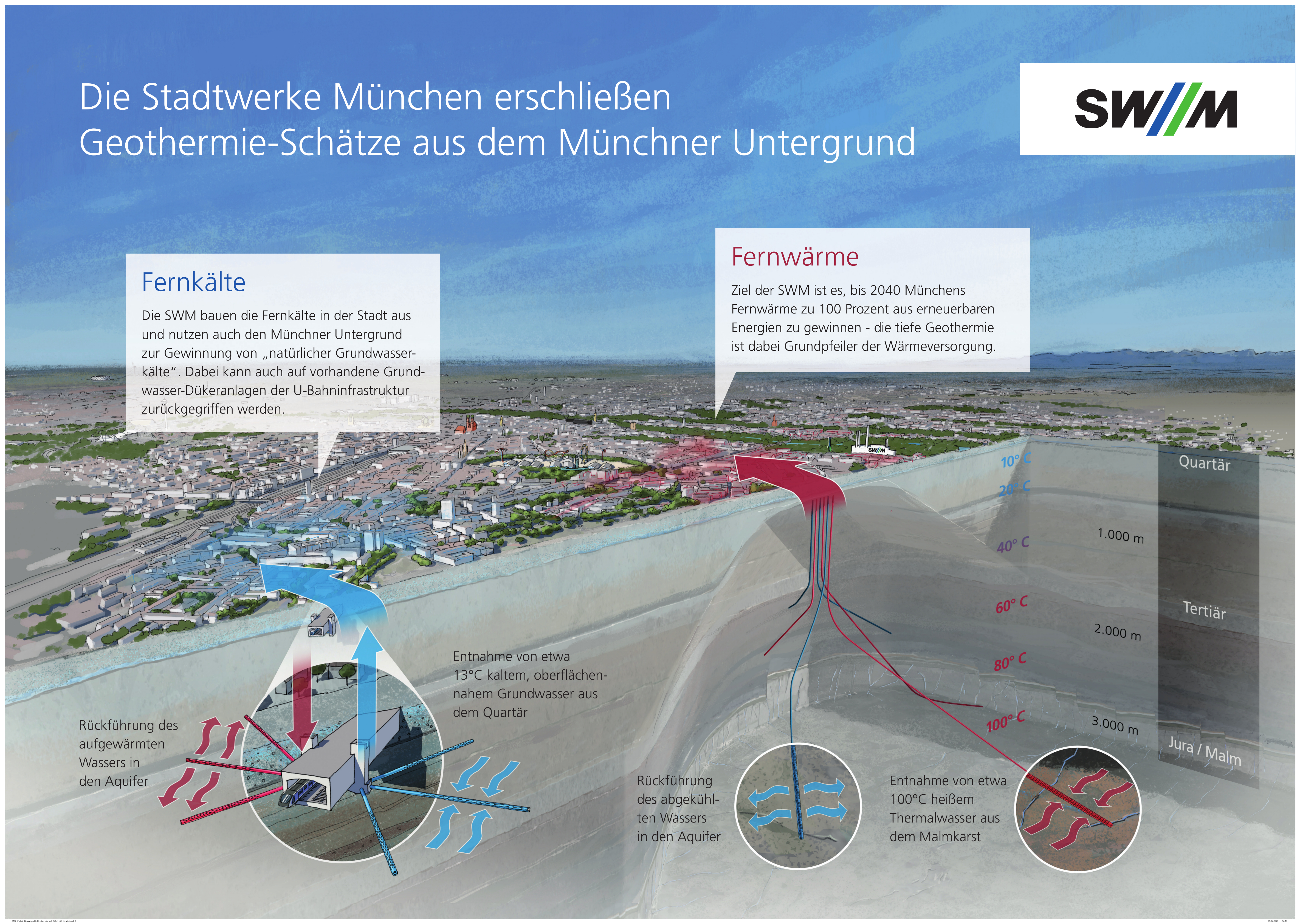
Germany: Pump Tests Commence at 50 MWth Munich Geothermal District Heating Project
Pump tests commence following the completion of the third well of the Schäftlarnstraße project (Erdwerk GmbH)
The pump tests for the Well Th3 commenced on 26.02.3019, following the successful drilling of the third of six wells for the SWM geothermal project Schäftlarnstraße (Munich).
This marks the halfway point of one of the biggest projects of its kind in Europe.
The results of the previous 2 wells have been very promising. The final geothermal power plant shall have a capacity of 50 MWth and supply heat for a least 80,000 residence of the Sendling district in Munich.
Read More........
From Global Geothermal News archives:
The pump tests for the Well Th3 commenced on 26.02.3019, following the successful drilling of the third of six wells for the SWM geothermal project Schäftlarnstraße (Munich).
This marks the halfway point of one of the biggest projects of its kind in Europe.
The results of the previous 2 wells have been very promising. The final geothermal power plant shall have a capacity of 50 MWth and supply heat for a least 80,000 residence of the Sendling district in Munich.
Read More........
From Global Geothermal News archives:
- Monday, March 25, 2019 - Germany: Third Well Drilled at Munich Geothermal District Heating Project
- Friday, January 25, 2019 - Germany: Good Progress at 50 MWth Munich Geothermal District Heating Project
- Friday, December 14, 2018 - Germany: Second Well Successfully Drilled at Munich Geothermal District Heating Project
- Thursday, July 26, 2018 - Germany: Successful Drilling Produces 100 Degrees C from 2,800 Meters at Munich Geothermal District Heating Project
New Zealand: Geothermal Energy Helps to Increase Renewable Share of generation
New Zealand Energy Quarterly (Ministry of Business, Innovation and Employment)
Despite the increase in coal-fired generation, the overall renewable share of generation rose from 81.9 per cent in the December 2017 quarter to 84.5 per cent in the December 2018. This was largely as a result of higher geothermal generation. In 2018 geothermal energy generated 7,377 GWh of electricity.
Geothermal generation has, for a long time, been an integral part of New Zealand’s electricity landscape. It began over 55 years ago with the opening of the Wairakei power station in November 1958. Most of New Zealand’s installed capacity is situated in the Taupo Volcanic Zone. Geothermal generation is around 15% of New Zealand’s electricity generation. Energy Quarterly: 2018 Q4 report [PDF, 82 KB]
Read More.........
![]() |
| (Courtesy CIA.gov) |
Geothermal generation has, for a long time, been an integral part of New Zealand’s electricity landscape. It began over 55 years ago with the opening of the Wairakei power station in November 1958. Most of New Zealand’s installed capacity is situated in the Taupo Volcanic Zone. Geothermal generation is around 15% of New Zealand’s electricity generation. Energy Quarterly: 2018 Q4 report [PDF, 82 KB]
Read More.........
Labels:
energy,
geothermal,
geothermal plant,
geothermal power,
GRC,
renewable
Location:
New Zealand
USA, Utah: “The Best Hippie Hot Springs in the West”
How one man turned a geothermal wonder into a steamy, post-Woodstock paradise (Roadtrippers )
The '70s are alive and groovy as ever at Mystic Hot Springs in Utah
Back in the 1800s, long before hordes of VW bus owners set off on adventures of self-discovery, this geothermally rich destination was already bringing the heat. Guests from all over the valley and beyond would travel by horse and buggy to dance and soak all through the night. Earlier still, nomadic bands from the Ute, Shoshone, and Paiute tribes would make use of the warm grounds near the springs, setting up their camps here as they passed through.
The bathtubs were some of the first additions Mike made when he acquired the property in 1996—but they’re still relatively new, considering that the hot springs first formed out of geologic events dating back millennia.
The unique reddish-brown travertine mounds that can be seen throughout the hot springs, most notably around the tubs, are the results of minerals that have built up after being deposited inch by inch via the constant flow of water.
Water comes out of the ground at a piping hot 168 degrees Fahrenheit (75.5 degrees celsius) and a rate of 200 gallons per minute. The water eventually cools as it works it way through a network of channels and cascades into the pools and tubs. The minerals carried in this water—calcium carbonate, magnesium, and iron among them—are celebrated for their healing and relaxation properties, all part of the draw that’s been enticing visitors for centuries.
Labels:
direct use,
energy,
geothermal,
GRC,
renewable
Location:
475 E 100 N, Monroe, UT 84754, USA
Thursday, March 28, 2019
USA: Opportunity for Funding of Research on Subsurface Stress and Lost Circulation in Geothermal Drilling
Energy Department Announces $7 Million for Research on Subsurface Stress and Lost Circulation in Geothermal Drilling (EERE/GTO)
Applicants must first submit a concept paper by April 26, 2019 at 5 p.m. EST to be eligible to submit a full application.
Today, the U.S. Department of Energy (DOE) announced up to $7 million toward the research and development (R&D) of innovative subsurface geothermal technologies. DOE’s Geothermal Technologies Office (GTO) will fund projects that will focus on improving geothermal drilling efficiency and cost reduction by addressing two of the most significant barriers: state of stress and lost circulation events.
The subsurface state of stress dictates fracture networks that provide the required permeability for a geothermal reservoir, so an increased understanding of the stress state is valuable for siting wells during geothermal energy development. Lost circulation events (LCEs) can occur during drilling when fluids pumped from the rig through downhole drilling equipment are “lost” and flow into geological formations instead of returning to the surface to complete a circulation path. Researching and developing innovative technologies that tackle state of stress and LCEs issues will reduce geothermal exploration and drilling costs, making geothermal a more viable and accessible energy source.
Currently, the United States is the world leader in installed geothermal capacity with more than 3.8 gigawatts online. One key to unlocking domestic geothermal potential is to reduce the cost of drilling operations, which can account for up to 50% of geothermal exploration and development costs.
GTO plans to provide funding in two topic areas:
Applicants must first submit a concept paper by April 26, 2019 at 5 p.m. EST to be eligible to submit a full application.
Today, the U.S. Department of Energy (DOE) announced up to $7 million toward the research and development (R&D) of innovative subsurface geothermal technologies. DOE’s Geothermal Technologies Office (GTO) will fund projects that will focus on improving geothermal drilling efficiency and cost reduction by addressing two of the most significant barriers: state of stress and lost circulation events.
The subsurface state of stress dictates fracture networks that provide the required permeability for a geothermal reservoir, so an increased understanding of the stress state is valuable for siting wells during geothermal energy development. Lost circulation events (LCEs) can occur during drilling when fluids pumped from the rig through downhole drilling equipment are “lost” and flow into geological formations instead of returning to the surface to complete a circulation path. Researching and developing innovative technologies that tackle state of stress and LCEs issues will reduce geothermal exploration and drilling costs, making geothermal a more viable and accessible energy source.
Currently, the United States is the world leader in installed geothermal capacity with more than 3.8 gigawatts online. One key to unlocking domestic geothermal potential is to reduce the cost of drilling operations, which can account for up to 50% of geothermal exploration and development costs.
GTO plans to provide funding in two topic areas:
- Topic 1: Development of technologies for characterizing, monitoring, and predicting state of stress for geothermal exploration and drilling; and
- Topic 2: Development of new technologies for predicting and mitigating lost circulation events in geothermal drilling.
- DE-FOA-0002083 Subsurface FAQs
- DE-FOA-0002083 Subsurface Stress and Loss Circulation in Geothermal Drilling
Indonesia: Geothermal Energy Important for Economy of East Java
Wagub Jatim: Geothermal Energi Terbarukan Paling Relevan
- Deputy Governor of East Java: Geothermal Most Relevant Renewable Energy (Cakrawala News)
Energi panas bumi (energi geothermal) adalah sumber energi yang relatif ramah lingkungan karena berasal dari panas dalam bumi, sehingga dianggap paling relevan menjadi energi terbarukan.
Hal ini disampaikan Wakil Gubernur (Wagub) Jawa Timur, Emil Elestianto Dardak, saat Instrumentation Talk Show, bertema Pengembangan Teknologi Energi Terbarukan dalam rangka menjaga ketahanan energi nasional (Making Indonesia 4.0) di Ruang Sidang Utama Gedung Rektorat ITS, Minggu (24/3).
(From Google Translate) Geothermal energy is an energy source that is relatively environmentally friendly because it comes from the earth's heat, so it is considered the most relevant to renewable energy.
This was conveyed by Deputy Governor of East Java, Emil Elestianto Dardak, during the Talk Show segment, titled Development of Renewable Energy Technology in order to maintain national energy security (Making Indonesia 4.0) in the Main Session Room of the ITS Rectorate Building, Sunday (24/3) .
Labels:
energy,
geothermal,
geothermal power,
GRC,
renewable
Location:
East Java, Indonesia
Finance: Investment Management Company Raises More Funds for Renewable Energy
Meridiam announces the closing of the reopening of its Africa fund at €546 million, 2.5 times its initial size (News Release)
European investment management company Meridiam announced today the closing of the reopening of its Meridiam Infrastructure Africa Fund (MIAF) for a total amount of €546 million, above its initial target of €510 million. Launched in 2015, for an initial amount of €207 million, the initial commitment has already been fully invested two years before the end of the investment period. At the end of this closing, it is now 2.5 times bigger than at the beginning.
This fund has already financed and developed 14 major projects for Africa amounting to more than EUR 3 billion, including the Tulu Moye geothermal power plant. With a final capacity of 500 MW, it is the first Independent Power Producer (IPP) in Ethiopia.
Finance: Corporate Giants Band Together to Buy Renewable Energy
Google, GM and other corporate giants form alliance to create a boom in US clean energy (CNBC)
Some of the nation's top tech firms, manufacturers and consumer companies are banding together to create a boom in renewable energy purchases throughout corporate America.
The corporate giants and their nonprofit partners on Thursday launched the Renewable Energy Buyers Alliance (REBA), a trade organization that will help companies take advantage of new ways to purchase clean energy. The goal is to support construction of new green power projects by striking renewable energy deals pioneered by companies like Google-parent Alphabet, General Motors and Walmart in recent years.
Under the banner of REBA, these pioneers aim to empower tens of thousands of companies to buy renewable energy in the coming years — increasing the market from roughly 5,000 companies today.
Through last year, companies signed enough corporate renewable deals to support nearly 16 gigawatts of new renewable energy capacity in the U.S. REBA aims to accelerate that activity and grow the market to 60 gigawatts by 2025.
Wednesday, March 27, 2019
Science & Technology: Model for Optimizing Production from a Geothermal Two-Phase Reservoir
Study of Production-Injection Strategies for Sustainable Production In Geothermal Reservoir Two-Phase by Numerical Simulation (ITB)
by Nenny Miryani Saptadji and Heru Berian Pratama. Geothermal Engineering Study Program, Institut Teknologi Bandung, Indonesia.
The main issue in the management of the two-phase liquid-dominated geothermal field is a rapid pressure decline in the reservoir which affects steam supply to the power plant.
The changes of reservoir characteristic due to mass and heat extraction from the reservoir can be learned through a numerical simulation under numerous strategies production-injection. The model developed on liquid-dominated geothermal fields are assessed with various scenarios of production strategies (steam cap, brine reservoir, and combination) and injection strategies (deep, shallow, centered and dispersed), for generation of 110 MW and 220 MW using separated steam cycle.
A full factorial scenario of 32 production-injection strategies has been successfully carried out. The results show a relatively low decrease in reservoir pressure and steam flow rate for a production strategy combined with the steam cap and brine reservoir, with deep and dispersed injection strategy.
From the simulation, it can be concluded that the strategy for sustainable production is a production of 25% from steam cap and 75% from brine reservoir, dispersed and deep reinjection with 9 make-up wells from the steam cap. The implementation of production-injection strategy needs to be planned right from the beginning of exploitation, therefore, the strategy can adapt to changes in reservoir characteristics.
Read More.........
by Nenny Miryani Saptadji and Heru Berian Pratama. Geothermal Engineering Study Program, Institut Teknologi Bandung, Indonesia.
The main issue in the management of the two-phase liquid-dominated geothermal field is a rapid pressure decline in the reservoir which affects steam supply to the power plant.
The changes of reservoir characteristic due to mass and heat extraction from the reservoir can be learned through a numerical simulation under numerous strategies production-injection. The model developed on liquid-dominated geothermal fields are assessed with various scenarios of production strategies (steam cap, brine reservoir, and combination) and injection strategies (deep, shallow, centered and dispersed), for generation of 110 MW and 220 MW using separated steam cycle.
A full factorial scenario of 32 production-injection strategies has been successfully carried out. The results show a relatively low decrease in reservoir pressure and steam flow rate for a production strategy combined with the steam cap and brine reservoir, with deep and dispersed injection strategy.
From the simulation, it can be concluded that the strategy for sustainable production is a production of 25% from steam cap and 75% from brine reservoir, dispersed and deep reinjection with 9 make-up wells from the steam cap. The implementation of production-injection strategy needs to be planned right from the beginning of exploitation, therefore, the strategy can adapt to changes in reservoir characteristics.
Read More.........
Japan: 7 MW Iwate Geothermal Power Plant Starts Operations
7.4 MW Geothermal Power Plant Begins Operation in Iwate (Nikkei Business)
Iwate Chinetsu KK (Hachimantai City, Iwate Prefecture) built a geothermal power plant with a rated output of 7.499 MW in Matsuo-hachimantai District, Iwate Prefecture, Japan, and started operation of the plant Jan 29, 2019.
This is the first time in 22 years that a geothermal power plant with an output higher than 7 MW has begun operation in Japan.
Electricity generated at the plant is sold to Tohoku-Electric Power Co Inc at a price of ¥40/kWh based on the feed-in tariff (FIT) scheme. JFE Engineering Corp provided construction services for the plant.
From the Global Geothermal News archives:
- Friday, March 3, 2017 - Japan: More Details of Guarantee of Liabilities for Iwate Geothermal Power Project
- Monday, February 27, 2017 - Japan: Liability Guarantee Allows 7 MW Iwate Geothermal Power to Proceed
- Thursday, July 30, 2015 - Japan: JOGMEC to Invest in 7 MW Iwate Geothermal Exploration Project
- Wednesday, May 22, 2013 - Japan: JFE Venture Starts Geothermal Test Drilling in Northern Japan
Labels:
energy,
geothermal,
geothermal power,
GRC,
renewable
Location:
Hachimantai, Iwate, Japan
Finance: Batteries Co-located with Solar or Wind Projects are Starting to be Competitive
Battery Power’s Latest Plunge in Costs Threatens Coal, Gas (BNEF)
Two technologies that were immature and expensive only a few years ago but are now at the center of the unfolding low-carbon energy transition have seen spectacular gains in cost-competitiveness in the last year.
The latest analysis by research company BloombergNEF (BNEF) shows that the benchmark levelized cost of electricity,[1] or LCOE, for lithium-ion batteries has fallen 35% to $187 per megawatt-hour since the first half of 2018. Meanwhile, the benchmark LCOE for offshore wind has tumbled by 24%.
Batteries co-located with solar or wind projects are starting to compete, in many markets and without subsidy, with coal- and gas-fired generation for the provision of ‘dispatchable power’ that can be delivered whenever the grid needs it (as opposed to only when the wind is blowing, or the sun is shining).
Electricity demand is subject to pronounced peaks and lows inter-day. Meeting the peaks has previously been the preserve of technologies such as open-cycle gas turbines and gas reciprocating engines, but these are now facing competition from batteries with anything from one to four hours of energy storage, according to the report.
Tuesday, March 26, 2019
Geothermal Event! Opportunity for Exposure at GRC Annual Meeting & Expo
Sponsor The Geothermal Event Of The Year!
Sponsorships for the GRC Annual Meeting & Expo are now available. These are great opportunities for companies to get more exposure at the largest annual geothermal gathering in the world.
The 2019 meeting will take place in Palm Springs, California from September 15th through the 18th.The four-day event will offer technical, policy, and market conference sessions, educational seminars, tours of local geothermal and renewable energy projects, an expo and numerous networking opportunities.
Make the geothermal community take notice, become a sponsor now!
Sponsorships for the GRC Annual Meeting & Expo are now available. These are great opportunities for companies to get more exposure at the largest annual geothermal gathering in the world.
The 2019 meeting will take place in Palm Springs, California from September 15th through the 18th.The four-day event will offer technical, policy, and market conference sessions, educational seminars, tours of local geothermal and renewable energy projects, an expo and numerous networking opportunities.
Make the geothermal community take notice, become a sponsor now!
Thanks to our 2018 sponsors!
Science & Technology: Using Electric Plasma Bursts to Increase Rate of Penetration in Geothermal Drilling
Mechanical engineering researchers receive federal grant to enhance geothermal energy (Texas A&M University College of Engineering)
One remaining challenge associated with drilling geothermal wells is the presence of hard rocks, such as granite, that slow down the process and wear down drill bits. In turn, this causes drilling time and expenses to increase.
To combat this, a team of researchers from the J. Mike Walker '66 Department of Mechanical Engineering at Texas A&M University is developing Shockwave and Plasma Accelerated Rock Cracking (SPARC) drilling technology. By making the creation of wells more efficient, accessible and cost effective, their U.S. Department of Energy funded project will help make geothermal energy a more viable alternative to fossil fuels.
According to Dr. David Staack, associate professor, Sallie and Don Davis ’61 Career Development Professor, and College of Engineering director of laboratory instruction, the team’s SPARC technology will equip traditional drill bits with high voltage electrodes on the tip that emit a microscopic plasma discharge to shock the rock and crack it like a tiny explosion. Creating fractures and weakening the rock will allow the drill head, affixed with conventional diamond cutters, to have an easier time breaking through the material.
As Dr. Alan Palazzolo described, along with setting the stage for further development of geothermal energy, using electric plasma bursts to increase the rate of penetration will enable the drilling process to be streamlined and therefore be more cost competitive with nonrenewable resources.
Finance: Older Renewable Energy Facilities Can Be Ripe for Technology Upgrades
The Invisible Renewable Energy Revolution (#CleanTechnica Interview)
CleanTechnica went to the BNEF Summit in New York on Monday and got the inside scoop on decarbonization from Mark McGrail, Associate VP of Energy Management at Enel Green Power North America (EGPNA).
McGrail had some interesting things to say about Enel’s recent headline-grabbing deal to purchase 620 megawatts of US renewable energy projects from GE.
The deal involves 7 solar and geothermal facilities that were already under a joint venture between GE and EGPNA. Many energy industry observers are scratching their heads over GE’s motivation to sell, though paying down debt is probably high on its list.
For EGPNA, part of the motivation to buy may be sole bragging rights to the innovative Stillwater geothermal plant.
As McGrail explained, the plant includes both a PV array and a concentrating solar field. The extra dose of solar power adds heat to the well, slows its degradation by smoothing out operational fluctuations, and stretches out its effective lifespan.
Another facility in the group of 7, the Cove Fort plant, also puts innovative technology to work with the aim of extending the lifespan of a geothermal well.
All of this is by way of saying that the US now has a fairly long roster of older renewable energy facilities that are ripe for technology upgrades that add capacity and/or improve lifespan. It’s like getting a whole new clean power plant, without having to develop a new site.
Read More.........
![]() |
| In Utah, the Cove Fort geothermal plant gets a new life with hydroelectric additions |
McGrail had some interesting things to say about Enel’s recent headline-grabbing deal to purchase 620 megawatts of US renewable energy projects from GE.
The deal involves 7 solar and geothermal facilities that were already under a joint venture between GE and EGPNA. Many energy industry observers are scratching their heads over GE’s motivation to sell, though paying down debt is probably high on its list.
For EGPNA, part of the motivation to buy may be sole bragging rights to the innovative Stillwater geothermal plant.
As McGrail explained, the plant includes both a PV array and a concentrating solar field. The extra dose of solar power adds heat to the well, slows its degradation by smoothing out operational fluctuations, and stretches out its effective lifespan.
Another facility in the group of 7, the Cove Fort plant, also puts innovative technology to work with the aim of extending the lifespan of a geothermal well.
All of this is by way of saying that the US now has a fairly long roster of older renewable energy facilities that are ripe for technology upgrades that add capacity and/or improve lifespan. It’s like getting a whole new clean power plant, without having to develop a new site.
Read More.........
Climate Change: Increased Use of Renewables Have Great Impact on CO2 Emissions - IEA
Global Energy & CO2 Status Report (IEA)
The latest trends in energy and emissions in 2018
This online, annual report provides a snapshot of recent global trends and developments across fuels, renewable sources, and energy efficiency and carbon emissions, in 2018.
Renewables increased by 4% in 2018, accounting for almost one-quarter of global energy demand growth. The power sector led the gains, with renewables-based electricity generation increasing at its fastest pace this decade. Solar PV, hydropower, and wind each accounted for about a third of the growth, with bioenergy accounting for most of the rest. Renewables covered almost 45% of the world's electricity generation growth, now accounting for over 25% of global
power output.
Renewable electricity generated from other technologies grew by 7%, dominated by bioenergy. Geothermal electricity increased mostly in Turkey, with some gains also seen in Indonesia and the United States.
Increased use of renewables in 2018 had an even greater impact on CO2 emissions, avoiding 215 Mt of emissions, the vast majority of which is due to the transition to renewables in the power sector.
The savings from renewables was led by China and Europe, together contributing two-thirds to the global total. Increased generation from nuclear power plants also reduced emissions, averting nearly 60 Mt of CO2 emissions. Overall, without the transition to low-carbon sources of energy in 2018, emissions growth would have been 50% higher.
Download the PDF............
The latest trends in energy and emissions in 2018
Renewables increased by 4% in 2018, accounting for almost one-quarter of global energy demand growth. The power sector led the gains, with renewables-based electricity generation increasing at its fastest pace this decade. Solar PV, hydropower, and wind each accounted for about a third of the growth, with bioenergy accounting for most of the rest. Renewables covered almost 45% of the world's electricity generation growth, now accounting for over 25% of global
power output.
Renewable electricity generated from other technologies grew by 7%, dominated by bioenergy. Geothermal electricity increased mostly in Turkey, with some gains also seen in Indonesia and the United States.
Increased use of renewables in 2018 had an even greater impact on CO2 emissions, avoiding 215 Mt of emissions, the vast majority of which is due to the transition to renewables in the power sector.
The savings from renewables was led by China and Europe, together contributing two-thirds to the global total. Increased generation from nuclear power plants also reduced emissions, averting nearly 60 Mt of CO2 emissions. Overall, without the transition to low-carbon sources of energy in 2018, emissions growth would have been 50% higher.
Download the PDF............
China: Four-Day Geothermal Conference in Beijing
2019 ARMA-CUPB International Geothermal Conference (ARMA)
5-8 August, 2019, Beijing, China
The Organizing Committee of 2019 American Rock Mechanics Association (ARMA) International Conference in Beijing warmly invites you to attend the conference during Aug 5-8, 2019, in Beijing, China.
The theme of the conference is “From conventional hydrothermal systems to enhanced geothermal energy: Technology Sharing with the Oil and Gas Industry”.
As the conference chairmen, it is a great honor for us to make an invitation for all of you to this exciting event, with the cordial hospitality and the warm welcome of Beijing.
More Information.........
5-8 August, 2019, Beijing, ChinaThe Organizing Committee of 2019 American Rock Mechanics Association (ARMA) International Conference in Beijing warmly invites you to attend the conference during Aug 5-8, 2019, in Beijing, China.
The theme of the conference is “From conventional hydrothermal systems to enhanced geothermal energy: Technology Sharing with the Oil and Gas Industry”.
As the conference chairmen, it is a great honor for us to make an invitation for all of you to this exciting event, with the cordial hospitality and the warm welcome of Beijing.
More Information.........
Costa Rica: A Quarter of a Century of Geothermal Production at the Alfredo Mainieri Protti Geothermal Field
Costa Rica cumple 25 años de generación geotérmica sostenible - Costa Rica celebrates 25 years of sustainable geothermal generation (La Republica.net)
Este 24 de marzo se cumplió un cuarto de siglo del inicio de producción geotérmica por parte del Instituto Costarricense de Electricidad (ICE). Hoy día, el país posee la tercera capacidad instalada más grande del continente, detrás de Estados Unidos y México.
Los pozos que dieron ese primer empuje de energía siguen activos y en producción, como resultado de la visión sostenible del recurso que el ICE implementó desde el período de investigación. Se trata de la planta Miravalles I, en el Campo Geotérmico Alfredo Mainieri Protti, ubicado en Bagaces, Guanacaste.
![]() |
| Miravalles geothermal power plant, Costa Rica, by Prof. D. Chandrasekharam. GRC Photo Contest 2010. |
Los pozos que dieron ese primer empuje de energía siguen activos y en producción, como resultado de la visión sostenible del recurso que el ICE implementó desde el período de investigación. Se trata de la planta Miravalles I, en el Campo Geotérmico Alfredo Mainieri Protti, ubicado en Bagaces, Guanacaste.
(From Google Translate) On March 24, Instituto Costarricense de Electricidad (ICE) completed a quarter of a century of geothermal production. Today, the country has the third largest installed capacity in the continent, behind the United States and Mexico.
The wells that produced that first push of energy are still active and in production, as a result of the sustainable vision of the resource that ICE implemented since the investigation period. It is the Miravalles I plant, in the Alfredo Mainieri Protti Geothermal Field, located in Bagaces, Guanacaste.
From the GRC Bulletin:
- Alfredo Mainieri Protti Geothermal Field—Formerly Miravalles, by Susan Fox Hodgson
Commonwealth of Dominica: Two X 3.5 MW Turbines Funded for Geothermal Power Project
Funds secured for two geothermal turbines says Vince Henderson (Dominica News Online)
Senior Advisor to the Dominica Geothermal Development Company (DGDC), His Excellency Dr. Vince Henderson has said that the financing package for Dominica’s Geothermal Program has been secured.
The financing package, which includes $22 million in grants, was approved by the World Bank.
Henderson said that the technical plan for the development of the project has also been secured, “and we are now awaiting the final approval of the tender documents so that we can go to market to invite tenders for an EPC contract, which is Engineering Procurement and Construction contract, [for] the entire development of the plant.”
He said that will lead to the construction of two turbines of 3.5 megawatts each in the Laudat area in order to generate power to sell to DOMLEC.
Henderson went on to say that the DGDC late last year finalized negotiations with Dominica Electricity Services Limited (DOMLEC) on the power purchase agreement.
Read More.........
From the Global Geothermal News archives:
- Tuesday, March 19, 2019 - Commonwealth of Dominica: World Bank Approves Funding of 7 MW Geothermal Power Project
- Monday, January 28, 2019 - Commonwealth of Dominica: Citizenship by Investment Program Helps Pay for Construction of Geothermal Power Plant
- Thursday, December 27, 2018 - Commonwealth of Dominica: Construction of Geothermal Power Plant to Begin by Third Quarter of 2019
- Thursday, January 4, 2018 - Commonwealth of Dominica: European Union Provides Funds for Geothermal Energy Development
Labels:
energy,
geothermal,
geothermal plant,
geothermal power,
GRC,
renewable
Location:
Dominica
Croatia: More Interest in Tapping Geothermal Resources
Croatia eyes more gas and oil production, use of geothermal sources (Reuters)
From the Global Geothermal News archives:
![]() |
| (Courtesy CIA.gov) |
Croatia’s tender for gas and oil exploration in the north of the country has met good initial demand from potential bidders, while it is also eying investments in geothermal electricity production, a top energy official said on Tuesday.
The tender for seven blocks in the northern Panonian region over an area of 14,272 square kilometres closes on June 28.
At the same time Croatia is running a tender for four blocks in the country’s mountainous central and southern regions which closes on Sept. 10, but more exploration there is needed.
- Wednesday, December 12, 2018 - Croatia: 17.5 MWe Velika Ciglena Geothermal Plant is Commissioned
- Thursday, July 12, 2018 - Croatia: Tender Opened for Operation of Four Geothermal Resources
- Wednesday, April 6, 2016 - Croatia: Construction Starts at Garden of Croatia Geothermal Project
Labels:
energy,
geothermal,
geothermal plant,
geothermal power,
GRC,
renewable
Location:
Croatia
Iceland: Geothermal Training Programme of the United Nations University Presentations of Graduating Fellows
Seminar of MSc and PhD Fellows (UNU-GTP)
Thursday 28 March from 13:00-16:30.
A seminar, for the presentations of the Geothermal Training Programme of the United Nations University (UNU-GTP) MSc Fellows graduating this spring, as well as presentations from two of our PhD Fellows, will be held in Vidgelmir, Orkugarður, Grensásvegi 9, Reykjavík, Iceland, Thursday 28 March from 13:00-16:30.
The presentations will start at 13:00. Each presentation is 20 min with approx. 10 minutes allowed for questions and discussions after each one.
The seminar is open to all and we strongly encourage everyone interested in the world's geothermal development to attend!
More Information........
Thursday 28 March from 13:00-16:30.
A seminar, for the presentations of the Geothermal Training Programme of the United Nations University (UNU-GTP) MSc Fellows graduating this spring, as well as presentations from two of our PhD Fellows, will be held in Vidgelmir, Orkugarður, Grensásvegi 9, Reykjavík, Iceland, Thursday 28 March from 13:00-16:30.
The presentations will start at 13:00. Each presentation is 20 min with approx. 10 minutes allowed for questions and discussions after each one.
The seminar is open to all and we strongly encourage everyone interested in the world's geothermal development to attend!
More Information........
Subscribe to:
Posts (Atom)