Tuesday, May 7, 2019

Europe: Latest Issue of European Geologist Magazine Devoted to Geothermal Energy

Geology and the energy transition

European Geologist - The journal of the European Federation of Geologists
Download..........                        View Online..........

Philippines: Top Garment Exporter Now Powered by EDC’s Geothermal Energy

Garments exporter taps EDC to power Cavite facility (Business Mirror)

Top garments exporter Hamlin Industrial Corp., a subsidiary of the NST Group, has tapped the Energy Development Corp. (EDC) to supply power to its facility in Carmona, Cavite.

The EDC will source power from its Bacon-Manito geothermal project in the Bicol region to supply Hamlin’s requirements.

“We believe geothermal power is a great fit for our business. It is a great complement to the biomass boiler we have on-site, which powers our air-conditioning systems, among others, using waste materials generated from production,” NST Apparel Director and Hamlin President Lawrence de los Santos said.

“We are happy to support businesses like Hamlin. Geothermal, for us, is the holy grail of renewable energy. It is clean, and it is baseload; hence, it is reliable and can run 24/7 without depending on the seasons,” EDC Head of Business Development, Marketing, and Trading Marvin Kenneth Bailon said.

Kenya: Tender Invitation to Connect Makeup Wells at Olkaria Geothermal Power Plant

KenGen: Geothermal division seeks connection of makeup wells (ESI-Africa)

Tenders must be delivered before 29 May 2019

The Kenya Electricity Generating Company Limited (KenGen) has issued a tender invitation for the connection of makeup wells OW-53B, OW-53C and OW- 53D to Olkaria IAU Power Plant at geothermal development division.

Interested firms may obtain further information from the office of the Supply Chain Director, Tel: (254) (020) 3666230, Email: tenders@kengen.co.ke on working days.

There will be a mandatory site visit on 15 May 2019 starting at 10:00am at Geothermal Plaza in Olkaria Naivasha.

Saint Vincent and the Grenadines: Drilling Starts at 10 MW Geothermal Power Plant Site

Exploratory drilling of Geothermal well begins (Searchlight Newspaper)

Yesterday, May 6, exploratory drilling of geothermal wells at Bamboo Range, Orange Hill began under the direction of the St Vincent Geothermal Company Limited, which is owned by Reykjavik Geothermal and the Government of St Vincent and the Grenadines.

Speaking at a ceremony held to officially announce the launch of the drilling operations, North Windward parliamentary representative Montgomery Daniel told the gathering that when history is written, it will show May 6 as the beginning of a new era in St Vincent and the Grenadines (SVG), the era of geothermal energy.


Europe: Webinar on Adressing Environmental Concerns in Geothermal Energy Projects

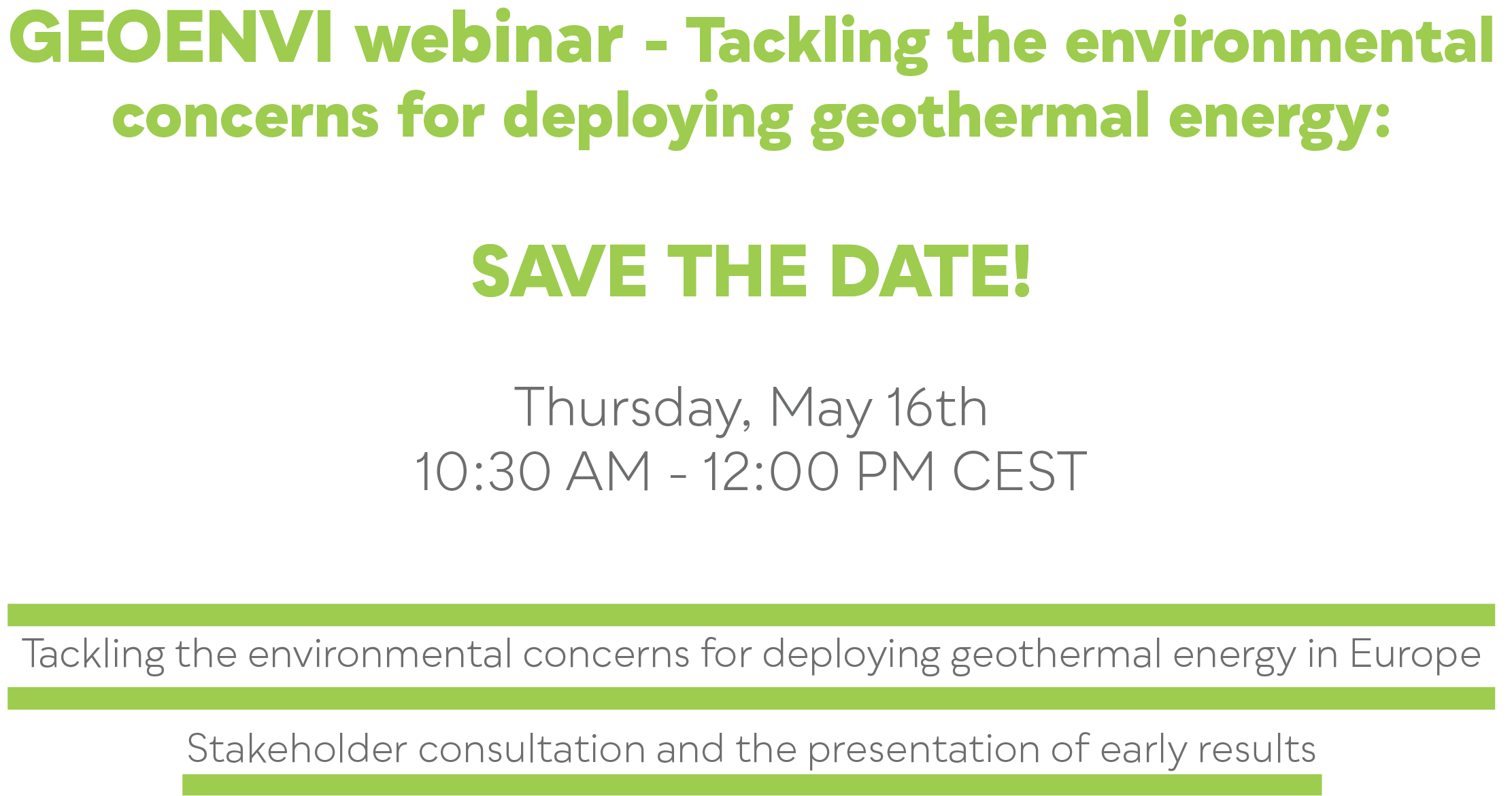
GEOENVI webinar - Tackling the environmental concerns for deploying geothermal energy

Thu, May 16, 2019 1:30 AM - 3:00 AM PDT

The EU-funded GEOENVI project is organising the first GEOENVI webinar on May 16th at 10:30 - 12:00 (CET) on Tackling the environmental concerns for deploying geothermal energy in Europe. The objective of the GEOENVI project is to answer environmental concerns in terms of both impacts and risks, by first setting an adapted methodology for assessing environment impacts to the project developers, and by assessing the environmental impacts and risks of geothermal projects operational or in development in Europe.

The GEOENVI project has the objective to make sure that deep geothermal energy can play its role in Europe’s future energy supply in an increasingly sustainable way and to create a robust strategy to answer environmental concerns. It will engage with all geothermal stakeholders to ensure the exchange of best practices, the test of harmonized methods in selected areas and then, to facilitate its replication across Europe. The project is funded by the European Union’s Horizon 2020 research and innovation programme and coordinated by EGEC. More on: www.geoenvi.eu
 
This webinar will present the preliminary results of the GEOENVI project, which is working since November 2018. It will also be open to inputs and questions by participants, which are welcome to provide their perspective or comment on the methodology of the project.

Science & Technology: US Lab Develops Self-Healing Cement that Performs Strongly in Harsh Geothermal Conditions

Self-healing cement could transform geothermal industry (Phys.org)

A self-healing cement developed by Pacific Northwest National Laboratory can outperform conventional concrete, offering a potentially pollution-preventing technology for the growing geothermal industry.

This game-changing combination uses a flexible ingredient, a polymer, to repair fractured surfaces and fill cracks, minimizing mechanical failure risks and offering a sustainable energy source.

There are large geothermal energy reserves across the country and around the world that are not in use because wellbore cement fails in high-temperature conditions and in chemically corrosive environments. Geothermal energy is thermal energy that the Earth generates and stores. With improvements like self-healing cement, geothermal energy has the potential to be an applicable, sustainable energy source. The self-healing cement can deliver significant energy with minimal carbon release to the atmosphere.


Insights into the physical and chemical properties of a cement-polymer composite developed for geothermal wellbore applications. Kenton A.Rod, et al.
Cement and Concrete Composites. Volume 97, March 2019, Pages 279-287. https://doi.org/10.1016/j.cemconcomp.2018.12.022

Geothermal Event - Save the Date for GRC Annual Meeting & Expo

Geothermal Event - Save the Date!


Monday, May 6, 2019

Geothermal Event - Book Your Rooms Now for GRC Annual Meeting & Expo

Reserve Your Hotel Rooms for GRC Annual Meeting & Expo (News Release)


Hotel room reservations can now be made for the biggest geothermal energy event of the year to be held September 15-18 in Palm Springs, California, USA.

Reservations can now be made for hotel rooms for the Geothermal Resources Council (GRC) Annual Meeting & Expo, being held in Palm Springs, California, USA from September 15-18, 2019. All the events are in one central location, at the Palm Springs Convention Center. The official hotels are either connected to the convention center or just one block away.

The GRC has contracted with the Renaissance Palm Springs and Hilton Palm Springs hotels for a discounted block of rooms. At both hotels there is a choice of rooms with either two double beds or a king bed starting at $150 a night excluding taxes and fees.

Attendees can make their reservations on secure websites prepared specially for the GRC. The links are available from the GRC Annual Meeting website at: https://geothermal.org/Annual_Meeting/hotel.html.

The GRC strongly encourage you to stay at one of the conference hotels to gain the benefits of networking with colleagues, being close to the event venue, and relaxing in nice hotel properties.

We make every effort to negotiate the best possible rates. When you stay at the conference hotels, you help GRC meet our contractual obligations, avoid paying financial damages for this meeting, secure suitable venues and preferred dates-and-rates for future conferences.

The GRC Annual Meeting is the industry’s largest annual gathering of leading geothermal energy scientists, producers, renewable energy industry stakeholders, regulators, utilities, and key associated business leaders. The four-day event will offer technical, policy, and market conference sessions, educational seminars, tours of local geothermal and renewable energy projects, and numerous networking opportunities.

Over 1,000 attendees came to the 2018 GRC Annual Meeting and Expo from over 40 different countries, highlighting the GRC’s role in connecting the global geothermal energy community. With increasing interest in geothermal as a reliable source of renewable energy providing both flexible and baseload power production around the world, the GRC is looking ahead to an even stronger international attendance in 2019.

For information on how to sponsor this event, contact Anh Lay, GRC at (530) 758-2360 X100 or alay@geothermal.org.

For more information about the GRC Annual Meeting & Expo in Palm Springs, California, USA, visit www.geothermal.org/meet-new.html or call (530) 758-2360.

USA, Nevada: Ormat Revenue Increases Despite Puna Geothermal Venture Shutdown

Ormat Technologies Reports First Quarter 2019 Financial Results (News Release)

Ormat Technologies, Inc. today announced financial results for the first quarter ended March 31, 2019.
  • Total revenues of $199.0 million, up 8.2% compared to the first quarter of 2018 despite the volcano-related shutdown of Ormat’s Puna power plant in Hawaii;
  • Electricity segment revenues of $142.9 million, up 7.9% compared to Q1 2018, as the growth resulting from recently expanded operations at McGuinness Hills and Olkaria, as well as contributions from recently acquired US Geothermal (USG), combined to mitigate the loss of revenues resulting from the temporary shutdown of the Puna power plant;
“Ormat delivered another strong quarter, with continued growth across our diversified portfolio of operations helping us to overcome the loss of revenue and profit resulting from the temporary shutdown of our Puna power plant in Hawaii,” commented Isaac Angel, Chief Executive Officer. 

“Our Electricity segment revenue grew 7.9% and generation increased 11.0% in Q1 2019 vs Q1 2018, reflecting the contribution of new and expanded power plants as well as the continuing growth resulting from our recent USG acquisition."

Geothermal Event! Exhibitor Highlights Software Used for Enhanced Geothermal Systems Project

A New Future For Geothermal: The Utah Forge Project (Seequent)

Seequent is an exhibitor at the GRC Annual Meeting & Expo from 15-18 September at the Palm Springs Convention Center in Palm Springs, California, USA.


In November 2018, we kicked off a five-year partnership with the Utah FORGE (Frontier Observatory for Research in Geothermal Energy) project at the University of Utah. The project is sponsored by the U.S. Department of Energy (DOE), with the aim to provide research on enhanced geothermal systems (EGS).

Seequent has provided significant cost sharing (over $300,000 USD) of our products and also the support of our technical staff to the Utah FORGE project team. The team’s first order of business is to use Seequent products to visualise the subsurface at the FORGE Milford site.

They’ve chosen to reconcile all this data in Leapfrog Geothermal, our 3D modelling solution for the geothermal industry. They’re also using Central, our model management solution for visualising, tracking and managing geological data from a centralised, auditable environment.

Read More.........

Good Graphic of Global Geothermal Energy Capacity

Cumulative installed geothermal capacity, megawatts, 2016 (Our World in Data)

Netherlands: Good Potential for Geothermal District Heating Around Utrecht

With geothermal to a natural gas free future (Well Engineering Partners)


The fact that such a large part of the Netherlands is still a white spot on the map of geothermal heat, is since oil or gas industry has hardly drilled in these regions in the past, and a few seismic profiles are available. The so-called Rotliegend formation forms the subsoil of the region from west to east. If the results of the research in the province of Utrecht are positive, it is likely to mean a high probability of the presence of geothermal energy in other places in the area. That is why the province, the municipality of Utrecht (where there is a gas-fired heating network), and the government (via the RVO), contribute financially to the research.

USA, Hawaii: Electricity May be Restored Soon at Puna Geothermal Venture

HELCO works to restore power at PGV (Hawaii Tribune-Herald)

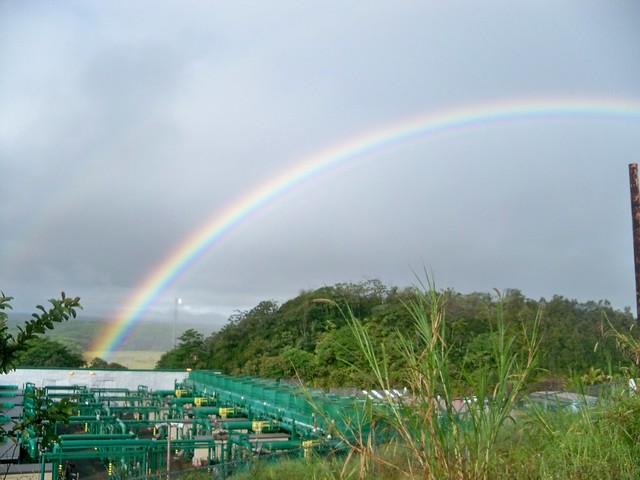
Rainbow from a Passing shower. Puna Geothermal Plant,
Pahoa, Hawaii, USA. Sam Abraham on February 24, 2012.
GRC Photo Contest 2012.
Electricity may be restored soon at Puna Geothermal Venture (PGV) as the Hawaii Electric Light Company (HELCO) works to reconnect the facility to the electric grid.

HELCO spokeswoman Kristen Okinaka said both HELCO and PGV are hard at work to restore the geothermal plant to operational capacity by the end of this year. As part of that process, HELCO is currently extending power lines to the PGV facility over the cooled lava flow.

PGV has previously stated that it will return to full operational status by the end of 2019. Kaleikini said there are no new developments in that process and that they are still working on assessing the facility.

El Salvador: UN Geothermal Training Programme to Provide Services Through La Geo

Jarðhitaskóli Háskóla Sameinuðu þjóðanna á Íslandi undirritar samstarfssamning við LaGeo í El Salvador - United Nations University Geothermal School in Iceland signs a co-operation agreement with LaGeo in El Salvador (Orkustofnun)

Fimmtudaginn 2. maí var undirrituð viljayfirlýsing milli Jarðhitaskóla Háskóla Sameinuðu þjóðanna á Íslandi og jarðhitafyrirtækisins LaGeo í El Salvador um áframhaldandi samstarf á sviði jarðhitaþjálfunar og uppbyggingar jarðhitaþekkingar í Rómönsku Ameríku.

Jafnframt var undirritaður sérstakur samstarfsamningur til næstu tveggja ára milli þessara aðila um áframhaldandi rekstur 5-mánaða diplómanáms á spænsku fyrir Rómönsku Ameríku sem farið hefur fram við Háskóla El Salvador (University of El Salvador), en að mestu byggt á kennslu frá LaGeo, auk nokkurra íslenskra kennara frá Jarðhitaskólanum. 

On Thursday, May 2, a memorandum of understanding was signed between the United Nations University Geothermal School in Iceland and LaGeo geothermal company in El Salvador on ongoing co-operation in the field of geothermal training and the development of geothermal knowledge in Latin America.

At the same time, a special two-year co-operation agreement was signed between these parties on the ongoing operation of a 5-month Spanish-language diploma in Latin America conducted by the University of El Salvador, mostly based on LaGeo teaching, as well as several Icelandic teachers from the Geothermal School.

Lestu meira.........                           Read More........

Kenya: New Transmission Line to Deliver Olkaria Geothermal Power to Western Region

Kenya to save Sh2bn through Geothermal line to Western (Capital FM)

Kenya will save Sh2 billion worth of electricity per year lost through leakages during transportation with the construction of a more efficient transmission line to supply geothermal power to western Kenya for the first time.

The 300km high voltage line, with the benefit of less power losses, is set for completion early next year and will connect Counties in Western Kenya to geothermal power plants in Olkaria, Naivasha. Through the 220kV/ 400kV Olkaria-Lessos-Kisumu line, western parts of the country will for the first time receive geothermal electricity, a cheap, green and renewable source.

Reliable power supply to western is expected to ignite activity, ensuring uninterrupted operations for factories, businesses and households. The expected overall impact of cheap geothermal supply to western Kenya is lower bills for consumers across the country since power tariffs on the national grid are harmonised regardless of location and energy source. The 300km Olkaria-Lessos-Kisumu line runs from Naivasha steam fields through Eldoret to the lakeside city of Kisumu.

Nicaragua: San Jacinto Geothermal Project Generating Average of 64.3 MW (Net)

Polaris Infrastructure Announces 2019 First Quarter Results (News Release)


Toronto -based Polaris Infrastructure Inc. reports its financial and operating results for the quarter ended March 31, 2019 including the following highlight. 

The San Jacinto project generated 139 GWh (net) (an average of 64.3 MW (net)), resulting in revenue of $18.6 million for the three months ended March 31, 2019, versus revenue of $14.7 million on generation of 116 GWh (net) (an average of 53.9 MW (net)) in the prior year period. The 27% revenue increase was due to higher average production in the first quarter of 2019, the impact of the 3% annual tariff increase and a $0.4 million contribution from Canchayllo. The 5 MW capacity Canchayllo hydropower facility produced total net 8.86 MWh for the quarter.

Comprehensive preventative maintenance was completed on the Unit 4 turbine at the San Jacinto project over the course of approximately two and a half weeks in April 2019. This exercise was completed on schedule and on budget and leaves the company well-positioned for consistent turbine performance throughout the balance of fiscal 2019, given that the Unit 3 turbine was serviced in early 2018.

Friday, May 3, 2019

Philippines: National Geothermal Association of the Philippines to Hold First Conference

The 1st Philippine Geothermal Conference (NGAP) - Call for Papers

2-3 October 2019, Manila, Philippines
Beyond Conventional: Low-Medium-Enthalpy Geothermal Resources and Applications


The National Geothermal Association of the Philippines (NGAP) is organizing its annual meeting and technical conference for Oct 2 -3. This year we are expanding to two days and inviting more international participation. There will also be an optional field trip on Oct 4 covering the Mak-Ban and Maibarara geothermal fields and the Taal Volcano.

Preliminary Topics:
– exploration and development
– resource management
– geology, geochemisty, geophysics, reservoir engineering
– low-medium enthalpy systems
– binary systems and development
– acid systems

More Information..........

Geothermal Energy News from Around the World

Global Geothermal News - Weekly Update (Geothermal Resources Council)


A round-up of this week's international geothermal energy news.......

Click on the links below
to view the whole story and other news on Global Geothermal News.

World Bank Report on Gender Equality in The Geothermal Energy Sector

Gender Equality in The Geothermal Energy Sector: Road to Sustainability (ESMAP)

Although geothermal energy is globally recognized as a clean and reliable source of heat and electric power its development can inadvertently lead to adverse outcomes that disproportionately disadvantage women.

Based on good practices and lessons learned, this report introduces ways that geothermal projects can mitigate risks and pursue opportunities to address gender gaps within the project cycle.

It outlines the risks and opportunities associated with

  1. changes in land and natural resource use, 
  2. changes to employment and economic patterns, and 
  3. changes to environment and health. 
Beyond mapping risks and opportunities, the report makes the case for focusing on the gaps between men and women from the project outset. Once gaps, key stakeholder risks, and additional development opportunities have been identified, project teams have an opportunity to address them through actions.

The report provides guidance on how to include specific monitoring and evaluation indicators in the results framework for geothermal projects that measure progress toward closing gaps between men and women. In addition, the report contains an overview of guidance and toolkits developed, selected global case studies, and other resources so that project teams, governments, and geothermal developers have additional guidance on hand to prepare more equitable projects.

Download the Report.......

“Energy Sector Management Assistance Program. 2019. Gender Equality in The Geothermal Energy Sector : Road to Sustainability. ESMAP Knowledge Series, no. 028/19;. World Bank, Washington, DC. © World Bank. https://openknowledge.worldbank.org/handle/10986/31607 License: CC BY 3.0 IGO.”

From the Global Geothermal News archives:

USA, California: Comments Sought on Draft Supplemental Environmental Impact Statement for Proposed Haiwee Geothermal Leasing Project

BLM considers 21K-acre Calif. geothermal lease sale (E&E News)

By Scott Streater, E&E News reporter

The Bureau of Land Management is seriously considering offering more than 21,000 acres of federal lands in Southern California for utility-scale geothermal power development, according to a new draft analysis released today.

The Haiwee Geothermal Leasing Area project would be among the largest areas offered for geothermal leasing on federal lands in recent years. It would also be the first geothermal lease sale in California, if not nationwide, under the Trump administration, which has been criticized by congressional Democrats for mostly ignoring renewable energy development on federal lands in favor of oil and gas leasing.

The draft supplemental environmental impact statement for the commercial lease sale proposal, published in today's Federal Register, establishes BLM's "preferred alternative" action: to authorize "geothermal leasing, exploration and development throughout the entire" Haiwee Geothermal Leasing Area.

Commonwealth of Dominica: More World Bank Funding for 7 MW Geothermal Power Plant Project

Dominica and World Bank sign financing agreement for geothermal project (Dominica News Online)

Dominica has signed an agreement with the World Bank for the financing of the Geothermal Development Project.

The project amounting to $27 million was signed between Regional Director for the Caribbean, Latin America and the Caribbean Region, Tahseen Sayed Khan and Prime Minister and Minister of Finance Roosevelt Skerrit at a ceremony held  at the Financial Centre earlier today.

This project will include the construction of a 7 MW geothermal domestic power plant. Skerrit revealed that in the next few weeks, the government will be engaged in a number of activities including the selection of the contractors and working towards the accomplishment of the conditions for effectiveness of the loan.

USA: DOE Announces Funding for Geothermal Exploration Machine Learning Projects

Energy Department Awards $5.5 Million to Apply Machine Learning to Geothermal Exploration (News Release)

Today, the U.S. Department of Energy (DOE) announced up to $5.5 million for 10 new projects to apply machine learning techniques to geothermal exploration and production. Machine learning – the use of advanced algorithms to identify patterns in and make inferences from data – could assist in finding and developing new geothermal resources. If applied successfully, machine learning could lead to higher success rates in exploratory drilling, greater efficiency in plant operations, and ultimately lower costs for geothermal energy.

Geothermal energy is an important part of DOE’s “all-of-the-above” strategy to advance toward energy dominance and ensure a secure, reliable, resilient, affordable, and enduring supply of American energy.

The projects selected by the Office of Energy Efficiency and Renewable Energy’s Geothermal Technologies Office focus in two areas: machine learning for geothermal exploration and advanced analytics for efficiency and automation in geothermal operations.

The selected projects include:
  • Colorado School of Mines (Golden, CO): Applying new machine learning techniques to analyze remote-sensing images, with the goal of developing a process to identify the presence of blind geothermal resources based on surface characteristics. Colorado School of Mines will develop a methodology to automatically label data from hyperspectral images of Brady’s Hot Springs, Desert Rock, and the Salton Sea.
  • Lawrence Livermore National Laboratory (Livermore, CA): Developing and applying new machine learning techniques to a multi-physics (magnetotelluric and seismic) dataset from the Raft River geothermal field. The overall goal of the project is to better identify and target fracture zones for drilling production wells.
  • Los Alamos National Laboratory (Los Alamos, NM): Developing an extendable, open source cloud-based machine learning framework called GTCloud (GeoThermal Cloud) that will incorporate local, regional, and continental scale geothermal data to estimate risk, cost, and thermal power production outputs for geothermal exploration.
  • National Renewable Energy Laboratory (Golden, CO): Improving geothermal reservoir management by using machine learning in conjunction with physics-based subsurface flow paths and interwell connectivity models. NREL will focus on two operational decisions: 1) where to drill and complete ‘makeup’ wells and 2) how to allocate injection into new and existing wells.
  • Pennsylvania State University (University Park, PA): Applying machine learning methodologies toward the study of microearthquakes (MEQs) and their linkages to probable zones of permeability, as well as the risks associated with induced seismicity in geothermal development. The project team has recently had notable success in predicting earthquakes at the laboratory scale, showing that passive seismic signals do contain information on the evolution of stress and fractures in the subsurface.
  • University of Arizona (Tucson, AZ): Building a single web-based platform to allow geothermal researchers and developers access to unique continuously growing scientific and exploration data. The project will programmatically parse the grammatical and visual relationships of words in the texts (e.g., noun, adjective) and use these relationships to build structured (e.g., spreadsheets) datasets for geothermal research. The project will address one of the most significant barriers to broader application of machine learning techniques in geothermal exploration, the unstructured (non-tabular) nature of most publicly available data.
  • University of Houston (Houston, TX): Developing a methodology to automatically detect subsurface fault/fracture zones from seismic images, and reliably characterize the fractures with the fault/fracture zones using the ‘double-beam’ method with machine learning. The investigators have already shown some success using the proposed techniques in an oil and gas setting (Marcellus Shale) and will now adapt these techniques to the more difficult geothermal environment.
  • University of Nevada (Reno, NV): Building on a prior GTO-funded project that was focused on defining geothermal ‘play fairways’ in Nevada; the previous project utilized several machine learning techniques to identify regions having high geothermal favorability but it relied to some degree on expert opinion where training data was lacking. This application addresses that shortcoming through the introduction of an additional 100 training sites, as well as the addition of an industry partner with extensive proprietary datasets.
  • University of Southern California (Los Angeles, CA): Developing novel data-driven predictive models for integration into real-time fault detection and diagnosis, and integrate those models by using predictive control algorithms to improve the efficiency of energy production operations in a geothermal power plant. The project will develop deep dynamic neural networks for fault prediction and predictive process control workflows to improve the efficiency of geothermal operations.
  • Upflow Limited (Taupo, New Zealand): Making available multiple decades of closely-guarded production data from one of the world’s longest operating geothermal fields, and combining it with the archives from the largest geothermal company operating in the U.S. Models developed from this massive data store will enable the creation of a prediction/recommendation engine that will help operators improve plant availability.
Learn more about the Geothermal Technologies Office, which works to reduce costs and risks associated with geothermal development by supporting innovative technologies that address key exploration and operational challenges.

From the Global Geothermal News archives: 

Geothermal Event! Exhibitor at GRC Annual Meeting Explains the Advantages of Hydraulic Rotary Drilling

Spinning into control (Geodrilling International)

Fast and highly efficient, hydraulic rotary drilling has been used for a broad range of applications for more than a century. However, says Signe Hansen, changing demands are continuously contributing to the development of new technology.

Boart Longyear, a leading service provider, explains how the end of the mining downturn and increased safety and environmental concerns are currently affecting the industry.

During the mining downturn, exploration budgets were minimised and demand for exploration rotary drilling - typically faster and less expensive than core drilling and thus often used in green-field exploration - fell. Now, it is slowly recovering. "We have seen an increase in demand on the exploration side of rotary as the industry is slowly increasing exploration budgets to locate possible new mineral supplies. We have also seen an increase in large rotary drilling (water well drilling)," says Michael Van Aacken, commercial manager for water services in the US at Boart Longyear.

Read More........
Boart Longyear is an exhibitor at the GRC Annual Meeting & Expo, 15-18 September at the Palm Springs Convention Center, California, USA.

Europe: Geothermica Seeking to Explore the Optimization of Geothermal Direct Use and Power Generation, Including Innovative Integrated and Combined Systems


The Geothermica consortium announced today the launch of an additional joint call on June 3 with a deadline for pre-proposals on September 13, 2019.

The Second Call will build on the success of the previous one and incorporate valuable lessons learnt during the last four years. Moreover, the GEOTHERMICA Consortium will be broadening for the Second Call, with Norway and USA joining, giving GEOTHERMICA now the weight to influence and accelerate the development of geothermal energy globally.

GEOTHERMICA's second call objective is to accelerate the development of geothermal energy globally, by combining the financial resources and know-how of its respective partners, as well as expanding the utilisation of clean and renewable low carbon geothermal energy beyond its traditional markets and regions. In addition, GEOTHERMICA seeks to explore the optimization of geothermal direct use and power generation, including innovative integrated and combined systems.

In the previous call, GEOTHERMICA financed, with the support of the European Commission, eight large Inter-European projects, allocating close to €30 million to innovation and technology development projects. The available budget for the Second Call will be confirmed with the publication of the call text but indicative commitments are close to €20 million in total.

GEOTHERMICA Second Call Timeline:
  • 3 MAY 2019 Pre-announcement of Second Call
  • 3 JUNE 2019 Call text published
  • 13 SEPTEMBER 2019 Deadline for project pre-proposals submission
  • 11 NOVEMBER 2019 Notification to projects that passed
  • 31 JANUARY 2020 Call for full proposal closes
  • 1 JUNE 2020 Tentative date for funding recommendation and announcement of results to Main Applicants
  • 1 SEPTEMBER 2020 Tentative date for national funding decisions and contracts completed. Start of projects

From the Global Geothermal News archives:

Europe: Update on GEOFIT Geothermal Heating and Cooling Projects

Progress on demonstration activities - GEOFIT project

The enhanced geothermal systems that are being developed under the GEOFIT project will be installed in 5 pilots located in 4 different countries covering the following scenarios: urban retrofitting, rock drilling and seismic retrofitting.


Pins del Vallès School in Sant Cugat (Spain). The power needed is about 100 kW, so it has been estimated that 19 boreholes of 120 m deep are required. Besides improved vertical drilling, Horizontal Directional Drilling (HDD) will be performed (several alternatives have been analysed by CDP as shown in the picture below). The heat pump is being developed by OCHSNER and technical specifications and tests are being carried out in AIT labs. In principle, the heat pump will be used for heating 3 buildings (administrative, primary school and sports pavilion) and passive cooling has been proposed for the administrative one.

Read More........

Science & Technology: Shallow Geothermal Energy is Source of Clean, Renewable and Virtually Inexhaustible Energy

Shallow geothermal energy: Geological energy for the ecological transition and its inclusion in European and national energy policies (European Geologist Journal)

By Rubén Esteban Pérez

Of all possible forms of energy substitution of oil and gas, geothermal energy is the one most closely related to geology. Shallow geothermal energy is a source of clean, renewable and virtually inexhaustible energy that is directly related to geographical areas, where heat fluxes and temperature gradients can vary due to several factors. This document summarises the current situation of the policies on the use of shallow (low temperature) geothermal energy in Europe to generate hot water and air conditioning. The current status of legislation in some European countries and the promotion of shallow geothermal energy in the EU28 are also discussed.

The geothermal surface energy can be divided according to the depth and constant temperature of the subsoil in several types that are directly related to the indicated heat output (Krarti et al., 1995):
  • Up to 0.5 m depth: The surface of the soil exchanges heat with the atmosphere and is undergoes daily temperature variations.
  • Up to around 10 m depth: Seasonal temperature variations are noticeable in the ground. Some authors consider that in the south of Europe from 5 m depth, the temperature is around 15°C with small variations (e.g. Burroughs, 2003). From 10 m deep and depending on the characteristics of the subsoil the temperature of the ground can remain constant throughout the year.
  • At a depth of 15 m: The soil is considered to be at constant temperature all year round with a value that, depending on the external climatic conditions, may be slightly higher than the average annual surface temperature. From this depth, the temperature of the subsoil does not depend on seasonal variations in temperature, only on geological and geothermal conditions.
  • Below 20 m depth: The temperature increases at a rate of 3 °C per 100 m (average geothermal gradient), being 25–30 °C at 500 m depth in most of the planet.
With all the exposed so far, it can be said that from 15 m depth the temperature of the subsoil will be constant throughout the year, being higher than the atmospheric temperature in winter and much colder in summer (obviously this will depend on the climatic zone where the geothermal installation is located).

Read More.........

Shallow geothermal energy: Geological energy for the ecological transition and its inclusion in European and national energy policies.  By Rubén Esteban Pérez.  European Geologist Journal 47 – Geology and the energy transition.

United Kingdom: More Money for Upcoming Renewable Energy Auction

UK CfD auction gets slightly higher budget, details confirmed (Renewables Now)

(Courtesy CIA.gov)
The overall budget for the third Contracts for Difference (CfD) auction in the UK has been increased to GBP 65 million (USD 84.7m/EUR 75.6m) from GBP 60 million in the draft proposal, and the final details have been confirmed.

The allocation round starts on May 29 and will be open to all so-called Pot 2 less-established technologies such as offshore wind, geothermal power, remote island wind, and marine power, among others.

All projects have to be delivered in 2023-2024 and 2024-2025.

Read More........

From the Global Geothermal News archives:

Thursday, May 2, 2019

Saint Vincent and the Grenadines: Drilling has Started at 10 MW Geothermal Power Plant Site

Drilling Commences at Saint Vincent and the Grenadines Geothermal Power Project

Drilling commenced on April 30, 2019 at 1:10 pm


United Kingdom: Re-purposing Coal Mines as a Low-Carbon Geothermal Heat Source

Mining for heat (The Geological Society)

Many UK towns were built on coal. Charlotte Adams, Alison Monaghan and Jon Gluyas highlight the vast potential to repurpose our abandoned mining infrastructure as a low-carbon heat source

Deep coal mining in the UK has left a legacy of flooded former mines. Water within these mines can provide a source of heat energy. Durham University is researching the potential of this resource and the British Geological Survey (BGS), commissioned by the Natural Environment Research Council (NERC), are constructing and operating a research site in Glasgow to further understanding of mine energy systems.

BritGeothermal is lobbying for changes to national planning policy, licensing and regulation of subsurface use to ensure that mine energy potential is considered when planning new developments. This group is also investigating the mine energy potential of a number of former coalfields and it is hoped that the new Glasgow Geothermal Energy Research Field Site (BGS, 2018), as well as a variety of industrial and council supported projects in north-east England, will significantly reduce subsurface, geoscientific uncertainties and risks, raise awareness and stimulate the market for this low-carbon energy source.

Read More........

Adams, C., Monaghanand, A. & Gluyas, J., Mining for heat. Geoscientist 29 (4), 10-15, 2019
https://doi.org/10.1144/geosci2019-021

USA, California: Comments Sought on Draft Supplemental Environmental Impact Statement for Proposed Haiwee Geothermal Leasing Project

BLM Seeks Comments on Draft Plan for Haiwee Geothermal Leasing Project (BLM)

The Bureau of Land Management is seeking public comments on a draft supplemental environmental impact statement (EIS) for the proposed Haiwee Geothermal Leasing Project in Inyo County. The proposed billion-dollar project supports the Trump Administration’s goals of achieving energy security, strengthening local economies and creating local jobs.

The plan analyzes the proposed leasing of BLM-managed public lands for geothermal exploration, development, and utilization. The total acreage being considered for geothermal leasing is approximately 22,805 acres. Additionally, the BLM is analyzing three pending geothermal lease applications on public lands within the Haiwee Geothermal Leasing Area.

If approved, the project would deliver power to approximately 117,000 homes, contribute $72 million annually during peak construction and $3 million annually during operations to the Inyo County community. The total project investment amounts to approximately $1 billion. The project would also create job opportunities by hiring 250 temporary and 65 permanent employees.

Public comments on the draft supplemental EIS must be submitted to the BLM by Aug. 1, 2019.

Support Your Geothermal Energy Association - Support the Geothermal Energy Community

Show Your Love to the Geothermal Energy Community

The Geothermal Resources Council (GRC) has created a new Donate Page on the my.geothermal.org website.

The GRC is a non-profit professional association that relies on support from generous people like you. By donating to the GRC, you are helping support our geothermal community through education, outreach, and dissemination of research across local, national and global society.

Any amount is welcome and any support is appreciated. There are six different funds that you can donate to. All donations are tax deductible.

On behalf of our community, we would like to thank you for helping advance the geothermal industry!

Donate Online.........                     Donation Form.........

Science & Technology: Patent Awarded for Scalable Geothermal Power Scheme

Method and Apparatus for Repurposing Well Sites for Geothermal Energy Production (United States Patent Office)

United States Patent Application: 20190128567 - May 2, 2019
Inventor: Redfern, John.
Applicant: Eavor Technologies Inc., Calgary, Canada

A method and system for capturing geothermal energy. Injection and production well pairs in a geothermal zone are connected with a power generation apparatus between the production well of one well pair and the injection well of an adjacent well pair in a subterranean closed loop daisy chain configuration.

Fluid circulated through the loop and the power generation apparatus recover subterranean heat energy.

Specification is also disclosed in respect of application of the technology to repurpose an unused or suspended oilfield.

More Information.........

USA, California: Community Choice Aggregators Playing Larger Role in Golden State’s Rapidly Evolving Energy System

Dissecting the Role of Community Choice Aggregators in California’s Integrated Resource Plan (Greentech Media)

Last week, the California Public Utilities Commission (CPUC) unanimously approved a major decision in its Integrated Resource Plan (IRP) proceeding. Launched in 2015, the IRP is the state’s first effort to guide the procurement of a long-term generation mix that will cost-effectively hit the state’s greenhouse gas and renewable energy goals while maintaining grid reliability.

The most notable part of the CPUC’s decision may be just how much of the state’s future generation will come from entities that barely existed 10 years ago — community choice aggregators, or CCAs. According to the CPUC, by 2030, investor-owned utilities (IOUs), along with a presumably minor contribution from electric service providers (ESPs) serving the state’s commercial-industrial customer Direct Access market, “propose to invest in approximately 1,000 megawatts of new resources by 2030.” Meanwhile, “CCAs in aggregate propose more than 10,000 megawatts.”

The California Community Choice Association (CalCCA) highlighted this 10-gigawatt figure in its press release on the IRP decision this week, calling it “a major vote of confidence in the critical role CCAs are playing in California’s rapidly evolving energy system.”

Read More..........

Community Choice Aggregation in California - An Opportunity for the Geothermal Industry [July/August 2016 Bulletin] by Paul Brophy, Past-President, Geothermal Resources Council, and Community Advisory Committee, Sonoma Clean Power.

Wednesday, May 1, 2019

Science & Technology: Successful Control of Induced Seismicity During Hydraulic Stimulation of a Geothermal Well

Improved risk management for geothermal systems (Phys.org)


Enhanced geothermal systems (EGS) are considered a promising source of energy that is clean, provides a sustainable baseload for heat and electricity, and is an emerging key technology in the long-term transition to a fossil fuel-free future. However, developing a geothermal reservoir requires the forceful creation of fluid pathways in the deep underground by injecting large amounts of water under high pressure. Induced seismicity is an inevitable, yet poorly understood by-product of this technology, and has caused serious public concern and scepticism leading to the shutdown of several EGS projects in the past. Managing the induced seismicity risk is therefore crucial for the development and further exploitation of EGS technology toward market-ready power and heat supply in urban environments.

In a new study now published in Science Advances a team of scientists reports on a successful attempt to control induced seismicity during the deepest-ever hydraulic stimulation of a geothermal well in Helsinki, Finland.


G. Kwiatek el al., "Controlling fluid-induced seismicity during a 6.1-km-deep geothermal stimulation in Finland," Science Advances (2019). DOI: 10.1126/sciadv.aav7224 , https://advances.sciencemag.org/content/5/5/eaav7224

Geothermal News! Power Magazine Interviews Dr. William Pettitt

Q&A With Geothermal Experts (POWER magazine)

Geothermal energy has been around forever, used as a heating source across the world. Today it has surfaced as another renewable resource, with advancements in drilling technology bringing down costs and opening new areas to development.

Will Pettitt
In conjunction with the feature article on geothermal in the May 2019 issue of POWER, we sought opinion from a leading expert in the sector: Will Pettitt, executive director of the Davis, California-based Geothermal Resources Council.

POWER recently interviewed Pettitt to get his opinion about the future of geothermal energy:

What can we expect with regard to global growth in geothermal energy? Are there any regions where significant growth is expected?

Pettitt: Geothermal energy, I believe, has a really exciting and bright future. Geothermal power is a renewable energy that provides flexible baseload. It can provide the electricity grid with resiliency, reliability, and stability as we transition to more and more renewable fuels.

It is a stable 24/7 power source with capacity factors [higher than] 70% in practice, higher than any other power resource except nuclear. It can also be ramped up or down, so is flexible to give power when it’s needed and can help balance the grid when intermittent renewables come on or off.

Pettitt: The U.S. is the largest producer in the world but other countries are also doing well at developing their resources. The greatest developers of power over the past 10 years have been Turkey and Indonesia, followed by the U.S., Kenya, and New Zealand. In the USA we have about 3.6 GW of installed geothermal capacity. We have about 1.2 GW being developed. A recent study at NREL estimates there will be 6 to 11 GW installed in the USA by 2050 using today’s technologies and depending on the policy environment.

What are some of the technological advances we can expect to see that will support the growth of geothermal energy?

Pettitt: The geothermal industry also has great existing technologies, and new technologies being developed that will allow easier and more efficient access to resources. We also have talented people who are passionate about the technologies that we have, the renewable-energy mission, and the future of our industry. Geothermal energy is therefore well-placed to be a facilitator of the transition to renewable energy.

Enhanced or Engineered Geothermal Systems (EGS) offer a game-changing landscape for geothermal energy. If EGS is successful then more than 100 GW of power is conceivable in the USA alone according to government studies. In the U.S., current power production is limited to the western states with California being the largest producer and having the largest geothermal field in the world. However, the earth is hot everywhere it’s just how deep we want to drill and how the economics stacks up. If commercial EGS becomes viable then we can tap into that resource almost anywhere.

In my view there are three technology pieces that need to come together for EGS to be successful: 1) creating and maintaining the reservoir so as to ensure sufficient permeability without short circuiting; 2) bringing costs down on well drilling and construction; 3) high-temperature downhole equipment for zonal isolation and measurements. These technologies all have a lot of crossover opportunities to helping conventional geothermal be more efficient.

How important (or not important) are government subsidies to the growth of geothermal?

Pettitt: What we need to do as a renewable energy industry is appreciate that we need all sources of renewable power to be successful and that intermittent sources of power need the baseload sources to get to a 100% renewable portfolio. Geothermal therefore needs to be collaborating with the solar, wind and biofuel industries to make this happen.

Research projects into EGS are being performed all over the world. In USA there are two large projects funded by the DOE’s GTO (Geothermal Technologies Office) and by Bill Gates’  Breakthrough Energy Ventures. DOE’s FORGE EGS experiment is based in Utah. They selected the site last year and will now embark on five years of operating the site and performing research, development and experimental tests on technologies needed for commercial EGS. The DOE recently released their R&D roadmap for FORGE. The DOE is also funding other research projects that aim to develop conventional geothermal resources such as improving exploration techniques and development of Deep Direct Use.

What are the environmental concerns with regard to geothermal?

Pettitt: The IEA (International Energy Agency) notes that pre-development risks are an important factor in securing financing for geothermal projects. They see strong growth in Latin America and Caribbean because geothermal technology generates stable, CO2 emissions-free baseload power. Additional growth worldwide could be seen with faster commissioning of the projects, mainly in emerging economies.

What types of companies are likely to invest in geothermal power? Where will investments come from, and are there other opportunities for the geothermal sector?

Pettitt: There are many other technologies that add value to geothermal power plants and can help facilitate greater deployment. For example, Berkshire Hathaway Energy, among other companies, is looking at the recovery of lithium through solution mining the geothermal brine. The supply of lithium is becoming of national importance as battery markets and technologies develop. The Salton Sea geothermal field in Southern California is shown to be very cost competitive and could produce a significant portion of the world’s lithium demand.

Other similar opportunities include:
  • Production of hydrogen – for fuel cells.
  • Desalinization – for drinking water or to replenish lakes and reservoirs.
  • Hybrid production with solar – solar plant helps cover the operational energy consumption at warmest part of the day.
  • Co-production with oil and gas – as many operations are remote and in deep, hot, reservoirs.
  • Energy production for mining – as many hard rock mines are in similar locations worldwide to geothermal resources.

Geothermal: Advancements in Drilling Technology Bringing Down Costs and Opening New Areas to Development

Bringing the Heat: Geothermal Making Inroads as Baseload Power (POWER magazine)

It’s energy that has been around forever, used for years as a heating source across the world, particularly in areas with volcanic activity. Today, geothermal has surfaced as another renewable resource, with advancements in drilling technology bringing down costs and opening new areas to development.

Renewable energy continues to increase its share of the world’s power generation. Solar and wind power receive most of the headlines, but another option is increasingly being recognized as an important carbon-free resource.

Geothermal, accessing heat from the earth, is considered a sustainable and environmentally friendly source of renewable energy. In some parts of the world, the heat that can be used for geothermal is easily accessible, while in other areas, access is more challenging. Areas with volcanic activity, such as Hawaii—where the recently restarted Puna Geothermal Venture supplies about 30% of the electricity demand on the island of Hawaii—are well-suited to geothermal systems.

Read More..........

Global: Calendar of Geothermal Energy Events

Geothermal Energy Calendar from the Geothermal Resources Council


39th Euroheat & Power Congress
6-8 May, Nantes, France
https://www.ehpcongress.org/

IGC Islands Geothermal Conference
15-16 May, Terceira Island, Azores, Portugal
www.igc-islands.com/

CHPM2030 Final Conference
23 May, Delft, The Netherlands
https://www.chpm2030.eu/chpm2030-final-conference/

EAGE Annual Conference & Exhibition 2019
3-6 June, London, UK
https://events.eage.org/2019/eage-annual-2019

National Geothermal Academy 2019 
10-21 June, Reno, Nevada, USA
https://gbcge.org/education/

European Geothermal Congress 2019 (EGEC) 
11-14 June, The Hague, Netherlands
http://europeangeothermalcongress.eu/

GeoEnergy Days (Pole Avenia)
25-27 June, Pau, France
http://www.geoenergydays.com/

NZGA Seminar: The Future of Geothermal in a Low-Carbon Economy.
11 July, New Zealand
https://nzgeothermal.org.nz/nzga-seminar/

6th Geothermal Congress for Latin America and the Caribbean (GEOLAC)
17-18 July, Santiago, Chile
http://newenergyevents.com/geolac/

2019 ARMA-CUPB International Geothermal Conference
5-8 August, Beijing, China
http://www.arma-cupb.com/homePage/cupb/index.html

7th Indonesia International Geothermal Convention and Exhibition (IIGCE)
13-15 August, Jakarta Convention Center, Indonesia
http://www.iigce.com/

3rd International Geothermal Conference GEOHEAT 
3-6 September, Petropavlovsk-Kamchatsky, Russian Federation
http://www.igc-geoheat.com/

1st Conference on Geophysics for Geothermal and Renewable Energy Storage
8-12 September, The Hague, Netherlands
https://events.eage.org/en/2019/near-surface-2019/conferences/1st-conference-on-geophysics-for-geothermal-and-renewable-energy-storage

43rd GRC Annual Meeting & Expo
15-18 September, Palm Springs, California, USA
www.geothermal.org/meet-new.html

1st Philippine Geothermal Conference (NGAP)
2-3 October, Manila, Philippines
https://www.ngaphil.com/

Praxisforum Geothermie Bayern
7-9 October, Munich, Germany
www.praxisforum-geothermie.bayern/en

1st Philippine Geothermal Conference (National Geothermal Association of the Philippines) Beyond Conventional: Low-Medium-Enthalpy Geothermal Resources and Applications
2-3 October, Manila, Philippines
https://www.ngaphil.com/

European Geothermal Workshop 2019 - Characterization of Deep Geothermal Systems
9-10 October, Karlsruhe Institute of Technology, Germany
http://www.agw.kit.edu/EGW2019.php

Geothermal Resources in Sedimentary Basins Conference
15-18 October, Edmonton, Alberta, Canada
http://gssb2019.com/

1st Canadian Geothermal Students Day 
21-22 November 2019, Québec City, Québec, Canada
https://canadiangeothermal.wixsite.com/cgsd

IGC Turkey Geothermal Congress & Expo
6-8 November, Izmir, Turkey
https://www.igc-turkey.com/

Der Geothermiekongress 2019
19-22 November, Munich, Germany
https://www.der-geothermiekongress.de/kongress-2019/der-geothermiekongress.html

41st New Zealand Geothermal Workshop (NZGW) 
25- 27 November, University of Auckland, Auckland, New Zealand
https://nzgeothermal.org.nz/

World Geothermal Congress 2020
27 April - 1 May 2020, Reykjavik, Iceland
www.wgc2020.com/

44th GRC Annual Meeting & Expo 
18-21 October 2020, Reno, Nevada, USA
www.geothermal.org/meet-new.html