Daldrup & Söhne AG: Stadtwerke München expand order to commission six deep geothermal drillings for a geothermal power plant (News Release)
The drilling technology and geothermics specialist Daldrup & Söhne AG has received a major additional order for the extraction of geothermal energy from Munich-based energy provider Stadtwerke München (SWM).
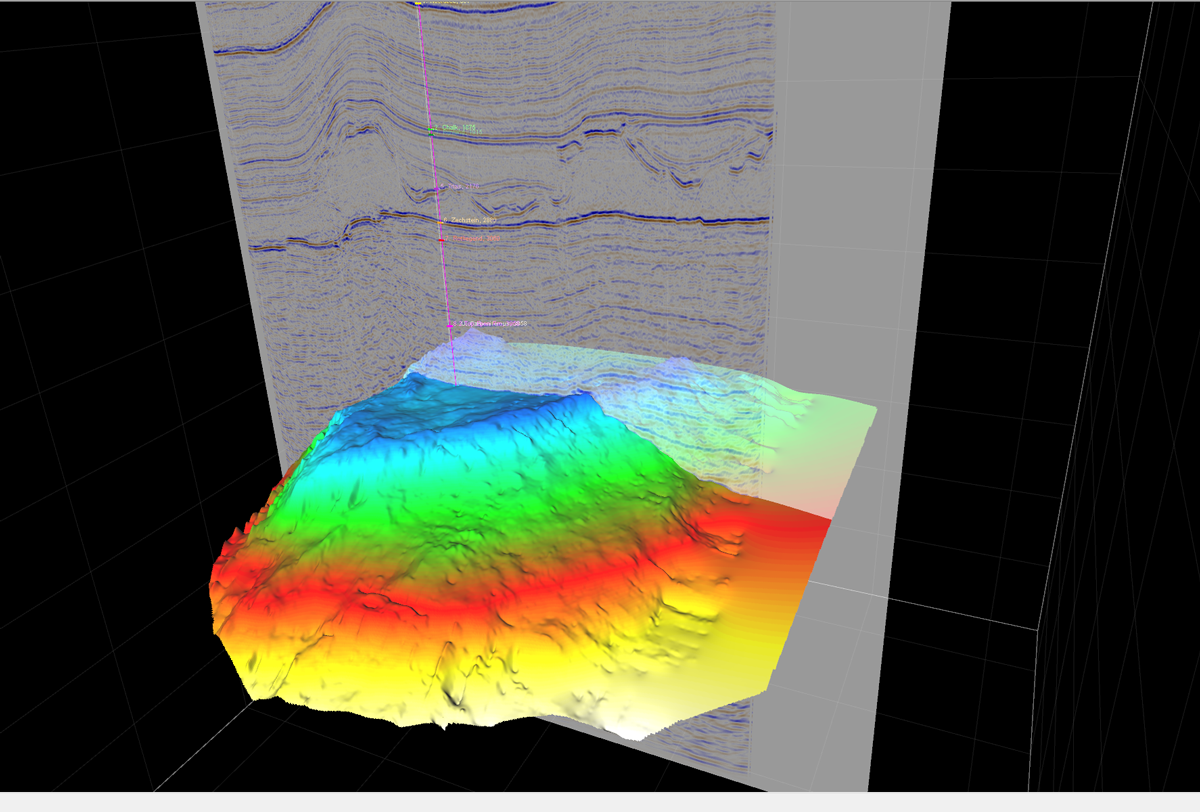
The additionally commissioned doubler drill (production and injection drill) is connected to the drillings commissioned by SWM in the spring of 2017. The drillings will go into a depth of 4,000 metres.
Preparations for the initial two doubler drills are currently underway on the site of Munich's oldest conventional thermal power station HKW South, which is located in Munich's Sendling district. Drilling is projected to start within the next couple of weeks.
The plan is for the new geothermal power plant to produce approximately 50 MW of environmentally friendly district heating for around 80,000 Munich households. The new plant is expected to go online in 2020.
Read More.........
Wednesday, April 11, 2018
Turkey: 4,000 MW of Geothermal Energy by 2030 is New Target
Turkey's geothermal target for 2030 quadruples (World Bulletin)
![]() |
| (Courtesy CIA.gov) |
Turkey has already superseded its 2023 target for geothermal installed capacity which prompted a revision up of the 2030 target to 4,000 MW, General Directorate of Renewable Energy (YEGM) chief said on Wednesday.
Speaking at the opening session of Geothermal Turkey Workshop and Congress, held in Ankara, Oguz Can, the general manager of the YEGM, said that Turkey had a geothermal target for 2023 of 1,000 MW of installed capacity which has already been achieved.
"We, as the Ministry of Energy and Natural Resources, think that geothermal energy is a sector in which strategic and important developments need to continue,” Can explain.
He also added that in terms of capacity, the introduction and creation of new areas should be carried out systematically.
Can recommended that geothermal energy be used not only for electricity production but expanded out for the use in the agricultural sector.
Labels:
energy,
geothermal,
geothermal plant,
geothermal power,
GRC,
renewable
Location:
Turkey
Tuesday, April 10, 2018
Pakistan: Potential for Geothermal Energy Development
Renewables Readiness Assessment: Pakistan (IRENA)
Pakistan’s geothermal resources remain largely unexplored. No comprehensive assessment of the potential has been made nor does a policy framework exist to encourage private participation in the sector. Some scientific studies have located potential geothermal resource areas in the country.
Most of the world’s high enthalpy geothermal resources are within the seismic belts associated with zones of crustal weakness. One example is the seismotectonic belt that passes through Pakistan, which has a long history of geotectonic events (Zaigham, Nayyar and Hisamuddin, 2009). Thus the country in all probability has commercially exploitable geothermal resources.
The sporadic efforts to assess the potential have all concentrated on identifying geothermal phenomena and locating production zones. However, assessors need to go further and integrate their efforts. They need to estimate the size of the resource base, determine heat content of fluids and compile a comprehensive database (Zaigham, 2005).
Conscious of geothermal as a potentially valuable renewable energy resource, Pakistan became a member of the Global Geothermal Alliance in December 2015 and adopted the Florence Declaration at the alliance’s high-level ministerial
meeting in Florence, Italy, in October 2017. In so doing, Pakistan has joined the global commitment to a fivefold increase in geothermal power generation and a 100% increase in geothermal heat by 2030.
Read More..........
Pakistan’s geothermal resources remain largely unexplored. No comprehensive assessment of the potential has been made nor does a policy framework exist to encourage private participation in the sector. Some scientific studies have located potential geothermal resource areas in the country.
Most of the world’s high enthalpy geothermal resources are within the seismic belts associated with zones of crustal weakness. One example is the seismotectonic belt that passes through Pakistan, which has a long history of geotectonic events (Zaigham, Nayyar and Hisamuddin, 2009). Thus the country in all probability has commercially exploitable geothermal resources.
The sporadic efforts to assess the potential have all concentrated on identifying geothermal phenomena and locating production zones. However, assessors need to go further and integrate their efforts. They need to estimate the size of the resource base, determine heat content of fluids and compile a comprehensive database (Zaigham, 2005).
Conscious of geothermal as a potentially valuable renewable energy resource, Pakistan became a member of the Global Geothermal Alliance in December 2015 and adopted the Florence Declaration at the alliance’s high-level ministerial
meeting in Florence, Italy, in October 2017. In so doing, Pakistan has joined the global commitment to a fivefold increase in geothermal power generation and a 100% increase in geothermal heat by 2030.
Read More..........
Labels:
energy,
geothermal,
geothermal plant,
geothermal power,
GRC,
renewable
Location:
Pakistan
Science & Technology: Increasing Efficiency of Organic Rankine Cycle Geothermal Turbines
Performance Analysis Of Organic Rankine Cycles Using R600/R601a Mixtures With Liquid-Separated Condensation (Science Trends)
"Performance analysis of organic Rankine cycles using R600/R601a mixtures with liquid-separated condensation", Applied Energy Volume 190, 15 March 2017, Pages 376-389. By Jian Li, Yuanyuan Duan, and Zhen Yang from Tsinghua University, and Qiang Liu from China University of Petroleum. https://doi.org/10.1016/j.apenergy.2016.12.131.
Liquid-separated condensation is an emerging enhanced heat transfer method that separates the condensed fluid from the vapor-liquid mixture during condensation. It reduces the condensing film thickness on the cooling surface and increases the vapor quality.
The key idea is to use the excellent heat transfer characteristics of high-quality vapor to increase the condensation heat transfer coefficient, as shown in the figure above. Separating the condensed fluid also reduces the flow resistance during condensation. Therefore, liquid-separated condensation can simultaneously increase the condensation heat transfer coefficient and reduce the pressure drop.
Denmark: Fund Management Company Raises EUR 3.5 Billion for Renewable Energy Investments
Final Close of Copenhagen Infrastructure III with EUR 3.5 billion (Recharge)
Copenhagen Infrastructure Partners’ (CIP) new fund, Copenhagen Infrastructure III (CI III), held a final close on March 23, 2018 at the EUR 3.5 billion hard cap exceeding the EUR 3.0 billion target fund size. The fund obtained commitments from 42 institutional investors comprised of pension companies, insurance companies, family offices, and asset/fund managers. The fund held its first close 12 months ago.
CI III has been formed to primarily invest in projects in regulated and long term contracted energy infrastructure and has a strong investment pipeline which includes ownership or exclusivity rights to more than 15 projects currently being developed towards financial close. The portfolio amounts to around EUR 3 billion in potential investment volume and provides diversification across offshore wind, onshore wind, solar PV, biomass/waste-to-energy, geothermal, and reserve capacity in North America, Northwestern Europe and Asia Pacific. The investment strategy of CI III will be a continuation of the successful predecessor fund, CI II, which is committed and on track to provide investors with long term stable cash flows and above target investment returns.
Germany: Combined Heat and Power Tender for Projects Using Geothermal Energy or Heat pumps and Other Renewable Heat Sources
Germany starts 25-MW tender for CHP with renewable heat source (Renewables Now)
![]() |
| (Courtesy CIA.gov) |
Germany today announced the start of its first innovative combined heat and power (CHP) tender in which projects have to use heat sources such as solar thermal, geothermal energy or heat pumps.
The tender will award contracts to 25 MW of projects, which will include a cogeneration plant, an innovative renewable heat source and a power generator. The deadline for offers is June 1 and the bid cap has been set at EUR 0.12 (USD 0.15) per kWh, Germany’s Federal Network Agency, or the Bundesnetzagetur, said.
The innovative CHP tenders in Germany are to help determine the role of CHP plants in decarbonising power and heat supply, the agency said.
In parallel with this tender, the Bundesnetzagetur will also hold Germany’s second normal CHP auction. The quota there is a bit over 93 MW and the maximum bidding price is lower, at EUR 0.07/kWh. The deadline for bids is the same.
Labels:
energy,
geothermal plant,
geothermal power,
GRC,
renewable
Location:
Germany
Kenya: GDC Secures 40-Year Rights to Develop Geothermal Energy at Menengai
GDC secures 40-year lease for power generation site (Hivisasa)
Geothermal Development Corporation (GDC) has secured the lease area for the geothermal power generation project in Menengai for 40 years.
Speaking at the site, Managing Director Joseph Ole Nchoe said that Kenya Forest Service has granted them the rights and would go a long way to developing the project which is of national importance.
The last hurdle has been addressed after the African Development Bank offered to offer credit guarantees to the three Independent Power Producers to each start the process of constructing 35-megawatts capacity power plant.
The GDC MD expects that the three IPPs will complete construction of the power plants and start generating 105 megawatts to the national grid by end of next year.
Labels:
energy,
geothermal,
geothermal plant,
geothermal power,
GRC,
renewable
Location:
Menengai, Kenya
USA: Feedback Sought on Key Barriers That May Prevent Long-Term Access to Low-Cost Water Supplies
DOE Seeks Feedback on the Use of Challenges and Prize Competitions to Address Critical Water Issues (GTO)
The U.S. Department of Energy (DOE) is seeking feedback on key barriers that may prevent long-term access to low-cost water supplies that could be best addressed through challenges and prize competitions. Challenges and prize competitions rely on competitive structures to drive innovation among a broad set of participants and usually offer financial and/or other rewards to winners and finalists.
This Request for Information (RFI) was first released in conjunction with a roundtable discussion led by Energy Secretary Rick Perry on the use of federal prizes and challenges to drive innovation, particularly when it comes to critical water issues. DOE may use the information provided through this RFI to develop challenges and prize competitions to address these key water issues.
Responses to this RFI must be submitted electronically to WaterPrizeRFI@ee.doe.gov no later than 5:00 p.m. EST on May 14, 2018.
Monday, April 9, 2018
USA, California: New Fact Sheet on the Long Valley Caldera Geothermal System
Hot water in the Long Valley Caldera—The benefits and hazards of this large natural resource (USGS)
The volcanic processes that have shaped the Long Valley Caldera in eastern California have also created an abundant supply of natural hot water. This natural resource provides benefits to many users, including power generation at the Casa Diablo Geothermal Plant, warm water for a state fish hatchery, and beautiful scenic areas such as Hot Creek gorge for visitors.
However, some features can be dangerous because of sudden and unpredictable changes in the location and flow rate of boiling water. The U.S. Geological Survey monitors several aspects of the hydrothermal system in the Long Valley Caldera including temperature, flow rate, and water chemistry.
Evans, W.C., Hurwitz, S., Bergfeld, D., and Howle, J.F., 2018, Hot water in the Long Valley Caldera—The benefits and hazards of this large natural resource: U.S. Geological Survey Fact Sheet 2018–3009, 4 p., https://doi.org/10.3133/fs20183009. ISSN: 2327-6932 (online)
The volcanic processes that have shaped the Long Valley Caldera in eastern California have also created an abundant supply of natural hot water. This natural resource provides benefits to many users, including power generation at the Casa Diablo Geothermal Plant, warm water for a state fish hatchery, and beautiful scenic areas such as Hot Creek gorge for visitors.
However, some features can be dangerous because of sudden and unpredictable changes in the location and flow rate of boiling water. The U.S. Geological Survey monitors several aspects of the hydrothermal system in the Long Valley Caldera including temperature, flow rate, and water chemistry.
Evans, W.C., Hurwitz, S., Bergfeld, D., and Howle, J.F., 2018, Hot water in the Long Valley Caldera—The benefits and hazards of this large natural resource: U.S. Geological Survey Fact Sheet 2018–3009, 4 p., https://doi.org/10.3133/fs20183009. ISSN: 2327-6932 (online)
USA: Register for Geothermal Technologies Office: Quarterly Update - 23 April 2018
Geothermal Technologies Office: Quarterly Update - April 2018
Monday, April 23, 2018 - 2:00-3:00 PM EST
The Office of Energy Efficiency and Renewable Energy’s (EERE) Geothermal Technologies Office (GTO) is pleased to announce the second installment of quarterly updates presented by GTO Director Dr. Susan Hamm on April 23, 2018. In an effort to keep the geothermal community fully updated on progress at the U.S. Department of Energy, Dr. Hamm will highlight ongoing efforts within GTO.
This quarterly update will touch upon a range of topics, including:
Register here: Register
Feel free to submit questions ahead of the Quarterly Update via the GTO mailbox. Please email questions to DOE.Geothermal@ee.doe.gov with the subject line “Q2 Question”.
This quarterly update will touch upon a range of topics, including:
- FY 2018 and FY 2019 Budget Overviews
- Peer Review
- SBIR/STTR
- Project updates including: FORGE, DDU, and EGS Collab
Register here: Register
Feel free to submit questions ahead of the Quarterly Update via the GTO mailbox. Please email questions to DOE.Geothermal@ee.doe.gov with the subject line “Q2 Question”.
Make Sure of Your Booth at the Geothermal Energy Event of the Year
GRC Annual Meeting & Expo
14-17 October, 2018, Peppermill Resort Spa Casino, Reno, Nevada, USA
20 exhibitors have signed up for the geothermal energy event of the year:
In conjunction with the Annual Meeting, the GRC will also have an expo in which companies can promote projects, equipment, services, and technology to leading geothermal energy scientists, producers, renewable energy industry stakeholders, regulators, utilities, and key associated business leaders around the world.
Contact Ann Lay Email: alay@geothermal.org, Phone: (530) 758-2360 ext. 100 if you have any questions.
14-17 October, 2018, Peppermill Resort Spa Casino, Reno, Nevada, USA
20 exhibitors have signed up for the geothermal energy event of the year:
In conjunction with the Annual Meeting, the GRC will also have an expo in which companies can promote projects, equipment, services, and technology to leading geothermal energy scientists, producers, renewable energy industry stakeholders, regulators, utilities, and key associated business leaders around the world.
Contact Ann Lay Email: alay@geothermal.org, Phone: (530) 758-2360 ext. 100 if you have any questions.
Netherlands: Study Into Ultra Deep Geothermal Energy Resources Completed
T&A study maps the potential of Ultra Deep Geothermal energy (News Release)
T&A Survey/AmsterdamPG has performed a non-proprietary study into the potential and the risk of Ultra Deep Geothermal Energy (UDG) in the Netherlands.
The emphasis is on the Dinantian Limestone, a promising reservoir for UDG at a depth of about four kilometers. For UDG we are looking for temperatures of at least 150°C. Such temperatures are not feasible for current geothermal systems in the Netherlands, but are essential for various industrial applications and for the production of electricity.
Read More..........
T&A Survey/AmsterdamPG has performed a non-proprietary study into the potential and the risk of Ultra Deep Geothermal Energy (UDG) in the Netherlands.
The emphasis is on the Dinantian Limestone, a promising reservoir for UDG at a depth of about four kilometers. For UDG we are looking for temperatures of at least 150°C. Such temperatures are not feasible for current geothermal systems in the Netherlands, but are essential for various industrial applications and for the production of electricity.
Read More..........
Labels:
energy,
geothermal,
geothermal plant,
geothermal power,
GRC,
renewable
Location:
Netherlands
Netherlands: 80 Degrees C Geothermal Water Helps Grow Dutch Soft Fruit
Sustainable energy in the soft fruit sector (News Release)
At the end of February Tuinbouwtoeleverancier Mertens organized an information meeting for growers of soft fruit.
The meeting focused on making cultivation more sustainable. Californië BV, in the person of Peter Smulders, was asked to give insight into the sustainability opportunities in the energy field. And in addition to tell a little more about Geothermal Energy, one of the most important pillars on which energy sustainability is based. With two doublets, Californië is one of the few areas where this energy source is used optimally and where there is a lot of experience.
Water at 80-85°C is pumped up and distributed among the horticultural entrepreneurs and then subsequently pumped back down into the ground. The return temperature is approximately 30°C. During the year, 70-80% of the energy consumption can be supplied by geothermal energy.
United Kingdom: Glasgow Geothermal Energy Research Field Site to Help District Heating Research
Abandoned collieries could hold key to heating UK homes (The Guardian)
Geologists aim to tap reservoir in tunnels under Glasgow
Scientists are finalising plans to exploit the vast reservoir of warm water that fills a labyrinth of disused mines and porous rock layers underneath Glasgow.
They believe this subterranean store of naturally heated water could be used to warm homes in the city. If the system proves successful, such water could then be exploited in other cities and towns across Britain, they say.
More Information.........
Geologists aim to tap reservoir in tunnels under Glasgow
Scientists are finalising plans to exploit the vast reservoir of warm water that fills a labyrinth of disused mines and porous rock layers underneath Glasgow.
They believe this subterranean store of naturally heated water could be used to warm homes in the city. If the system proves successful, such water could then be exploited in other cities and towns across Britain, they say.
More Information.........
Labels:
energy,
geothermal,
geothermal plant,
geothermal power,
GRC,
renewable
Location:
Glasgow, UK
USA, California: Opportunity to Tour Geothermal Power Plant in The Geysers
April 21 Earth Day celebration planned (Lake County News)
The annual community Earth Day event will take place at Calpine’s Geothermal Visitor Center on Saturday, April 21.
The free community event, which celebrates Lake County sustainability, will take place from 10 a.m. to 3 p.m.
It will feature guided bus tours to a geothermal power plant, live music, Middletown community garden tours and booths.
To participate in the bus tours, reservations are required; email geysers@calpine.com.
The annual community Earth Day event will take place at Calpine’s Geothermal Visitor Center on Saturday, April 21.
The free community event, which celebrates Lake County sustainability, will take place from 10 a.m. to 3 p.m.
It will feature guided bus tours to a geothermal power plant, live music, Middletown community garden tours and booths.
To participate in the bus tours, reservations are required; email geysers@calpine.com.
The Calpine Geothermal Visitor Center is located at 15500 Central Park Road, Middletown, telephone 707-987-4270.
China: First Hot Dry Rock Well Reaches 4,387 Meters and 185℃
Geothermal: First HDR Well Drilled to TD in Hainan, China by LandOcean (News Release)
The pilot well for a Hot-Dry-Rock (HDR) well was drilled in mid March, in Hainan Province, a south-eastern province of China, by LandOcean Hainan Company, a subsidiary of Land Ocean Energy Service Co. Ltd, to a true depth (TD) of 4,387 meters, and a temperature of 185℃ (365℉).
This is the first time for China to conduct such an experimental campaign. LandOcean owns the whole intellectual propriety of such technology. This well remarks the first HDR well in Hainan Province and first success in development of HDR geothermal energy and a milestone in the country’s endeavor to development of HDR geothermal energy.
Read More.........
![]() |
| (Courtesy LandOcean Hainan Company) |
This is the first time for China to conduct such an experimental campaign. LandOcean owns the whole intellectual propriety of such technology. This well remarks the first HDR well in Hainan Province and first success in development of HDR geothermal energy and a milestone in the country’s endeavor to development of HDR geothermal energy.
Read More.........
Labels:
energy,
geothermal,
geothermal plant,
geothermal power,
GRC,
renewable
Location:
Hainan, China
Poland: Sieradzu Geothermal District Heating Project Advances
Geotermia w Sieradzu. Kolejny przetarg rozstrzygnięty. Celem wykorzystanie ciepła spod ziemi do ogrzewania mieszkań - Geothermal in Sieradz. Another tender decided. For the purpose of using heat from under the ground for heating apartments (Naszemiasto)
Zgodnie z umową Pro-Invest Solutions obejmuje nadzór i dozór geologiczny w trakcie realizacji robót związanych z wykonaniem otworu badawczego. Firma ma także kontrolować zgodność prowadzonych prac z projektem robót geologicznych. Efektem nadzoru ma być przygotowanie kompletnej dokumentacji, która będzie podstawą do kolejnych prac. W tym przypadku ze strony Przedsiębiorstwa Energetyki Cieplnej w Sieradzu, które zamierza starać się o pozyskanie środków zewnętrznych na przygotowanie sieci cieplnej do potrzeb wody geotermalnej – wyjaśnia sieradzki magistrat.
(From Google Translation) The agreement with Pro-Invest Solutions includes supervision and geological supervision during the implementation of work related to the construction of a research well. The company is also to control the compliance of the work carried out with the geological work project. The effect of supervision is to prepare complete documentation, which will be the basis for subsequent work. In this case, from the side of Przedsiębiorstwo Energetyki Cieplnej in Sieradz, which intends to apply for obtaining external funds for the preparation of the geothermal heat network - explains the municipality of Sieradz.
Sweden: Geothermal Energy Company Wins International Award
Ten Winners of The New Energy Pioneers Unveiled at Bloomberg New Energy Finance Summit in New York City (News Release)
Bloomberg New Energy Finance (BNEF) is pleased to announce its selection of the 2018 New Energy Pioneers – innovators that are revolutionizing the energy, transport, and technology sectors. A geothermal energy company is included.
Climeon (Sweden) has commercialized the extraction of electricity from low-temperature heat (70-120 degrees Celsius), used in the context of waste heat or geothermal power.
“Climeon’s vision is to become the number 1 climate solver. To reach this we have to be true pioneers. Becoming a Bloomberg New Energy Pioneer confirms that we are on the right path and it really makes us very proud.” – Thomas Ostrom, CEO, Climeon
Iran: Turbine Being Installed at 5 MW Geothermal Power Plant
Iran building geothermal power plant in Ardabil (Iran Daily)
Iran has located three sites for the construction of geothermal power plants and is building the first such facility in the northwestern province of Ardabil.
According to Fars News Agency, the head of the Renewable Energy Department of Niroo Research Institute, Shahriar Bozorgmehri said on Sunday that the five MW geothermal power plant under construction in Meshkinshahr was designed several years ago and its turbine is being installed.
He elaborated that Iranian experts have identified three suitable sites, including Meshkinshahr, Damavand and Sistan-Balouchestan, for the construction of geothermal power plants.
Read More.........
From the Global Geothermal News archives:
Iran has located three sites for the construction of geothermal power plants and is building the first such facility in the northwestern province of Ardabil.
According to Fars News Agency, the head of the Renewable Energy Department of Niroo Research Institute, Shahriar Bozorgmehri said on Sunday that the five MW geothermal power plant under construction in Meshkinshahr was designed several years ago and its turbine is being installed.
He elaborated that Iranian experts have identified three suitable sites, including Meshkinshahr, Damavand and Sistan-Balouchestan, for the construction of geothermal power plants.
Read More.........
From the Global Geothermal News archives:
- Monday, February 27, 2017 - Iran: Enel Equipment for Geothermal Power Plant Will be Installed Soon
- Monday, January 25, 2016 - Iran: Enel Could Invest in Geothermal Power Project
- Friday, October 23, 2015 - Iran: 800 MW of Geothermal Energy Could be Developed
Friday, April 6, 2018
Iceland: Videos - A Young Professional from Slovakia and his Passion for Geothermal Energy
Icelandic Geothermal Pioneers on Record
By Miki Plichta, Digital Marketing Consultant, Bratislava, Slovak Republic
100% of Iceland's electricity comes from renewable sources, making it the only country in the world to do so. That fact leads many documentarists to explore Icelandic exceptionality, mainly the island's geothermal energy use. Miki Plichta – a young marketing professional from Slovakia (Central Europe) embarked on an audacious video expedition and interviewed various geothermal energy pioneers on site.
His first steps led to Hellisheidi Power Station – the third-largest geothermal power station in the world. There, he found out that 90% of Iceland's homes use geothermal water to heat their houses and keep pavements snow-free over winter. In Iceland on average, 6,500 feet is a standard depth of a borehole to reach hot water. However, in Hellisheidi area, they go down for the most profound hole to 11,000 feet. Miki Plichta explored the piping system in Reykjavík with approximate length of 1 800 miles. It ensures that every single household has hot water pipes without the need for extra water tanks.
(Video 4:02 Minutes)
Miki also experienced the taste of Earth Kitchen. There, he had a talk with terrestrial MasterChef, who met his vision to build the geothermal kitchen outside. First, they experimented with baking the pieces of bread, then they proceed with unique types of cakes like sponge or chocolate cake. Now, they are preparing tailored-cooked bread for Icelandic Airlines. Earth cooking can get heat up to 340 °F hot and use oven run by the geothermal power that is spending 0 kW.
(Video 4:22 Minutes)
The agriculture sector in Iceland is well-known for its independent model. Meanwhile, the cultivation on Iceland covers a significant proportion of its total consumption (e.g., 70% of tomatoes, 50% of lettuce salads). Miki Plichta visited Friðheimar farm which grows tomatoes all year round, despite Iceland’s dark winters, under artificial lighting in greenhouses. The secret lies in the use of hot water to warm these greenhouses and electricity production. They pursue eco-friendly model, where the second class tomatoes are re-purposed for jam sauces, drinks or food souvenirs.
(Video 3:07 Minutes)
Miki Plichta enjoyed hot baths in Secret Lagoon with boiling water coming automatically from the ground. The upcoming temperature of the water is 212 °F. Therefore they have to pull it into the tank and mix it with colder water to get a human-friendly temperature. The founder of baths explained that there are no seasonal changes due to the Lagoon location within the Golden Circle area.
(Video 1:00 Minute)
The author of the interviews Miki Plichta believes that energy beneath our feet needs to gain a stronger branding on a global scale. His primary vision is to spread the awareness of geothermal heat cascade from electricity production to aquaculture. He hopes that prove from geothermal Iceland could make the meaningful impact in the transitional process from carbohydrates to renewables.
100% of Iceland's electricity comes from renewable sources, making it the only country in the world to do so. That fact leads many documentarists to explore Icelandic exceptionality, mainly the island's geothermal energy use. Miki Plichta – a young marketing professional from Slovakia (Central Europe) embarked on an audacious video expedition and interviewed various geothermal energy pioneers on site.
His first steps led to Hellisheidi Power Station – the third-largest geothermal power station in the world. There, he found out that 90% of Iceland's homes use geothermal water to heat their houses and keep pavements snow-free over winter. In Iceland on average, 6,500 feet is a standard depth of a borehole to reach hot water. However, in Hellisheidi area, they go down for the most profound hole to 11,000 feet. Miki Plichta explored the piping system in Reykjavík with approximate length of 1 800 miles. It ensures that every single household has hot water pipes without the need for extra water tanks.
(Video 4:02 Minutes)
Miki also experienced the taste of Earth Kitchen. There, he had a talk with terrestrial MasterChef, who met his vision to build the geothermal kitchen outside. First, they experimented with baking the pieces of bread, then they proceed with unique types of cakes like sponge or chocolate cake. Now, they are preparing tailored-cooked bread for Icelandic Airlines. Earth cooking can get heat up to 340 °F hot and use oven run by the geothermal power that is spending 0 kW.
(Video 4:22 Minutes)
The agriculture sector in Iceland is well-known for its independent model. Meanwhile, the cultivation on Iceland covers a significant proportion of its total consumption (e.g., 70% of tomatoes, 50% of lettuce salads). Miki Plichta visited Friðheimar farm which grows tomatoes all year round, despite Iceland’s dark winters, under artificial lighting in greenhouses. The secret lies in the use of hot water to warm these greenhouses and electricity production. They pursue eco-friendly model, where the second class tomatoes are re-purposed for jam sauces, drinks or food souvenirs.
(Video 3:07 Minutes)
Miki Plichta enjoyed hot baths in Secret Lagoon with boiling water coming automatically from the ground. The upcoming temperature of the water is 212 °F. Therefore they have to pull it into the tank and mix it with colder water to get a human-friendly temperature. The founder of baths explained that there are no seasonal changes due to the Lagoon location within the Golden Circle area.
(Video 1:00 Minute)
The author of the interviews Miki Plichta believes that energy beneath our feet needs to gain a stronger branding on a global scale. His primary vision is to spread the awareness of geothermal heat cascade from electricity production to aquaculture. He hopes that prove from geothermal Iceland could make the meaningful impact in the transitional process from carbohydrates to renewables.
Labels:
energy,
geothermal,
geothermal plant,
geothermal power,
GRC
Location:
Iceland
Denmark: Company Awarded 6-Year Geothermal Exploration License
Geothermal Energy license application, Lolland-Falster Area (LinkedIn)
By Peter Veenhof, Owner at Nail Petroleum BV
Nail Resources Denmark BV, founded by current shareholders Nail Petroleum and Danica Resources (NRDBV), is pleased to announce that it has been awarded a 6-year geothermal license covering most of the Lolland-Falster area in Denmark.
Following the award, Beet Energy (having WellPerform ApS as its main shareholder) will join as shareholder. NRDBV will develop plans for geothermal projects in the license area with a view to develop low cost shallow geothermal projects in Denmark.
Read More.........
By Peter Veenhof, Owner at Nail Petroleum BV
Nail Resources Denmark BV, founded by current shareholders Nail Petroleum and Danica Resources (NRDBV), is pleased to announce that it has been awarded a 6-year geothermal license covering most of the Lolland-Falster area in Denmark.
Following the award, Beet Energy (having WellPerform ApS as its main shareholder) will join as shareholder. NRDBV will develop plans for geothermal projects in the license area with a view to develop low cost shallow geothermal projects in Denmark.
Read More.........
Labels:
energy,
geothermal,
geothermal plant,
geothermal power,
GRC,
renewable
Location:
Denmark
Australia: Nice Schematic of Geothermal Resources in Western Australia
Oil, gas and geothermal (Government of Western Australia)
The Geological Survey of Western Australia (GSWA) assesses and promotes the prospectivity of petroleum and geothermal energy in the sedimentary basins of Western Australia. Assessment is based on the interpretation of existing and new data that is gathered on geology, geophysics, geochemistry and temperature.
Labels:
energy,
geothermal,
geothermal plant,
geothermal power,
GRC,
renewable
Location:
WA, Australia
France: A Second Well to be Drilled at Champigny Geothermal District Heating Project
Champigny : ça chauffe pour le second puits de géothermie - Champigny: it's heating up for the second geothermal well (Le Parisien)
Le second puits servira au départ aux Cités-jardins, boulevard Stalingrad et tout autour, puis le service pourrait être étendu vers le centre-ville et la mairie. Cet équipement, qui nécessite un investissement d’environ 20 M€, restera totalement public, comme l’est le premier puits de Champigny.
(From Google translation) The second well will initially serve the Garden Cities, Stalingrad Boulevard and all around, then the service could be extended to the city center and town hall. This equipment, which requires an investment of approximately 20 M €, will remain totally public, as is the first well of Champigny.
Thursday, April 5, 2018
Geothermal Energy Magazine Now Available Online
Now Available - GRC Bulletin - Vol. 47, No. 2, March/April 2018
The latest GRC Bulletin has been published. Produced by the Geothermal Resources Council since 1972, the Bulletin is the voice of the global geothermal energy community.
In this issue:
The latest GRC Bulletin has been published. Produced by the Geothermal Resources Council since 1972, the Bulletin is the voice of the global geothermal energy community.
In this issue:
- Inside Geothermal: 12 pages of geothermal energy news from around the world.
- Temperature Recovery after Long-term Injection: Case History from Soda Lake, Nevada, by James Lovekin, et al.
- Corporate Focus - GeothermEx and Cyrq Energy.
- Geothermal History in the Making - a hot, dry rock geothermal energy program in 1977.
- Adventures Within the Geothermal Community - A Q&A with Cary Lindsey.
The GRC Bulletin is only available online to GRC members. To make sure of your copy join the GRC today!
Mongolia: Iceland to Advise on Geothermal Energy Development
Geothermal Water Use In Energy Sector Discussed With Iceland (Montsame)
Beginning the meeting, Ambassador Gunnar Snorri Gunnarsson said “I’m pleased with the immediate reception of the Deputy Energy Minister as energy is the main industry of Iceland. Our country used to solve the heating with geothermal water and we do not use coal at all. There is almost no possibility to export the energy as the country is surrounded by the sea. However, in recent years we have been implementing joint projects and programs with Europe, Africa, South Africa and China. We can share experiences of geothermal water sector and cooperate on this matter.”
Deputy Minister T.Gantulga noted that only few studies on geothermal water were conducted and an experimental project on using thermal properties of soil is being successfully implemented in Tsetserleg soum of Tuv aimag. The Deputy Minister emphasized that it is possible to conduct joint experiments on introducing geothermal water use, which ensures the ecological, environmental and financial sustainability.
The parties agreed to train Mongolian specialists on this matter in Iceland.
Read More........
![]() |
| (Courtesy CIA.gov) |
Deputy Minister T.Gantulga noted that only few studies on geothermal water were conducted and an experimental project on using thermal properties of soil is being successfully implemented in Tsetserleg soum of Tuv aimag. The Deputy Minister emphasized that it is possible to conduct joint experiments on introducing geothermal water use, which ensures the ecological, environmental and financial sustainability.
The parties agreed to train Mongolian specialists on this matter in Iceland.
Read More........
Labels:
energy,
geothermal,
geothermal plant,
geothermal power,
GRC,
renewable
Location:
Mongolia
Global: Geothermal Project Financing Decreased by 36% Between 2016 and 2017 - Report
Global Trends in Renewable Energy Investment Report 2018 (Frankfurt School-UNEP Collaborating Centre)
The Global Trends in Renewable Energy Investment 2018 report, published on April 5th by UN Environment, the Frankfurt School-UNEP Collaborating Centre, and Bloomberg New Energy Finance, recorded mixed results for the geothermal energy sector.
Geothermal project financing decreased by 36% between 2016 and 2017, with $1.4 billion invested, the lowest level for four years. Some 11 significant projects reached financial close last year, with Indonesia and the Netherlands accounting for three projects each.
Indonesia’s Supreme Energy Muara Laboh Geothermal Plant Phase I, with 80 MW of capacity and costing $600 million, was the largest geothermal project in 2017, and the 55 MW ICE Borinquen I Geothermal Project in Costa Rica for $230 million came in second place. Indonesia holds 40% of the world’s geothermal power potential, according to estimates, and the country aims to install 4.4 GW of that technology between 2017 and 2026.
Favorable regulation for geothermal development includes expedited permitting for drilling rights, although a lack of reliable mapping can hinder exploration activity.
While investor exits collapsed in 2017, private equity buy-outs quintupled to $11.2 billion – a record high. Geothermal’s 19-fold rise to $1.9 billion was largely explained by two big deals in Indonesia, both led by Star Energy Group.
It refinanced the 227 MW Star Wayang Windu Geothermal Project with $440 million in debt from an international banking consortium, and secured $309 million to buy the 647 MW Darajat Salak Star Energy Geothermal Portfolio from another group of banks.
Read More.........
The Global Trends in Renewable Energy Investment 2018 report, published on April 5th by UN Environment, the Frankfurt School-UNEP Collaborating Centre, and Bloomberg New Energy Finance, recorded mixed results for the geothermal energy sector.Geothermal project financing decreased by 36% between 2016 and 2017, with $1.4 billion invested, the lowest level for four years. Some 11 significant projects reached financial close last year, with Indonesia and the Netherlands accounting for three projects each.
Indonesia’s Supreme Energy Muara Laboh Geothermal Plant Phase I, with 80 MW of capacity and costing $600 million, was the largest geothermal project in 2017, and the 55 MW ICE Borinquen I Geothermal Project in Costa Rica for $230 million came in second place. Indonesia holds 40% of the world’s geothermal power potential, according to estimates, and the country aims to install 4.4 GW of that technology between 2017 and 2026.
Favorable regulation for geothermal development includes expedited permitting for drilling rights, although a lack of reliable mapping can hinder exploration activity.
While investor exits collapsed in 2017, private equity buy-outs quintupled to $11.2 billion – a record high. Geothermal’s 19-fold rise to $1.9 billion was largely explained by two big deals in Indonesia, both led by Star Energy Group.
It refinanced the 227 MW Star Wayang Windu Geothermal Project with $440 million in debt from an international banking consortium, and secured $309 million to buy the 647 MW Darajat Salak Star Energy Geothermal Portfolio from another group of banks.
Read More.........
Global: IRENA Records a 5% Increase in Geothermal Energy Capacity in 2017
Global Renewable Generation Continues its Strong Growth, New IRENA Capacity Data Shows (IRENA)
By the end of 2017, global renewable generation capacity increased by 167 GW and reached 2,179 GW worldwide. This represents a yearly growth of around 8.3%, the average for seven straight years in a row, according to new data released by the International Renewable Energy Agency (IRENA). Renewable Capacity Statistics 2018 is the most comprehensive, up-to-date and accessible figures on renewable energy capacity statistics. It contains nearly 15,000 data points from more than 200 countries and territories.
Geothermal power capacity increased by 644 MW in 2017, with major expansions in Indonesia (306 MW) and Turkey (243 MW), said the report.
According to the IRENA statistics geothermal energy rose from 12,249 MW in 2016 to 12,894 MW capacity in 2017, an increase of 5.3%. The USA remains the top producer with 2,488 MW followed by Indonesia (1,950 MW), the Philippines (1,928 MW), Turkey (1,064 MW) and New Zealand (986 MW).
The renewable power capacity data shown in these tables represents the maximum net generating capacity of power plants and other installations that use renewable energy sources to produce electricity. For most countries and technologies, the data reflects the capacity installed and connected at the end of the calendar year.
Read More..........
By the end of 2017, global renewable generation capacity increased by 167 GW and reached 2,179 GW worldwide. This represents a yearly growth of around 8.3%, the average for seven straight years in a row, according to new data released by the International Renewable Energy Agency (IRENA). Renewable Capacity Statistics 2018 is the most comprehensive, up-to-date and accessible figures on renewable energy capacity statistics. It contains nearly 15,000 data points from more than 200 countries and territories.
Geothermal power capacity increased by 644 MW in 2017, with major expansions in Indonesia (306 MW) and Turkey (243 MW), said the report.
According to the IRENA statistics geothermal energy rose from 12,249 MW in 2016 to 12,894 MW capacity in 2017, an increase of 5.3%. The USA remains the top producer with 2,488 MW followed by Indonesia (1,950 MW), the Philippines (1,928 MW), Turkey (1,064 MW) and New Zealand (986 MW).
The renewable power capacity data shown in these tables represents the maximum net generating capacity of power plants and other installations that use renewable energy sources to produce electricity. For most countries and technologies, the data reflects the capacity installed and connected at the end of the calendar year.
Read More..........
Wednesday, April 4, 2018
USA: Oregon, Washington, Idaho: Hydroelectric Dams on Snake and Columbia Rivers can be Replaced by Geothermal Energy and other Renewables
Reliable and affordable clean energy options that help restore salmon and protect the environment (The NW Energy Coalition)
Wild salmon and orca whales are threatened with extinction owing partly to the presence of four hydroelectric dams on the lower Snake River in Washington. The dams create an impediment to fish migration and worsen the warming of river water, which also inhibits migration. As a result, salmon populations have declined by more than 90%. One solution that would give salmon a fighting chance, is the removal of the dams.
This study was undertaken to investigate the technical feasibility and cost of replacing the power and energy services provided by the four Lower Snake River Dams with a portfolio of clean and renewable resources that support a reliable and adequate regional power system while minimizing increases to greenhouse gas emissions.
![]() |
| Geothermal Resource Potential Map of Washington State shows the considerable potential for a clean, dependable baseload alternative to hydropower on the Snake and Columbia Rivers. |
This study was undertaken to investigate the technical feasibility and cost of replacing the power and energy services provided by the four Lower Snake River Dams with a portfolio of clean and renewable resources that support a reliable and adequate regional power system while minimizing increases to greenhouse gas emissions.
The region can remove the four Lower Snake River Dams and replace the power they provide with a portfolio of conservation and renewable energy resources while maintaining grid and transmission reliability at levels equal to or better than the current system and with little or no increase in greenhouse gas emissions.
The Lower Snake River Dams Power Replacement Study - The NW Energy Coalition
Labels:
energy,
geothermal,
geothermal plant,
geothermal power,
GRC,
renewable
Location:
WA 99337, USA
Kenya: Video on Direct Use of Geothermal Energy at Menengai
The Direct Use of Geothermal Heat (GDC Kenya)
Apart from its application in electricity generation, geothermal steam has also been used in other areas such as greenhouse and fish farming. These alternatives are referred to as direct uses of geothermal heat.
In the video below, we show you more about these direct uses of geothermal heat and how we have been doing research on the same at our Menengai Geothermal Project area.
(Video 10:30 minutes)
Apart from its application in electricity generation, geothermal steam has also been used in other areas such as greenhouse and fish farming. These alternatives are referred to as direct uses of geothermal heat.
In the video below, we show you more about these direct uses of geothermal heat and how we have been doing research on the same at our Menengai Geothermal Project area.
(Video 10:30 minutes)
Labels:
energy,
geothermal,
geothermal plant,
geothermal power,
GRC,
renewable
Location:
Menengai, Kenya
Canada: Important Step in Demonstrating the Viability of Commercial Geothermal Heat Power in Canada
Climeon wins the world’s first geothermal Heat Power order in Canada (News Release)
Delivery of the Climeon Heat Power modules is planned for the end of 2018
![]() |
| (Courtesy Climeon) |
Swedish company Climeon has received the world’s first order for a geothermal power plant in Canada from Borealis GeoPower. The order relates to a demonstration project named Sustainaville, in Valemount, British Columbia. It includes delivery of three 150 kW Climeon modules and is valued at approximately EUR 1,000,000.
Drilling of the wells will start in the Spring of 2018 and the delivery of the Climeon Heat Power modules is planned for the end of 2018. Together with Borealis GeoPower, Climeon is taking an important step to demonstrate the viability of commercial geothermal heat power in Canada.
Indonesia: Hitay Holdings Commits Funding for 220 MW Geothermal Power Plant in Aceh
Turkish firm Hitay Holdings to invest US$1 billion in Aceh geothermal power plant (Jakarta Post)
Turkish firm Hitay Holdings has reiterated its commitment to invest US$1 billion in the development of a 220 MW geothermal power plant in Bener Meriah regency, Aceh. The company plans to drill six wells in two years to harness geothermal energy.
The company is now awaiting the result of its bid from the Energy and Mineral Resources Ministry, according to a press statement sent to The Jakarta Post by the Aceh governor's office.
Singapore-based firm KS Orka also participated in the bidding.
From the Global Geothermal News archives:
- Friday, February 2, 2018 - Indonesia: Hitay Holding AS Starts Work on 110 MW Aceh Geothermal Project
- Tuesday, September 26, 2017 - Indonesia: Turkish Companies to Develop Aceh Geothermal Power Project
- Friday, August 26, 2016 - Indonesia: Local Governor Wants to Help Geothermal Energy Project
Iceland: Geothermal Power Source on North Coast Under-Utilised
Turn off the immersion! Icelandic town has too much hot water (RTE.ie)
At a time when sustainable green energy is in high demand and short supply around the world, the inhabitants of a small region in northern Iceland have more geothermal power than they know what to do with.
When the building of a new luxury hotel was being planned in the region of "Fljot" in Skagafjordur, on Iceland's north coast, the local utility company decided to drill a new geothermal borehole, in an attempt to provide enough hot water to heat up the hotel and provide water for the adjacent swimming pools.
The project was so successful that today, only about a fifth of the water from the borehole is used for the hotel and a few other customers in the area.
The 170m deep borehole provides about 30 litres per second of 110C degree hot water.
Experts say that the borehole in the Fljot region is not the only example of a geothermal power source being under-utilised.
Tuesday, April 3, 2018
USA, Washington DC: Kenya and New Zealand Provides Ideas for Community Engagement in Geothermal Development
Importance of Community Engagement in Geothermal Development - Insights From New Zealand and Kenya (USEA)
Wednesday, April 11, 2018, 10:00 am to 11:30 am, Washington, DC, United States
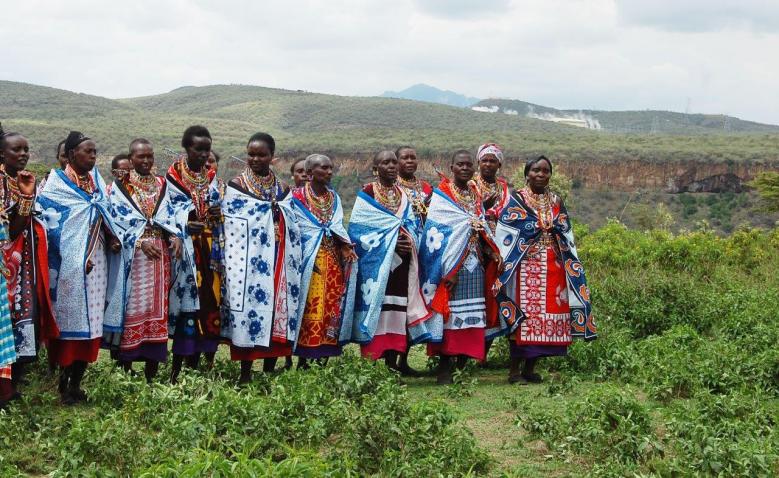
Please join us as representatives from Ngati Tahu and Contact Energy discuss their relationship and how it has helped to advance geothermal power development within New Zealand. The group will also share their experiences from their partnership with KenGen and the Maasai.
More Information and Register.........
Wednesday, April 11, 2018, 10:00 am to 11:30 am, Washington, DC, United States
Please join us as representatives from Ngati Tahu and Contact Energy discuss their relationship and how it has helped to advance geothermal power development within New Zealand. The group will also share their experiences from their partnership with KenGen and the Maasai.
More Information and Register.........
USA, Nevada: 472 MW Geothermal Energy Helps Silver State Surpass Renewable Portfolio Standard Requirement
NV Energy Exceeds Nevada's Renewable Requirement for Eighth Straight Year (News Release)
Company achieved an overall 23.8 percent Renewable Portfolio Standard in 2017, ahead of Nevada's 20 percent requirement. Geothermal energy contributes 472 MW from 19 plants.
NV Energy filed its 2017 Renewable Portfolio Standard (RPS) Annual Report with the Public Utilities Commission of Nevada (PUCN), showing that the company achieved a 25.5 percent renewable energy and related credits level in northern Nevada and 23.1 percent in southern Nevada, for a combined weighted average of 23.8 percent.
This is the eighth year in a row that NV Energy has exceeded the state’s renewable energy requirement, which currently sits at a 20 percent level. Separate from this legislated mandate, NV Energy has set a goal to double its renewable energy portfolio by 2023.
Currently NV Energy customers benefit from 46 separate renewable energy projects in Nevada, which include 19 geothermal plants, 16 solar fields, six hydroelectric resources, four biomass or methane gas facilities and one large wind farm. Five additional large solar fields are being constructed or developed for NV Energy customers, which are located in both northern and southern Nevada areas.
Additionally, the company and an independent evaluator are reviewing more than 100 bids for renewable energy projects and battery-energy storage systems proposed for 26 separate sites throughout Nevada. The winning bids will be submitted for approval to the PUCN by June 1, 2018.
Read More..........
Company achieved an overall 23.8 percent Renewable Portfolio Standard in 2017, ahead of Nevada's 20 percent requirement. Geothermal energy contributes 472 MW from 19 plants.
NV Energy filed its 2017 Renewable Portfolio Standard (RPS) Annual Report with the Public Utilities Commission of Nevada (PUCN), showing that the company achieved a 25.5 percent renewable energy and related credits level in northern Nevada and 23.1 percent in southern Nevada, for a combined weighted average of 23.8 percent.
This is the eighth year in a row that NV Energy has exceeded the state’s renewable energy requirement, which currently sits at a 20 percent level. Separate from this legislated mandate, NV Energy has set a goal to double its renewable energy portfolio by 2023.
Currently NV Energy customers benefit from 46 separate renewable energy projects in Nevada, which include 19 geothermal plants, 16 solar fields, six hydroelectric resources, four biomass or methane gas facilities and one large wind farm. Five additional large solar fields are being constructed or developed for NV Energy customers, which are located in both northern and southern Nevada areas.
Additionally, the company and an independent evaluator are reviewing more than 100 bids for renewable energy projects and battery-energy storage systems proposed for 26 separate sites throughout Nevada. The winning bids will be submitted for approval to the PUCN by June 1, 2018.
Read More..........
Labels:
energy,
geothermal,
geothermal plant,
geothermal power,
GRC,
renewable
Location:
Nevada, USA
Monday, April 2, 2018
St. Vincent and the Grenadines: Government Increases Share in Geothermal Power Project
Gov’t To Own Bigger Share of Geothermal Plant (IWN)
The government of St. Vincent and the Grenadines will now own a 49 per cent stake in the geothermal plant being developed in the country.
Originally, Emera and Reykjavik Geothermal, two foreign firms, were to own 75 per cent of the plant, with the remainder going to the government.
But Prime Minister Ralph Gonsalves said on radio Tuesday night that the US$100 million dollar deal has been renegotiated.
The geothermal project was initially scheduled to come on stream this year, but it is not clear whether the government still intends to meet that target.
Read More.........
From the Global Geothermal News archives:
The government of St. Vincent and the Grenadines will now own a 49 per cent stake in the geothermal plant being developed in the country.
Originally, Emera and Reykjavik Geothermal, two foreign firms, were to own 75 per cent of the plant, with the remainder going to the government.
But Prime Minister Ralph Gonsalves said on radio Tuesday night that the US$100 million dollar deal has been renegotiated.
The geothermal project was initially scheduled to come on stream this year, but it is not clear whether the government still intends to meet that target.
Read More.........
From the Global Geothermal News archives:
- Wednesday, September 21, 2016 - St. Vincent and the Grenadines: Outreach to Locals by St. Vincent Geothermal Company
- Thursday, May 19, 2016 - St. Vincent and the Grenadines: Additional Funding Received for Geothermal Energy Project
- Wednesday, May 11, 2016 - St. Vincent and the Grenadines: Geothermal Energy Development Project ESA
Taiwan: Videos on Advantages of Geothermal Energy
Geothermal Power Generation in Taiwan
The Taiwanese Ministry of Science and Technology have sponsored a series on Climate Change, these ones on geothermal Heat Power - with English subtitles.
(0:52 Minutes)
(0:57 Minutes)
The Taiwanese Ministry of Science and Technology have sponsored a series on Climate Change, these ones on geothermal Heat Power - with English subtitles.
(0:52 Minutes)
(0:57 Minutes)
Labels:
energy,
geothermal,
geothermal plant,
geothermal power,
GRC,
renewable
Location:
Taiwan
Global: Launch of United Nations Framework Classification to Geothermal Energy Resources and Reserves
IRENA, IGA and World Bank Team Up to Streamline Geothermal Energy Development (News Release)
New country-level resource data gathering and classification effort to streamline geothermal investments and facilitate more projects around the world
Countries can expect a more robust and reliable set of procedures when screening a potential site for setting up geothermal energy projects, thanks to new geothermal resource data gathering and classification efforts being piloted by International Renewable Energy Agency (IRENA), the International Geothermal Association (IGA) and the World Bank, with the support of the Global Geothermal Alliance.
The specifications of the United Nations Framework Classification (UNFC) to Geothermal Energy Resources and Reserves provides a harmonised framework to qualify estimates of extractable geothermal energy by projects — taking into account economic viability, technical feasibility and geological confidence — that will help stimulate geothermal investments in countries where it is applied.
New country-level resource data gathering and classification effort to streamline geothermal investments and facilitate more projects around the world
The specifications of the United Nations Framework Classification (UNFC) to Geothermal Energy Resources and Reserves provides a harmonised framework to qualify estimates of extractable geothermal energy by projects — taking into account economic viability, technical feasibility and geological confidence — that will help stimulate geothermal investments in countries where it is applied.
To be jointly implemented by IRENA and the IGA, with support from the World Bank’s Energy Sector Management Assistance Program, the project will begin by reviewing and classifying the identified geothermal projects and resource estimates of Flores — an Indonesian island with 14 different geothermal projects, representing significant geothermal development activity.
Kenya: New Textile Plant to Take Advantage of Cheap Electricity at Olkaria Geothermal Industrial Park
Dubai textiles firm to create 10,000 jobs at Olkaria plant (Business Daily Africa)
A Dubai-based textiles company, United Aryan (EPZ), plans to build a factory that could employ up to 10,000 workers at Olkaria geothermal fields in Naivasha to take advantage of lower electricity costs.
“We have identified an ideal place at Olkaria geothermal fields in Naivasha where we intend to establish a Sh11.5 billion factory for the production of quality garments. We expect to start construction in the next two years and thereafter start operations as soon as the factory will be complete,” said the company’s founder and Chairman Pankaj Bedi in an interview.
From the Global Geothermal News archives:
- Thursday, February 19, 2015 - KenGen to Set up Economic Zones for Cheaper Industrial Power from Geothermal Energy
- Tuesday, September 9, 2014 - Kenya: Kengen Identifies Potential Investors for Planned Olkaria Industrial Park
Labels:
energy,
geothermal,
geothermal plant,
geothermal power,
GRC,
renewable
Location:
Olkaria, Kenya
Science & Technology: Using GPS Buoys to Monitor Submerged Volcanic Regions
Visualizing One of the Most Hazardous Formations in Nature (EOS)
A network of buoys provides a first glimpse of the seafloor beneath a volatile Italian caldera.
Iannaccone et al. used data collected by Multiparametric Elastic-beacon Devices and Underwater Sensors Acquisition (MEDUSA) system to generate the first image of seafloor deformation patterns in the Gulf of Pozzuoli portion of the Campi Flegrei caldera. The team found that from April to June 2016, some sections of the seafloor were uplifted by approximately 4.2 centimeters.
The researchers also compared these GPS seafloor data, transmitted from MEDUSA’s four buoys to the Osservatorio Vesuviano monitoring center in Naples, to values projected by a model using only GPS land measurements. Their results matched up, showing that either data collected on land or data from the seafloor can be used to determine the other. They also found that bottom pressure records, or measurements of pressure at the bottom of the ocean, could be used to determine seafloor uplift in shallow water.
Not only did the team provide the first image of seafloor deformation patterns beneath Campi Flegrei, a critical caldera, but their study is also a good example of how GPS buoys can be used to monitor submerged volcanic regions in general. It also shows the potential to use bottom pressure records as a cost-effective, high-resolution mode of monitoring shallow waters.
A network of buoys provides a first glimpse of the seafloor beneath a volatile Italian caldera.
Iannaccone et al. used data collected by Multiparametric Elastic-beacon Devices and Underwater Sensors Acquisition (MEDUSA) system to generate the first image of seafloor deformation patterns in the Gulf of Pozzuoli portion of the Campi Flegrei caldera. The team found that from April to June 2016, some sections of the seafloor were uplifted by approximately 4.2 centimeters.
The researchers also compared these GPS seafloor data, transmitted from MEDUSA’s four buoys to the Osservatorio Vesuviano monitoring center in Naples, to values projected by a model using only GPS land measurements. Their results matched up, showing that either data collected on land or data from the seafloor can be used to determine the other. They also found that bottom pressure records, or measurements of pressure at the bottom of the ocean, could be used to determine seafloor uplift in shallow water.
Not only did the team provide the first image of seafloor deformation patterns beneath Campi Flegrei, a critical caldera, but their study is also a good example of how GPS buoys can be used to monitor submerged volcanic regions in general. It also shows the potential to use bottom pressure records as a cost-effective, high-resolution mode of monitoring shallow waters.
Read More.........
Measurement of Seafloor Deformation in the Marine Sector of the Campi Flegrei Caldera (Italy), by Giovanni Iannaccone et al. First published: Journal of Geophysical Research: Solid Earth, 1 December 2017, https://doi.org/10.1002/2017JB014852
(Thanks to GRC Member Marcelo Lippmann, Staff Scientist (retired) at Lawrence Berkeley National Laboratory for the submission.)
Measurement of Seafloor Deformation in the Marine Sector of the Campi Flegrei Caldera (Italy), by Giovanni Iannaccone et al. First published: Journal of Geophysical Research: Solid Earth, 1 December 2017, https://doi.org/10.1002/2017JB014852
(Thanks to GRC Member Marcelo Lippmann, Staff Scientist (retired) at Lawrence Berkeley National Laboratory for the submission.)
Global: $15,000 in Educational Awards Available to Eight Students in Global Geothermal Energy Community
Update to 2018 Geothermal Resources Council Scholarships Announced (News Release)
Total of $15,000 in educational awards to be given to eight students in the global geothermal energy community.
The Geothermal Resources Council (GRC), a non-profit educational association dedicated to the promotion of geothermal energy and associated technologies around the world, is announcing the following changes to the 2018 GRC Scholarship Awards:
Undergraduate Scholarship Awards:
If you have any questions regarding the GRC Scholarship Awards, please contact Brian Schmidt at bschmidt@geothermal.org or (530)758-2360, ext. 104.
Total of $15,000 in educational awards to be given to eight students in the global geothermal energy community.
The Geothermal Resources Council (GRC), a non-profit educational association dedicated to the promotion of geothermal energy and associated technologies around the world, is announcing the following changes to the 2018 GRC Scholarship Awards:
Undergraduate Scholarship Awards:
- The number of recipients will be increased from two to three;
- Instead of a lump sum, each recipient will receive a stipend of $250 and travel expenses (up to $750) to attend the GRC Annual Meeting (double occupancy);
- Each recipient will be required to either present at the meeting (poster or paper such as from a senior thesis) or prepare a report for the GRC Bulletin describing what they learned from attending the meeting and how they would utilize what they learned for their educational or career path.
- The number of recipients will be increased from three to five;
- The amount of each award will remain $2500, but travel expenses will now be considered part of this total rather than offered separately;
- Each recipient is required to submit a paper on his/her research (or research progress) to be published in the GRC Transactions and deliver results at the meeting as either a poster or oral presentation;
- If the recipient presents in the year of the award then the full $2500 is awarded;
- If the recipient defers to present/publish the following year then $750 is withheld to cover travel expenses for when the recipient presents.
If you have any questions regarding the GRC Scholarship Awards, please contact Brian Schmidt at bschmidt@geothermal.org or (530)758-2360, ext. 104.
Sunday, April 1, 2018
Global: Calendar of Geothermal Energy Events
Geothermal Energy Calendar from the Geothermal Resources Council
DESTRESS Mid-Term Conference
14-17 October, Reno, Nevada, USA
www.geothermal.org/meet-new.html
6th National Geothermal Congress - Polish Geothermal Association
5 April, Glasgow, United Kingdom
www.destress-h2020.eu/en/stay-informed/news-and-events/bsds-blog/Join-our-Mid-Term-Conference-in-Glasgow/
Geothermal Cross Over Technology Workshop Part II (AAPG and IGA)
www.destress-h2020.eu/en/stay-informed/news-and-events/bsds-blog/Join-our-Mid-Term-Conference-in-Glasgow/
Geothermal Cross Over Technology Workshop Part II (AAPG and IGA)
17-18 April, Utrecht, Netherlands
www.eiseverywhere.com/ehome/275855/homegeothermal/
25th Annual Congress of the Mexican Geothermal Association
www.eiseverywhere.com/ehome/275855/homegeothermal/
25th Annual Congress of the Mexican Geothermal Association
18-20 April, Morelia, Michoacán, México
www.geotermia.org.mx/geotermia/?page_id=1131
5th Expo Geothermal
www.geotermia.org.mx/geotermia/?page_id=1131
5th Expo Geothermal
24-26 April, Reykjavik, Iceland
www.igc.is
Resources for Future Generations
Premier Conference On Energy • Minerals • Water • The Earth
www.igc.is
Resources for Future Generations
Premier Conference On Energy • Minerals • Water • The Earth
16-21 June, Vancouver Convention Center, Vancouver, BC, Canada
http://rfg2018.org/
Grand Renewable Energy 2018 - International Conference and Exhibition
http://rfg2018.org/
Grand Renewable Energy 2018 - International Conference and Exhibition
17-22 June, 2018, Yokohama, Japan
www.grand-re2018.org/english/index.html
ICEM18 - the Eighteenth International Conference of Experimental Mechanics (EuraSEM)
Session on "Experimental Methods in Geothermal Engineering"
www.grand-re2018.org/english/index.html
ICEM18 - the Eighteenth International Conference of Experimental Mechanics (EuraSEM)
Session on "Experimental Methods in Geothermal Engineering"
3-5 July, Pau, France
www.pole-avenia.com/eng/geo-energy-days/
Geothermal Energy: From Potential to Implementation (Cranfield University) 11-13 July, The Geological Society, London, U.K.
www.cranfield.ac.uk/Courses/Short/Energy%20And%20Power/Geothermal%20Energy
GEOHEAT International Geothermal Conference
www.pole-avenia.com/eng/geo-energy-days/
Geothermal Energy: From Potential to Implementation (Cranfield University) 11-13 July, The Geological Society, London, U.K.
www.cranfield.ac.uk/Courses/Short/Energy%20And%20Power/Geothermal%20Energy
GEOHEAT International Geothermal Conference
4-7 September, Petropavlovsk-Kamchatsky, Russian Federation
https://pbs.twimg.com/media/DLsAdQDW0AAxWj9.jpg
6th Indonesia International Geothermal Convention and Exhibition (IIGCE) 5-8 September 2018, Jakarta Convention Center, Indonesia
www.iigce.com/
GRC Annual Meeting & Expo
https://pbs.twimg.com/media/DLsAdQDW0AAxWj9.jpg
6th Indonesia International Geothermal Convention and Exhibition (IIGCE) 5-8 September 2018, Jakarta Convention Center, Indonesia
www.iigce.com/
GRC Annual Meeting & Expo
14-17 October, Reno, Nevada, USA
www.geothermal.org/meet-new.html
6th National Geothermal Congress - Polish Geothermal Association
23-25 October, Zakopane, Poland
www.energia-geotermalna.org.pl/vi-ogolnopolski-kongres-geotermalny/
Seventh African Rift Geothermal Conference (ARGeo-C7)
www.energia-geotermalna.org.pl/vi-ogolnopolski-kongres-geotermalny/
Seventh African Rift Geothermal Conference (ARGeo-C7)
29 October–4 November, Kigali, Rwanda
www.theargeo.org
www.theargeo.org
San Serriffe: Call for Geothermal Energy to Replace Ailing Oil & Gas Industry
Oil & Gas Wells Could be Repurposed for Geothermal Energy (Mutley Fool)
In 2016, Global Geothermal News reported on new geothermal resource on San Serriffe, a remote island in the Indian Ocean. In an update on the project last year scientists indicated that a binary geothermal plant could be developed, using surplus sunscreen as a working fluid.
Recently, oil & gas wells off the west coast of Caissa Superiore (Upper Caisse) have begun to run dry resulting in the layoff of thousands of workers, mostly from the local Flong and Creole populations. There is now an urgent call to re-train the workforce to convert the oil & gas wells to produce geothermal energy.
The republic of San Serriffe is located on the seismically active mid-indian ocean ridge near the Seychelle Islands. The potential capacity of the renewable resource has been estimated as upwards of 500 MWe.
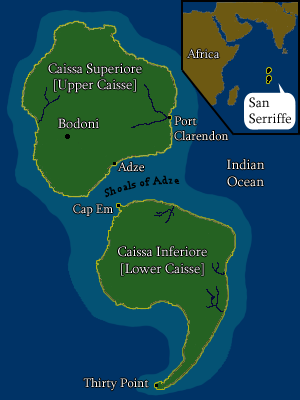
San Serriffe comprises of two islands, Upper Caisse and Lower Caisse, shaped curiously like a semi-colon. Since it's first exposure to the outside world on April 1, 1977, the island has struggled for acceptance but now with the discovery of geothermal energy it could become a powerhouse for the southern Indian Ocean.
More information......
In 2016, Global Geothermal News reported on new geothermal resource on San Serriffe, a remote island in the Indian Ocean. In an update on the project last year scientists indicated that a binary geothermal plant could be developed, using surplus sunscreen as a working fluid.
Recently, oil & gas wells off the west coast of Caissa Superiore (Upper Caisse) have begun to run dry resulting in the layoff of thousands of workers, mostly from the local Flong and Creole populations. There is now an urgent call to re-train the workforce to convert the oil & gas wells to produce geothermal energy.
The republic of San Serriffe is located on the seismically active mid-indian ocean ridge near the Seychelle Islands. The potential capacity of the renewable resource has been estimated as upwards of 500 MWe.
San Serriffe comprises of two islands, Upper Caisse and Lower Caisse, shaped curiously like a semi-colon. Since it's first exposure to the outside world on April 1, 1977, the island has struggled for acceptance but now with the discovery of geothermal energy it could become a powerhouse for the southern Indian Ocean.
More information......
Labels:
energy,
geothermal,
geothermal power,
renewable
Location:
Unknown location.
Subscribe to:
Posts (Atom)