Monday, February 10, 2020

Science & Technology: Geothermal Drilling in Search of Supercritical Fluids did not Cause Uncontrolled Seismic Activity - Researchers

Geothermal energy: Drilling a 3,000-meter deep well (Science Daily)

Geothermal Sunset, by Fabio Sartori. GRC Photo Contest 2019.
Nuova Monterotondo geothermal power plant, Italy.
Researchers at the University of Geneva (UNIGE), Switzerland, working in collaboration with the University of Florence and the National Research Council (CNR) in Italy, have studied the seismic activity linked to a geothermal drilling in search of supercritical fluids. 

They discovered that the drilling did not cause uncontrolled seismic activity. 

This drilling under such critical conditions suggests that the technology is on the verge of mastering geothermal energy, paving the way for new sources of non-polluting heat and electricity.


Riccardo Minetto, Domenico Montanari, Thomas Planès, Marco Bonini, Chiara Del Ventisette, Verónica Antunes, Matteo Lupi. Tectonic and Anthropogenic Microseismic Activity While Drilling Toward Supercritical Conditions in the Larderello‐Travale Geothermal Field, Italy. Journal of Geophysical Research: Solid Earth, 2020; 125 (2) DOI: 10.1029/2019JB018618

USA, California: Opening Session of Stanford Geothermal Workshop


Opening Session: 8:30-10:15:
  1. "The US Department of Energy Geothermal Program -- Update 2020," Lauren BOYD
  2. "The EGS Collab Project: Learnings from Experiment 1," Presenter: Tim Kneafsey/
  3. "Overview of Utah Forge Results in 2019," Presenter: Stuart Simmons.
  4. "Field Test of Thermoelectric Generators at Bottle Rock Geothermal Power Plant," Kewen Li, et al.

Global: GRC Announces Funding for Geothermal Marketing and Public Relations Campaign

Geothermal Energy’s Dynamic Potential as a Clean Source of Renewable Energy to be Showcased in Public Relations Campaign (News Release)

The Geothermal Resources Council (GRC) announces funding investment for a marketing/public relations campaign to drive awareness of Geothermal Energy and its potential throughout society.

The GRC is developing a marketing/public relations campaign to highlight geothermal energy and its potential to be a strong ally in humanity’s fight against climate change. The objective of the campaign will be to raise awareness of, and support for, geothermal energy as a viable clean and renewable energy source. The yet-to-be-named campaign will reach individual people, families, communities, and society’s decision makers in its quest to drive recognition of the power and heat management capabilities of geothermal energy.

Launching the campaign planning phase follows a successful and thorough search for a marketing team to develop the strategy, design the visuals, and execute the tactics. The GRC is pleased to announce that Taoti Creative, a full-service creative agency based in Washington, D.C., has been selected as GRC’s agency of record and will be starting to develop the campaign strategy immediately.

Geothermal energy is a reliable source of energy that provides clean, renewable power and heat that’s always on—day or night, regardless of the weather, 365 days a year. Geothermal heat management is used in homes with geothermal heat pumps, in commercial buildings and communities with district heating, and higher-temperature power generation uses deep subsurface fluids in rock formations not too far beneath our feet.

The partnership with Taoti Creative will also result in enhanced services for GRC’s members, sponsors, and supporters through a rebranding of the GRC, development of a strategic marketing plan for the association, and redesign of the website. Funding of the project came through the GRC Board of Directors decision to use investments from Foundation Funds. Information on donating to these funds can be found here.

“It’s an exciting time for geothermal energy. We’ve seen an amazing increase in momentum build over the past couple of years with increased awareness of the benefits of geothermal, increased government funding to the industry, and new technological innovations for developing geothermal resources,” said Will Pettitt, GRC’s Executive Director. “Taoti Creative is a strong and talented choice for our marketing needs. I applaud our Board for taking this bold and courageous step to fund a new public relations campaign that aims to help take the industry to the next level and introduce geothermal as part of society’s mainstream energy mix.”

“It’s not every day we have the opportunity to move the needle for a brand and positively impact the world at a global scale, but that’s exactly what we’ll be striving towards through our new partnership with GRC,” said Brent Lighter, Founder and CEO of Taoti Creative. “Geothermal energy has the potential to benefit our society in so many ways, and we’re excited to be working with GRC to create a campaign to share that potential with the world.”

##

About Taoti Creative:

Taoti Creative is a Washington, D.C.-based full-service creative agency with a commitment to driving measurable and meaningful impact through website design, marketing and brand strategy, and unique experiences. Taoti is made up of a group of dreamers, makers, and doers who are passionate about more than the agency’s award-winning work—they want their partners to thrive. The agency is built upon the pillars of Quality, Innovation, Service, and Teamwork, and has moved the needle for over 800 clients to date.

Friday, February 7, 2020

Geothermal Energy News from Around the World

Global Geothermal News - Weekly Update (Geothermal Resources Council)


A round-up of this week's international geothermal energy news.......

Click on the links below
to view the whole story and other news on Global Geothermal News.

Canada: Geothermal District Heating and Direct Use Network Recommended for Abandoned Potash Mine

Geothermal Potential for Sussex Region Powerful (Town of Sussex)

An exhaustive study into the flooded depths of the decommissioned potash mine in Penobsquis has revealed an exciting opportunity to produce geothermal energy for the Sussex area.

It's been three years in the making, a process necessary to uncover the true viability of developing a lower cost, carbon-friendly heating and cooling source that has the potential to grow a region recovering from the loss of its potash mining activity, says Bill Thompson. 

The study concludes the potential is very real, and would take an investment of about $14.4 million. With the savings in heating and cooling costs, it could pay for itself in just under 10 years.

After modelling 20 geothermal scenarios, Vernon Banks, senior hydrogeologist and project manager with Wood Environment & Infrastructure Solutions, determined an open loop system has the most potential. In that process water would be pumped to the surface, run through heat pumps to generate heating and cooling power, and then return below ground after use. The cost savings would be between 40-60 per cent, Thompson pointed out, which in businesses like hatcheries or those that run greenhouses for everything from cannabis to hot house tomatoes, the savings translates into big money.

Italy: Geothermal Energy Saves Lives - Report

Ecco qual è l’impatto della geotermia su inquinamento atmosferico e clima in Italia - Here is the impact of geothermal energy on air pollution and climate in Italy (Green Report)

(From Google Translate) The use of this renewable source results in a decrease in pollutants and CO2 emissions not only in our country but throughout Europe, explains the European Environment Agency

Dalla geotermia arrivano dunque chiari benefici contro la crisi climatica e l’inquinamento atmosferico, che da solo ha provocato oltre 400mila morti premature nell’Ue nel solo 2016. Anche in Italia, dove l’inquinamento atmosferico miete almeno 76.200 vittime l’anno (14.600 da NO2, 3.000 da O3, 58.600 da PM2,5) e dove i cambiamenti climatici hanno investito il territorio con 157 eventi climatici estremi nell’ultimo anno, l’impiego della geotermia ha garantito importanti vantaggi.

There are clear benefits from geothermal energy in battling the climate crisis and air pollution, which alone has caused over 400 thousand premature deaths in the EU in 2016 alone. Also in Italy, where air pollution causes at least 76,200 victims per year (14,600 from NO2, 3,000 from O3, 58,600 from PM2.5) and where climate change has affected the country with 157 extreme climatic events in the last year, the use of geothermal energy has guaranteed important advantages.

Leggi di più..........                            Read More..........

Poland: Funds Provided for Investment in Geothermal Energy

Poland to receive EUR 140 mln for environment, energy and climate change (TFN)

(Courtesy CIA.gov)
A contract for carrying out the Environment, Energy and Climate Change Programme was signed on Friday by the ministers of funds and climate and Norway's ambassador to Poland, securing Poland EUR 140 million from the Norway Grants for the programme.

A further EUR 24.7 million will come from Poland's own coffers.

"Raising Poles' quality of life seems to be the ambition at the centre of the programme," Climate Minister Michał Kurtyka said. "We will invest in heating stations, cogeneration, geothermal energy, hydro-energy, energy efficiency. But in parallel, we will think how the city of the future should look, hence the component of rural policy, green development and blue infrastructure, which is important to us."

France, Martinique: Outreach for Possible Geothermal Power Project

Un projet de géothermie aux Anses-d'Arlet. Une concertation publique lancée
- A geothermal energy project in Anses-d'Arlet. A public consultation launched (RCI)

Une réunion de concertation publique est organisée le mardi 11 février 2020 aux Anses-d'Arlet afin d'échanger avec la population sur l'opportunité d'implanter une centrale géothermique à Petite Anse.

(From Google Translate) A public consultation meeting is organized on Tuesday, February 11, 2020 at Anses-d'Arlet in order to discuss with the population on the advisability of installing a geothermal power plant in Petite Anse.

Lire la suite.........                       Read More.........

From the Global Geothermal News archives:
  • Friday, January 3, 2020 - France, Martinique: Geothermal Power Project Advances - The establishment of a geothermal power plant is envisaged in Petite Anse, with the aim of supplying electricity to the entire municipality. The ambitious project was explained during a public conference which took place at the nautical club.

Latin America: Express Your Interest for Funding from Geothermal Development Facility for Latin America

Geothermal Development Facility for Latin America (GDF)

Fifth Call (EOI) will open on March 30th.


The Pre-Expression of Interest (EOI) sign-up is always open. EOI Call 5 – Begins 30 March 2020 and will end on 25 May. Don’t miss your chance. Register Now........

The objective of the Facility (GDF) is to encourage public and/or private investment in geothermal power development in Latin America.

Read More..........

Thursday, February 6, 2020

Global: Geothermal Magazine Now Available

GRC Bulletin - January/February 2020

Volume 49, No. 1 of the internationally-renowned geothermal energy magazine is now available - for GRC Members only.

In this issue:
  • President’s Message, by Andy Sabin
  • Executive Director's Message, by William Pettitt
  • Communication from the GRC, by Ian Crawford
  • Inside Geothermal: North America, Central & South America, Australasia, Asia, Africa, Europe, Education, Science & Technology, Climate Change, by Ian Crawford
  • Plaine de Garonne Energies (PGE): A New Geothermal District Heating in Bordeaux, France, by Delphine Patriarche, et al
  • Geothermal Energy in the Era of Artificial Intelligence, by Luis Ruano
  • The Vikings & Geothermal Iceland, by Susan Fox Hodgson
  • An Introduction to the GRC Student Committee: Progress and Plans for 2020, by the GRC Student Committee
  • In Memoriam - Brian Berard, Mike Shook and John Pritchett  
  • Publications, Websites, Videos & Maps
  • Calendar of Events
Over sixty (60) pages of essential news and information is available to GRC members only. Don't miss out! Become a GRC Member and be informed.

USA: Entries are Open for this Year’s Geothermal Design Challenge

Geothermal Design Challenge opens opportunities for winners (INL)

If you’re seeking new innovations, few things work better than calling for ideas from the best and brightest young minds.

For Bane Sullivan, pursuing a master’s in hydrology at Colorado School of Mines, the call came in early 2019, when he saw an advertisement for the U.S. Department of Energy’s Geothermal Design Challenge coordinated by Idaho National Laboratory (INL). As someone interested in geoscience visualization, “I saw it as a really good opportunity to gain exposure,” he said. “I was able to showcase a lot of the work I’m doing at school.”

One year after winning second place in the Design Challenge with “Open Source Solutions for 3-D Communications,” Sullivan is getting ready to graduate and take a job with Kitware, a Clifton Park, New York, company that specializes in open-source software development. The attention he and his collaborator Adam Kinard found through the contest brought them attention they might not have otherwise received.

Entries are now open for this year’s Geothermal Design Challenge, which is sponsored by DOE’s Geothermal Technologies Office.

Read More.........

USA, New York: Cornell Enhanced Geothermal Energy System Project Gets Welcome Attention

‘Borehole of opportunity’ attracts international scientists (News Release)

Scientists and engineers from around the world gathered in Cornell University’s Snee Hall, Jan. 8-10, to design experiments that could be incorporated into the university’s proposal to dig a 2.5-mile-deep borehole as part of an enhanced geothermal energy system.

About 35 researchers traveled to campus for the workshop, where they were joined by about 20 Cornell faculty members, students and facilities professionals. The workshop was sponsored by the International Continental Scientific Drilling Program, a nonprofit organization that promotes subterranean investigations.

Scientific access to deep continental boreholes is uncommon, as the holes are mostly dug by industry, which generally does not share access or data. Access is critical to learning about rock mechanics, hydrogeology, seismology, microbiology and other information about the planet.

Cornell is proposing a borehole on campus property to serve as a test well for Earth Source Heat, an enhanced geothermal system that would use the Earth’s thermal energy to heat most of the buildings on campus.

USA, California: Ormat 30 MW Casa Diablo-IV Geothermal Project to Supply Electricity to Central Coast Communities

The Central Coast turns to geothermal vents for after-hours power (Monterey County Weekly)

In California, climate-friendly energy usually means wind or solar, but a contract approved in Monterey last month could mark the rise of another clean technology: geothermal power.

The state’s first geothermal plant in nine years will soon be built in the Eastern Sierras thanks to a deal between Monterey Bay Community Power (MBCP) (and other energy providers) and Reno-based Ormat Technologies. Negotiations are underway for similar projects involving a growing number of communities across California.

Currently, geothermal energy provides a tiny fraction of the electricity used by Americans, but there’s enough power bubbling up from the seismic cracks in the Earth’s surface to generate some 16 percent of the country’s demand, according to the U.S. Department of Energy. Most of the potential is on the West Coast along the edges of tectonic plates that also are responsible for earthquakes.

What’s driving the interest in geothermal energy as a renewable source is its reliability. Unlike solar panels or wind turbines, geothermal plants produce a steady, 24/7 supply of emissions-free electricity. That’s especially important as California pursues carbon neutrality by 2045, and more fossil fuel-fired power plants are taken offline.

The contract with Ormat comes out of a request for proposals jointly put out last year by Monterey Bay Community Power and Silicon Valley Clean Energy (SVCE), two public agencies formed under the state’s Community Choice Aggregation laws.

Under the 10-year power purchase agreement signed with Ormat, MBCP and SVCE will buy 7 megawatts of electricity each. The plant’s remaining 16 megawatts will be bought by the city of Colton in San Bernardino County.

Read More.........

Europe: Nominees Announced for Geothermal Innovation Award

Ruggero Bertani European Geothermal Innovation Award – Endorsed nomination available! (News Release)

The European Geothermal Energy Council (EGEC) is pleased to announce the five endorsed nominations for the Ruggero Bertani European Geothermal Innovation Award 2020.

The final candidates are (in alphabetical order):
  • BAKKER OILFIELD SUPPLY (Netherlands), for Degasser, which consists is a multi-usable type of separator which separates oil and/or gas from high volume water flows.
  • CARBFIX (Iceland), that aims to becoming a key instrument in tackling the climate crisis and substantially reducing global CO2 emissions.
  • EAVOR GMBH (Germany), that aims to capture geothermal energy to produce steady and dependable heat and electrical power without emissions of any kind.
  • VULCAN ENERGIE RESSOURCEN GMBH (Germany), that aims to extract the lithium from the brine using direct lithium extraction.
  • ZAE BAYERN (Germany), the test QEWS II rig emulates the thermal behaviour of a real borehole heat exchanger of different lengths and underground properties.
This year as well, the high-quality of submitted applications for projects developed within the previous year made for a challenging competition, showing that the geothermal sector is brimming with unceasing innovation.

The jury for 2020 is composed of Miklos Antics (France, representing EGEC), Adele Manzella (Italy, research expert), Sandra Kircher (Germany, representing Messe Offenburg), Fausto Batini (Italy, Magma Energy, ETIP-DG President), and Javier Urchueguia (Spain, representing RHC-ETIP geothermal panel). The Jury will now deliberate to select an overall winner which will be announced on 5th March at the GeoTHERM expo & congress in Offenburg (Germany).

Read More.........

USA: Corporations Procured 9.33 GW Renewable Energy in 2019

Renewable Energy Buyers Alliance Announces Top 10 U.S. Large Energy Buyers in 2019 (REBA)

Today, the Renewable Energy Buyers Alliance (REBA), announced the release of its Deal Tracker highlighting 2019’s Top 10 Large Energy Buyers, topped by Facebook with the procurement of 1.546 gigawatts (GW). The REBA Deal Tracker showcases total announcements of 9.33 GW of renewable energy in the U.S. and a shift in the energy landscape driven by the demand for accessible clean energy options.

2019 Top U.S. Large Energy Buyers

Ranking    Company      Volume (Gigawatts)
  1. Facebook               1.546
  2. Google                   1.107
  3. AT&T                      .960
  4. Microsoft                 .624
  5. T-Mobile                  .581
  6. Walmart                   .541
  7. Amazon                   .487
  8. Ball Corporation     .388
  9. McDonald’s            .380
  10. Honda                     .320
The continued growth of large-scale energy buyer led procurement of renewable energy, as well as a surge of first-time buyers accounting for more than half of transactions, contributes to REBA’s overall goal to catalyze 60 GW of renewable energy by 2025. The benefits of these commitments extend beyond helping achieve carbon reduction targets – these renewable energy projects also drive the creation of jobs and can revitalize local economies.

Read More..........

Wednesday, February 5, 2020

Chile: Despite Obstacles Geothermal Capacity Could Reach 2,100 MW by 2050

Energía geotérmica: ¿qué es lo que traba el desarrollo de su gran potencial en Chile? - Geothermal Energy: What hinders the development of its great potential in Chile? (La Tercera)

Tolhuaca geothermal prospect, Southern Chile.
By Silke Lohmar, Santiago, Chile. 3rd Place GRC Photo Contest 2013.
La falta de una estrategia donde el Estado se vincule de manera más activa y los altos costos en la fase de exploración, serían, según los expertos, los principales obstáculos para que esta industria tenga el protagonismo que podría alcanzar en la matriz energética nacioal. No obstante, de acuerdo a estudios en el área, se espera que con nuevas plantas geotérmicas, en 2050 se puedan generar 2.100 MW para inyectarlos al sistema.

(From Google Translate) According to experts the main obstacles to increasing the prominence of geothermal energy is a lack of State involvement and the high costs of the exploration phase. However, according to studies in the area, it is expected that with new geothermal plants, another 2,100 MW can be generated by 2050 .

Lee mas.........                                Read More.........

Croatia: Potential 500 MW from Geothermal Energy - Hydrocarbon Agency

Geothermal Energy in Croatia (Croatian Hydrocarbon Agency)


Above the European average - There are few countries in the Europe that have this significant potential, and even fewer that have been able to make full use of geothermal energy. Croatia has an above-average geothermal gradient - even 60% higher than the European average and has the basic prerequisite for the use of geothermal water for energy purposes. Temperature rises around 4.9°C with every 100 m of depth at average.

According to current estimates of existing geothermal sources, the current potential is 500 MW from geothermal energy. Some of these are sources of very high temperatures, usually above 120°C or 150°C, which can be used for the production of electricity in geothermal energy, and sources with lower temperatures of 60°C or 80 ° C and higher, are suitable as hot water sources suitable for exploitation in district heating systems or in agriculture.

Geothermal potential in Croatia has been proven in cca existing 40 wells.

Read More..........

Finance: Renewable Energy Finance Guides from IRENA

Publications on Renewable energy finance from IRENA - International Renewable Energy Agency

Renewable energy finance: Green bonds

Renewables have emerged as a major recipient of green bond proceeds. This brief highlights the need for more green bonds to drive sustainable, climate safe, energy finance.

Renewable energy finance: Institutional capital

Transforming the global energy system calls for massive mobilisation of capital. This brief provides recommendations to harness institutional investment for renewable energy projects.

Renewable energy finance: Sovereign guarantees

To make renewables bankable, investors need assurances against default due to various country-level risks. This brief examines sovereign guarantees and other risk mitigation options.

Canada: Potential for Geothermal Energy from a Sedimentary Basin in Quebec

Geothermal resource assessment of remote sedimentary basins with sparse data: lessons learned from Anticosti Island, Canada (Geothermal Energy Journal)

Anticosti Island is located in the Anticosti sedimentary basin, an Ordovician/Silurian carbonate platform. Like most remote and off-grid regions in Canada, it relies heavily on fossil fuels for energy supplies. An assessment of deep geothermal resources was achieved in this area with the objective of diversifying energy resources to help develop renewable energy for villages deserved by micro-grid systems. 

Although the modeling generates a wide range of temperatures in the deep Precambrian basement, prospects for generating electricity from geothermal energy on Anticosti Island from temperatures over 120 °C can only be reached at a depth of at least 3.8 km, even in the optimistic scenario. Additional work to refine estimation about thermal conductivity of rocks (for both the sedimentary basin and its underlying Precambrian basement) and equilibrium temperature data, needs to be done in order to reduce the range of temperature predictions.

Direct geothermal heating seems feasible, with 40–55 °C reached at the base of the sedimentary basin (2 km depth) under the main village of the island. The basal sedimentary thermal unit (Romaine) was considered as a possible reservoir for oil and gas exploration due to its permeability, which can be up to 14 mD according to Roliff (1968). A geothermal doublet can be envisioned at such permeability, but further studies to better define the hydraulic properties of this unit are nonetheless needed to confirm this hypothesis. This can be combined with extensive work on fault mapping and characterization to better constrain model hydraulic properties and simulate fluid flow, both at the island and reservoir scales for further geothermal resource characterization of the Anticosti sedimentary basin. Interestingly, the sensitivity of temperature prediction in the thermal units at the base of the sedimentary basin is 29% less than in the deep Precambrian basement in contact with the mantle.

Read More.........

Gascuel, V., Bédard, K., Comeau, F. et al. Geothermal resource assessment of remote sedimentary basins with sparse data: lessons learned from Anticosti Island, Canada. Geotherm Energy 8, 3 (2020). https://doi.org/10.1186/s40517-020-0156-1

Canada: Successful Demonstration of Eavor-Lite™ Closed Loop Geothermal Project

The World’s first truly scalable form of Green Baseload Power demonstrated by Eavor Technologies Inc. (News Release)

Eavor is pleased to announce the full completion and 3rd party validation of the Eavor-Lite™ demonstration project near Rocky Mountain House, Alberta. Eavor’s technology, known as “Eavor-Loop™” captures geothermal energy to produce steady and dependable heat and electrical power without emissions of any kind. Unlike traditional geothermal power plants, an Eavor-Loop™ works at drilling depths which have geologically common parameters and characteristics; enabling implementation almost anywhere in the world. This technology represents the opportunity to transform the world’s energy stack, redefine how energy is produced and address climate change.

On December 3rd, 2019 the facility was commissioned and then switched to “thermosiphon mode” on the morning of December 4th, 2019. The flowrate and temperature have remained steady and consistent since then.

TNO, the Netherlands Organization for applied scientific research, operating out of their head office in Utrecht, Netherlands has provided an independent assessment of the Eavor-Lite™ project.  This report is currently being updated with the recent field results and will be made available to interested parties under non-disclosure agreements.

Read More.........

From the Global Geothermal News archives:

USA, California: Agenda Available for Workshop Exploring Geothermal and Oil & Gas Synergies

High-Temperature Well Cementing and Integrity Workshop - Agenda Now Available! (News Release)

Early-Bird Registration Ends March 1
“Exploring Geothermal and Oil & Gas Synergies”

Join us for a Joint Geothermal Resources Council (GRC) & Society of Petroleum Engineers (SPE) Workshop

March 30 - April 1, 2020
San Diego, California, USA


Geothermal wells experience high temperatures at very shallow depths and are required to cement casing across the entire length of each casing string set in the well. Our joint workshop will enable both industries to share their experiences, technologies, technical procedures and best practices on this important aspect of well completion.

Sessions and Speakers:
  • Opening Panel Session. Moderators: Louis Capuano Jr., and Todd Zahacy. Panelists: Steve Pye, Daniel Bour and Jeff Spence.
  • Session 1: The Function of Cement in Well Construction. Chairs: Susan Petty and Kyriacos Agapiou. Presenters: Daniel Bour, Jack Collender and Catalin Teodoriu.
  • Session 2: Slurry Blends. Chairs: Hamid Najafi and Jeff Spence. Presenters: Nicolas Droger, Rouzbeh Shahsavari, and Thomas J. Pisklak.
  • Session 3: HT/HP Cements. Chairs: Giorgia Bettin and Axel-Pierre Bois. Presenters: Martin Herriot, Abdelfattah Lamik, Arpita Bathija and Vidar Rygg.
  • Session 4: Placement Procedures. Chairs: Steve Pye and Ramon Viso. Presenters: Ralph Winmill, Rafael Hernandez and Simon Iremonger.
  • Session 5: Other Uses of Cement/Research and Development. Chairs: Marc Brennen and Mileva Radonjic. Presenters: Mercy Achang, Simon Iremonger and Carlos A. Fernandez.
  • Session 6: Problems and Solutions. Chairs: Bob Pilko and Catalin Teodoriu. Presenters: Stephen J. Bauer, Jarrett Wise, Ramadan Ahmed and Temitope Ajayi.
  • Session 7: What is Needed for Future Cement Blends and Cement Placement Technologies. Chairs: Mileva Radonjic and Daniel Bour. Presenters: Sai Vamsi Krishna Vissa, Arash Dahi Taleghani and Yunxing Lu.
  • Session 8: Case Histories and Past Experiences. Chairs: Pablo Gutierrez and Carlos Fernandez. Presenters: Andreas Ruch, William (Billy) Thomas, Kristin Kutchak and Afshin Ahmady.
  • Session 9: Conclusion. Moderator: Susan Petty. Panelists: Bob Pilko and Catalin Teodoriu.
The complete agenda, speaker information, hotel reservations, registration and more, can be found on our new dedicated website at https://cement.mygeoenergynow.org/

Save $100 by registering before March 1, 2020.

GRC or SPE Member: $990
Non Member: $1,090

In addition, by booking and staying at the Wyndham San Diego Bay Hotel under the GRC room block, the GRC will refund your workshop registration by $50 per night for up to 3 nights booked/paid. Make your reservation........


Tuesday, February 4, 2020

USA: Funding Available for Geothermal "Wells of Opportunity"

Energy Department Announces $25 Million for Enhanced Geothermal Systems Research (EERE/GTO)

Ducks at the Schäftlarnstraße Drill Site in
Munich, Germany. By David Lentsch.
GRC Photo Contest 2018
Today, the U.S. Department of Energy (DOE) announced up to $25 million to promote the advancement of Enhanced Geothermal Systems (EGS) technologies and techniques. The Funding Opportunity Announcement (FOA), entitled Wells of Opportunity (WOO), supports research and development (R&D) that complements DOE’s Frontier Observatory for Research in Geothermal Energy (FORGE) initiative and aligns with the goals of the recently released GeoVision study, which outlines a path to unlock the full potential of geothermal power.

"There is an incredible opportunity for geothermal to become an essential part of America’s energy mix,” said U.S. Secretary of Energy Dan Brouillette. “The work performed with this investment will be a key part of our strategy to ensure all Americans can have access to clean, reliable, affordable geothermal energy.”

The WOO FOA will provide funding in two topic areas:
  • Topic Area 1 – Pilot: Prepare and repair existing wells and host the testing of innovative downhole tools and well stimulation technologies in parallel with or in preparation for deployment at the FORGE site.
  • Topic Area 2 – Amplify: Test and validate targeted stimulation techniques for improving productivity of wells or increasing inter-well connectivity at existing geothermal fields for purposes of producing additional energy.
The GeoVision study summarizes findings showing that geothermal electricity generation could increase more than 26-fold from today—reaching 60 gigawatts (GW) of installed capacity by 2050. In addition to describing electricity-generation opportunities, the GeoVision analysis also shows how geothermal can enhance heating and cooling solutions for American residential and commercial consumers through direct-use and heat-pump technologies.

DOE’s FORGE initiative enables cutting-edge research, and drilling and technology onsite testing to allow scientists to identify a replicable, commercial pathway to enhanced geothermal systems. The FORGE subsurface laboratory is a fully instrumented research site, coupled with a collaboration and management platform, making it a first of its-kind endeavor. In addition to the site itself, the FORGE effort will include a robust instrumentation, data collection, and data dissemination component to capture and share data and activities occurring at FORGE in real time.

Full applications will be due by 5:00 p.m. ET on April 10, 2020. Please view the FOA and application instructions for more information.

USA, Washington D.C.: American Council on Renewable Energy Policy Forum

2020 ACORE Policy Forum

4 March, Washington D.C., USA

The 2020 American Council on Renewable Energy (ACORE) Policy Forum will unite leaders from across the renewable energy sector for a day of networking and timely policy analysis. If you are seeking the latest insights on state or federal policy trends, the ACORE Policy Forum offers unparalleled access to a variety of elected officials, congressional staffers, and government insiders.

Keynote speakers and panelists will address the 2019 tax extenders package, recent legislative efforts such as the GREEN Act and the CLEAN Future Act, next steps on the FERC MOPR and other regulatory actions, and prospects for further congressional progress in 2020. 

More Information and Register..........

NB. The Geothermal Resources Council is a member of ACORE.

Turkey: Hybrid Geothermal Energy and Concentrated Solar Power Plant to be Demonstrated at Kızıldere Geothermal Field

GeoSmart Explores Geothermal Hybrid Energy (TWI)

GeoSmart aims to transform geothermal plants to flexible sources of power and heat thereby improving environmental performance and energy security. In order to make informed future energy investment decisions in light of declining fossil fuel usage, GeoSmart will also evaluate the synergistic effects on flexibility, dispatchability, price and Capex utilisation of retired assets, across a number of hybridisation opportunities including hybrid geothermal and concentrated solar power plant.

As part of this initiative, GeoSmart partners METU, is hosting an Open Event “ODAK2023 Kick-Off Event Sunrise for Concentrating Solar Thermal (CST)” on 26th February 2010 in Turkey. The event will showcase METU's Concentrating Solar Thermal (CST) H2020 projects, including the research on hybrid geothermal-CST power plants through GeoSmart.

Read More..........                      Flyer..........

From the Global Geothermal News archives:

Netherlands: Mapping Dutch Ultra Deep Geothermal Energy Resources

Drie nieuwe onderzoeken voor Ultradiepe Aardwarmte - Three new studies for Ultra Deep Geothermal Energy (Scan Aardwarmte)


Eind 2019 werden de resultaten gepubliceerd van drie nieuwe onderzoekstudies die deel uitmaken van het SCAN Dinantien programma dat in totaal 12 studies omvat. Hiervan zijn er nu 10 afgerond en beschikbaar via NLOG. De studies worden uitgevoerd om te bepalen waar de ondergrond in Nederland mogelijk geschikt is voor Ultra Diepe Geothermie (UDG). Bij UDG is er sprake van winning van aardwarmte op dieptes van 4 kilometer of meer en waarbij het gaat om temperaturen in de ondergrond van 120 graden Celsius of hoger.

(From Google Translate) At the end of 2019 the results were published of three new research studies that are part of the SCAN Dinantien program that comprises a total of 12 studies . Of these, 10 have now been completed and are available through NLOG . The studies are being conducted to determine where the subsurface in the Netherlands may be suitable for Ultra Deep Geothermal Energy (UDG). At UDG there is extraction of geothermal heat at depths of 4 kilometers or more and involving temperatures in the subsurface of 120 degrees Celsius or higher.

Lees verder.........                               Read More.........

USA, California: 16% of State Load Will be Serviced by Community Choice Aggregators in 2020

Power to the People: Community Choice Aggregation in California (Georgetown Environmental Law Review)

California has seen a recent surge in local municipalities establishing Community Choice Aggregation programs to choose their electricity portfolios. But how do these programs work and are they effective?

Electricity production is the second largest source of greenhouse gas (GHG) emissions in the United States, [1] with approximately 62.9% of our electricity coming from non-renewable fossil fuels. [2] In light of the federal government’s failure to enact comprehensive climate legislation, [3] municipalities across the country have begun to tackle climate change at the local level.

One such example is Community Choice Aggregation (CCA). Community Choice Aggregation allows local governments [4] to aggregate the electrical loads of the residents, businesses, and institutions in their geographic region to purchase energy on their behalf. [5] Since the first CCA was established in Massachusetts in 1997, [6] CCAs have continued to grow in popularity. 

However, no state has seen more significant growth than California. Since the launch of Marin Clean Energy in 2010, nineteen CCA programs now exist in California and reports estimate that 16% of the state load will be serviced by CCAs in 2020. [7]


Community Choice Aggregation in California - An Opportunity for the Geothermal Industry [July/August 2016 Bulletin] by Paul Brophy, Past-President, Geothermal Resources Council, and Vice-Chair, Business Operations Committee, Sonoma Clean Power.

USA, Colorado: International Conference on Energy Sustainability

14th International Conference on Energy Sustainability (ASME) - For a Sustainable Planet

Conference: June 7 – 11, 2020
Exhibition: June 9, 2020
The Westin Westminster, Denver, CO

The American Society of Mechanical Engineers (ASME) Energy Sustainability Conference is focused on identifying innovative technologies, research and design advances, and solutions toward a path of renewable and sustainable energy, including utility-level systems integration.

High-quality conference papers will be selected in a special issue dedicated to Energy Sustainability by the ASME Journal of Energy Resources Technology (JERT), with the chief editor, Prof. Hameed Metghalchi (Northeastern University). 

ES2020 will also host keynote/plenary speakers and panelists from national labs, Department of Energy, and world-known researchers from universities.

More Information..........                  Submit Abstract..........

USA: Opportunity for Hydrothermal and Low Temperature Geothermal Research Funding

Energy Department Announces $18.8 Million for Hydrothermal and Low Temperature Geothermal Research (News Release)

Energy dot gov Office of Energy Efficiency and renewable energy
Today, the U.S. Department of Energy announced $18.8 million toward the research and development (R&D) of innovative subsurface geothermal technologies. DOE’s Geothermal Technologies Office will fund up to six projects focused on two topic areas:
  • Topic 1: Exploration RD&D: Hidden Geothermal Systems in the Basin and Range; and
  • Topic 2: Advanced Energy Storage Initiative (AESI): Bi-directional Energy Storage Using Low-Temperature Geothermal Applications.
This multi-topic funding opportunity aims to drive down costs and risks associated with the discovery of hidden geothermal systems in the Basin & Range region of the western U.S., and to enhance energy system resilience through utilization of Reservoir Thermal Energy Storage (RTES), Deep Direct-Use (DDU), and other geothermal direct use applications. These applications can be deployed at military installations, hospital complexes, and other large energy end-uses across the U.S., such as university campuses.

Topic 1 builds on the success of GTO’s Play Fairway Analysis (PFA) initiative, which over the past five years has adapted the PFA technique from the oil and gas industry to the geothermal industry. PFA is a method of targeting undiscovered, or hidden, hydrothermal systems by incorporating a regional or basin-wide distribution of known geologic factors that control the occurrence of particular geothermal systems. This technique reduces uncertainty in geothermal exploration, ultimately reducing cost and risk for geothermal operators.

Topic 2 aligns with DOE’s prioritization of energy storage as a critical area of research, and continues GTO’s recent work in assessing the feasibility of DDU across various regions of the U.S. RTES is a technology that greatly complements DDU for space heating – for example, excess thermal energy generated in the summer could be redirected and stored in a subsurface reservoir for winter heating. In addition to providing a renewable source of heat, DDU and RTES help enhance electrical grid reliability by potentially offsetting heating and cooling demands that would otherwise manifest as electrical loads.

Applicants must first submit a letter of intent by 5:00 p.m. ET on February 28, 2020 to be eligible to submit a full application. Full applications will be due by 5:00 p.m. ET on April 6, 2020. Please view the FOA and application instructions for more information.

Monday, February 3, 2020

Global: Next Issue of the Geothermal Magazine Available This Week

GRC Bulletin - January/February 2020

Volume 49, No. 1 of the internationally-renowned geothermal energy magazine will be published later this week.

In this issue:
  • President’s Message, by Andy Sabin
  • Executive Director's Message, by William Pettitt
  • Communication from the GRC, by Ian Crawford
  • Inside Geothermal: North America, Central & South America, Australasia, Asia, Africa, Europe, Education, Science & Technology, Climate Change, by Ian Crawford
  • Plaine de Garonne Energies (PGE): A New Geothermal District Heating in Bordeaux, France, by Delphine Patriarche, et al
  • Geothermal Energy in the Era of Artificial Intelligence, by Zack Nolan and Luis Ruano
  • The Vikings & Geothermal Iceland, by Susan Fox Hodgson
  • An Introduction to the GRC Student Committee: Progress and Plans for 2020, by the GRC Student Committee
  • In Memoriam - Brian Berard and Mike Shook    
  • Publications, Websites, Videos & Maps
  • Calendar of Events
Over sixty (60) pages of essential news and information is available to GRC members only. Don't miss out! Become a GRC Member and be informed.

Canada: Interview With Closed Loop Geothermal System Innovator

Drilling for Clean Energy: Geothermal Innovation in Alberta (ARC Energy Research Institute)


This week we interview John Redfern, the President and CEO of Eavor. His company has invented a novel way for harvesting the earth’s geothermal energy based, in part, on their knowledge from drilling oil and gas wells. The solution is called the Eavor-Loop. The technology overcomes many of the issues that have hampered traditional applications.  For instance, it is not limited to niche geographies and it circulates naturally, instead of using an energy intense pump.  They Eavor-Loop has been successfully piloted in Alberta, and assuming the solution is successful at large-scale deployment, it would be a step forward into a low carbon future.

USA, California: Report Recommends Pulling Carbon from Atmosphere Using Geothermal Energy

California Can Be Carbon Neutral in 25 years—with Drastic Action (Scientific American)

To meet its ambitious goal, the state will have to pull carbon from the atmosphere [especially using geothermal energy] and tackle emissions from agriculture and landfills, a new report says

California can hit its goal of going carbon neutral by 2045 if it pulls emissions out of the air and slashes greenhouse gases from farming, landfills and other sources, according to a federal study released yesterday.

The nation’s most populous state needs to remove 125 million tons of carbon emissions per year from the atmosphere, roughly equivalent of removing 26 million cars from its roads annually, said an analysis by the Lawrence Livermore National Laboratory.

Removing carbon from the atmosphere, or direct air capture, is a cornerstone of the report. The technology involves absorbing carbon into a solvent or onto a solid material. Then that carbon is released into a stream for storage. The process is energy intensive, the report said, and using solar or wind to power the system would mean taking up swaths of land. For that reason, the report said, it focused on direct air capture using solvent-based systems powered by natural gas with CO2 capture and systems powered by geothermal energy.

Germany: Stadtwerke München Has High Hopes for Geothermal District Heating

Fernwärme für mehr als eine halbe Million Haushalte - District heating for more than half a million households (Süddeutsche)

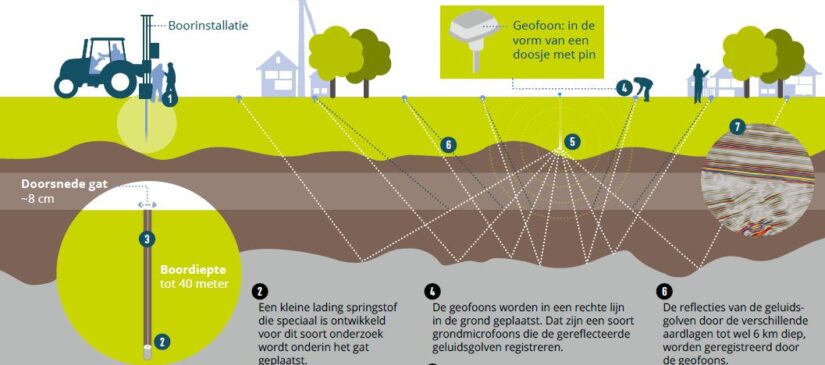
Stadtwerke makes ground measurements with geophones
and vibro vehicles, Dietfried Bruss heads the site development
for geothermal energy. (Photo: Angelika Bardehle)
Die Stadtwerke geben sich bei der Umsetzung ihrer Klimaziele selbstbewusst. Dietfried Bruss, Leiter der Standortentwicklung Geothermie, spricht von Energie für 560 000 Haushalte. Die Stadtwerke begrenzen sich bei ihren Untersuchungen nicht auf den Innenstadtrau, sondern betrachten vor allem angrenzende Landkreise. Münchens einzigartige geologische Lage soll das Projekt ermöglichen. Dafür wären allerdings Bohrungen in Tausend Meter Tiefe nötig, deren Erfolg ungewiss ist.

(From Google Translate) Stadtwerke is self-confident when it comes to implementing its climate targets. Dietfried Bruss, Head of Geothermal Energy Site Development, speaks of energy for 560,000 households. In their investigations, the municipal utilities do not limit themselves to the inner city district, but primarily consider neighboring counties. Munich's unique geological location should enable the project. However, this would require drilling at a depth of 1,000 meters, the success of which is uncertain.

Weiterlesen..........                          Read More..........

Spain: Geothermal District Heating Network Sourcing Heat from Abandoned Mine to Launch Next Year

La red de geotermia de Langreo entrará en funcionamiento el próximo año - The Langreo geothermal network will be operational next year (La Nueva España)

La red de geotermia del pozo Fondón se pondrá en servicio el próximo año. El proyecto para acometer la instalación, que utilizará el agua de mina de la explotación minera de Sama para climatizar varios edificios de Langreo Centro, ha dado un paso más con la puesta en marcha del procedimiento para adjudicar la obra. La actuación impulsada por Hunosa tiene un presupuesto de 3.157.985 euros y un plazo de ejecución de diez meses.

(From Google Translate) The Fondón geothermal network will be put into service next year. The project to undertake the installation, using the mine water from the Sama mining operation, to heat several buildings in Langreo Centro, has taken another step forward with the implementation of the procedure to award the work. The action promoted by Hunosa has a budget of 3,157,985 euros and an execution period of ten months.

Lee mas.........                              Read More.........

From Global Geothermal News archives:

USA, California: Renewable Energy Producers Show Support for PG&E Reorganization Plan

Renewable energy producers encouraged that all parties in PG&E bankruptcy remain committed to honoring power purchase contracts—and maintaining progress toward California’s climate goals

Eight trade organizations representing clean energy suppliers, including the developers and owners of over 20,000 MW of utility-scale renewable energy projects, today issued the following response to the Plan of Reorganization filed by Pacific Gas & Electric Corp. (PG&E) in U.S. Bankruptcy Court.

“Renewable energy producers have been watching the PG&E bankruptcy process closely and continue to be encouraged that all parties involved—including the utility, its bondholders, and the Governor—remain committed to honoring PG&E’s long-term power purchase contracts that have helped California achieve its climate goals to date, while also ensuring that electricity is provided safely, reliably, and affordably. 

“The language in PG&E’s reorganization plan that reiterates support for these contracts, which were reviewed and approved for their reasonableness by the California Public Utilities Commission, will maintain the confidence of the financial sector in California’s commitment to its renewable energy and climate change goals.

“Renewable generators look forward to working with a restructured PG&E and state leaders to stabilize markets, maintain affordability for ratepayers, and support investments in the transmission infrastructure and renewable energy that California will need to meet its long-term climate goals.”

  • American Wind Energy Association California
  • California Biomass Energy Alliance
  • California Low Carbon Fuel and Energy Coalition
  • California Wind Energy Association
  • Center for Energy Efficiency and Renewable Technologies
  • Geothermal Resources Council 
  • Independent Energy Producers Association
  • Large-scale Solar Association

Germany: “Geothermal energy is CO2 neutral, renewable and gentle on the landscape” - President of the Bundesverband Geothermie

Geothermie als Ersatz für fossile Energie - Geothermal energy as a substitute for fossil energy (Geothermie.de)

Data from the Bundesverband Geothermie
show the significant greenhouse gas savings in
CO2 eq [gkWh] in the area of heat generation.
Das von der Bundesregierung geplante Kohleausstiegsgesetz schafft Verbesserungen für den Ausbau von erneuerbaren Technologien wie der Geothermie. Der Bundesverband Geothermie begrüße die Pläne, sehe aber weiteren Handlungsbedarf bei der Förderung von umweltfreundlicher Fernwärme aus Geothermie. Geothermie nutze die vorhandene Fernwärme-Infrastruktur, sei platzsparend und reduziere den Kohlenstoffdioxidausstoß erheblich, heißt es in einer Pressemitteilung des Verbandes vom 24.01.2020.

(From Google Translate) The coal exit law planned by the federal government creates improvements for the expansion of renewable technologies such as geothermal energy. The Bundesverband Geothermie (Federal Geothermal Association) welcomes the plans, but sees further need for action in promoting environmentally friendly district heating from geothermal energy. Geothermal energy uses the existing district heating infrastructure, is space-saving and significantly reduces carbon dioxide emissions, according to a press release from the association on January 24, 2020.

Weiterlesen.........                             Read More.........

USA, California: GRC Applauds Energy Commission Support for Geothermal-Lithium Project

Support Letter for Salton Sea Geothermal Lithium Recovery Demonstration Project (News Release)

Lilac Solutions has developed a new ion exchange technology that is fundamentally different from other lithium recovery technologies that have been deployed around the Salton Sea.

Dear Mr. Piper,

On behalf of the geothermal industry, the Geothermal Resources Council (GRC) applauds the California Energy Commission’s embrace of funding for geothermal research and development.

We’re writing to especially commend your active interest in the holistic recovery of lithium with geothermal power production and to express our support for a proposal presented to you by BHE Renewables Minerals, LLC—a wholly owned subsidiary of Berkshire Hathaway Energy (BHE).

If fully commercialized, the proposed lithium recovery solution will help reduce the cost of electricity generation from geothermal and therefore lead to new development of geothermal power plants around the Salton Sea. These plants would increase the quantity of renewable electricity on the grid and reduce reliance on other, less safe baseload generation technologies, including nuclear, natural gas and coal.