Monday, December 12, 2016

Turkey: 65 MW Unit 2 of the Kizildere III Geothermal Power Plant Could be Funded by EBRD

EBRD mulls loan for 70-MW geothermal project in Turkey (SeeNews Renewables)

Somewhere Over The Rainbow: Kizildere Power Plant. By Erdinҫ Sentϋrk. GRC Photo Contest.
The European Bank for Reconstruction and Development (EBRD) may provide a senior loan of up to USD 70 million (EUR 66m) for the construction of a 70-MW geothermal power facility in Turkey.

The funds are to be used by Zorlu Dogal Elektrik Uretimi AS for the construction of unit 2 of the Kizildere III geothermal power plant in West Anatolia. The extension will increase the plant's capacity from 100 MW to 165 MW. Kizildere III unit 1 is currently under construction.

The bank said last week that Zorlu Dogal has presented the environmental and social impact assessment (ESIA) package for the project on December 8.

After the ESIA disclosure, there will be a 60-day public review and comment period, with the EBRD board expected to decide on the loan on February 22, 2017.

Read More........

USA, Hawaii: Puna Geothermal Venture Holds Successful Outreach to Local Community

Video: Tense Exchange On Geothermal Ends In Handshake


A recent community meeting included some of the usual back and forth between geothermal watchdog group Puna Pono Alliance and PGV officials, but ended in the spirit of the holidays.

Read More........

Finance: Billionaires Back Emerging Clean Energy Technology

Bill Gates Is Heading a $1 Billion Clean Energy Venture Fund (Fortune)

Nearly two dozen of the world’s most successful business leaders, entrepreneurs, and venture capitalists will invest up to $1 billion in a fund led by Microsoft-co-founder Bill Gates that aims to reduce greenhouse gas emissions to almost zero by financing emerging clean energy technology.

The Breakthrough Energy Ventures Fund includes John Doerr, chairman of venture firm Kleiner Perkins Caufield & Byers, Alibaba founder Jack Ma, Khosla Ventures founder Vinod Khosla, Laura and John Arnold Foundation co-chair and former energy hedge fund manager John Arnold, Amazon founder and CEO Jeff Bezos, and SAP co-founder Hasso Plattner.

The new fund is part of the Breakthrough Energy Coalition (BEC), which Gates launched in December 2015 in an effort to bring together a global group of investors who were committed to developing the nest-generation of energy technologies. The BEC was launched alongside Mission Innovation, a multi-billion clean energy research and development initiative on the opening day of the U.N. climate change summit in Paris. The countries participating in the initiative committed to doubling their clean energy technology research and development budgets by 2020 and private investors will boost their own investments in the sector.

Read More........

Latin America: Geothermal Development Facility for Latin America to Provide Funds

1st Call for Expressions of Interest (EOI) Geothermal Development Facility for Latin America (GDF)

The GDF is pleased to announce that the 1st call for Expressions of Interest (EOI) for funding opportunities will begin on: Sunday, January 15th, 2017

The 1st EOI will allow interested applicants to submit a proposal for surface study funding up to €600,000 and contingency drilling grants up to €5.8 million.

The ten eligible Latin American countries are: Bolivia, Chile, Colombia, Costa Rica, Ecuador, El Salvador, Guatemala, Honduras, Nicaragua, and Perú.

You can begin the process by signing up through the www.gdflac.com website. Signing up early allows you to receive the Developer’s Manual and other key information before January 15th, 2017. EOIs will be accepted between January 15th and February 28th, 2017. Please note that you must complete the sign-up survey before you can be invited to complete an EOI.

More information........

Friday, December 9, 2016

Philippines: Move to Remove Cap on Baseload Electricity Generation

FPI endorses DoE policy focusing on baseload stability (BusinessWorld Online Edition)

The Federation of Philippine Industries (FPI) has backed the Department of Energy’s (DoE) move to do away with a policy that sets a cap or a quota on the kind of technology to be used in building a power plant.

“[DoE] Secretary [Alfonso G.] Cusi’s pronouncements are consistent with FPI’s stand on certain issues, especially on supporting industrial growth by ensuring stable baseload power supply,” said Jesus L. Aranza, chairman of the federation.

Based on the DoE’s assessment, the Philippines requires 70% baseload power, which is provided by plants running on coal, natural gas and geothermal power on a 24-hour basis.

Around 20% will be needed from mid-merit plants, mostly running on natural gas that quick to switch on but costlier to operate than baseload plants.

Only 10% will come from peaking plants or mainly oil-based facilities and renewable energy resources such as wind and solar, whose output peaks at around the same time that the demand reaches its highest level.

Read More.......

Thursday, December 8, 2016

Kenya: 2.4 MW Eburru Geothermal Wellhead Plant to Expanded to 25 MW

KenGen reveals plan to upgrade Eburru plant capacity tenfold (Standard Media)

The original modular 2.4 MW geothermal wellhead plant at Eburru.
(Courtesy GDA) 
State-owned power generation company KenGen has announced a multi-billion-shilling project to renovate the Eburru power station and increase its production by tenfold in the next two years. According to the company, plans are under way to increase the current power production from the 2.4 MW plant to 25 MW between 2018 and 2019.

According to Geothermal Resources Development Manager Peketsa Mangi, geo-scientific studies were already under way in Eburru. He said the company would drill more wells in the area so as to reach the targeted power capacity in two years.

The original modular 2.4 MW geothermal wellhead plant was commissioned in 2102. Geothermal Development Associates (GDA) of Reno, Nevada, USA designed the plant and the steamfield, and supplied all of the major equipment. This was a major milestone for KenGen, as it was their first geothermal wellhead power plant in commercial operation.

Read More.......

USA: Legislators Call for Generating 100% of US Electricity from Clean and Renewable Energy Resources by 2050.

U.S. Senators Propose 100% Clean Energy Bill (North American Wind Power)

U.S. Sens. Edward J. Markey, D-Mass., and Jeff Merkley, D-Ore., have introduced a Senate resolution calling for generating 100% of the electricity consumed in the U.S. from clean and renewable energy resources by 2050.

Other senators supporting the resolution include Bernie Sanders, I-Vt.; Elizabeth Warren, D-Mass.; Al Franken, D-Minn.; Ben Cardin, D-Md.; Brian Schatz, D-Hawaii; and Mazie Hirono, D-Hawaii.

According to the senators, the resolution points to the enormous job creation potential of transitioning to renewable energy sources such as wind, solar and geothermal, particularly in communities with high rates of unemployment or underemployment.

Kenya: Baringo-Silali Geothermal Project Could be Hit by Government Budget Cuts

Power projects hit as Energy budget halved (Standard Digital)

The Ministry of Energy and Petroleum got the biggest budgetary cut in the current financial year. The State Department of Energy has seen its approved budget halved to Sh60.25 billion, down from Sh117 billion that had earlier been approved. The cut is a massive Sh57 billion.

Among the projects affected by the cuts especially under the Department for Energy include geothermal wells being developed mostly by the Geothermal Development Company. The State owned firm has been developing geothermal wells in the Bogiria Silali.

According to Treasury’s mini-budget, allocation for geothermal development will go down to Sh10.5 billion from Sh21.9 billion. This has had the effect of scaling down to 25 MW the amount of electricity that will be produced by the wells in the area in the course of this financial year from an earlier estimate of 50 megawatts. The number of new wells that were to be drilled in the area have been reduced to five from 10.

Read More..........

Canada: Research Into Generating Geothermal Energy from Oil & Gas Wells

U Of C students consider geothermal energy and other scenarios for Alberta’s energy future (JWN)

University of Calgary
Imagine using geothermal heat from oil and gas wells to offset the burning of natural gas for domestic and commercial space heating. 

That is a concept Rachel Scharein and her fellow fourth-year classmates investigated as part of a University of Calgary project course in sustainable energy, environment and economy.

“You could either use actual fluid that is coming out of the well itself, or you could actually pump a fluid down into the well — ethylene glycol is what we were looking at,” the 27-year-old mechanical engineering student told the Daily Oil Bulletin.

“You have a piping system that will distribute it to the homes, and then through a heat exchanger you would use it to heat up the homes.”

Kenya: Women Urged to Pursue Careers in Geothermal Development

Pursue geothermal development careers to bridge gender equality gap - Nchoe (Hivisasa.com)

Women have been urged to pursue careers in geothermal development to bridge the gender equality gap and enhance business productivity in the industry.

Geothermal Development Company (GDC) Managing Director, Eng Johnson Ole Nchoe, said the company will continue supporting the growth of women in the industry to create a balance that will boost geothermal development through enhanced innovation.

Eng Nchoe said the industry has numerous opportunities for women to advance their careers disclosing that GDC has a third of women in senior management positions.

Read More.......

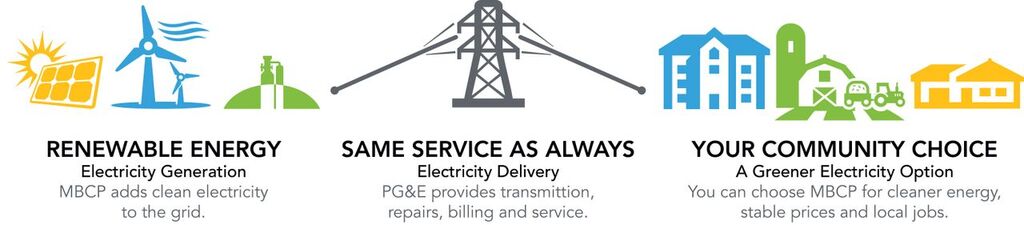
USA, California: Another Community Choice Aggregator by 2018 Will Boost Renewable Energy

Local governments move to break PG&E monopoly (Monterey County Weekly)


Just a few months ago things looked shaky, with both the city of Salinas and Monterey County contemplating bowing out of a plan to break Pacific Gas & Electric’s local monopoly. The plan was to do it with clean energy.

But now, 19 local government have announced their intention of joining Monterey Bay Community Power (MPEP) to create a Community Choice Energy program—including the city of Salinas and Monterey County.

The next step is for cities to pass ordinances in January and February 2017 to establish a joint power authority and formally create the MBCP. The governments will have to put up $2 million to start making clean energy purchases on the open market.

MPEP hopes to start selling energy to Monterey Bay area residents by the spring of 2018, at prices equal to what PG&E charges.

Once the initial investment is paid back to local governments, profits will be investing in local renewable energy projects including wind, solar, geothermal and biomass sources, among others.

Wednesday, December 7, 2016

United Kingdom: Scottish Tidal Power Project Now Operating at Full Power

MeyGen tidal project turbine now operating at full power (Utility Week)


Atlantis has announced its MeyGen tidal stream project in northern Scotland has reached another significant milestone with the first installed turbine now operating at full power.

The Andritz Hydro Hammerfest turbine is capable of generating 1.5 MW of power when the water speed reaches just over three meters per second, or around six knots of flow.

Operation at full power is significant as a de-risking event for the industry, proving the power curve models for the financial assumptions of the project.

Read More.......

Iran: Kiwi Geothermal Trade group Looking for Opportunities in Sabalan Area

Geothermal New Zealand Inc. in Iran exploring coop grounds (Trend News Agency)

Geothermal New Zealand Inc. is in Iran to meet Iranian partners and explore venues for cooperation on geothermal power generation projects.

"I am here with a trade mission from New Zealand headed by one of our ministers to learn about geothermal opportunities and new energy in general," Geothermal New Zealand Executive Director Mike Allen told Trend December 6.

"New Zealand was involved in the early project developments of Sabalan geothermal area in Iran some 15 years ago," he noted. "Now we are looking into what more is available."

Geothermal New Zealand Inc. (GEONZ) is an industry association that has an export focus promoting and marketing New Zealand companies with particular
geothermal capabilities and interests in international markets.

Bolivia: El Salvador to help Develop Laguna Colorado Geothermal Project

Bolivia geothermal exploration to begin 2017 (New Energy Events)

Laguna Colorada geothermal facility (Courtesy ENDE)
Bolivia has committed to diversifying its energy supply, and if all goes according to plan geothermal will be an integral part of their profile. Geothermal exploration at the Laguna Colorado site – close to the border of Chile – is set to begin in 2017 with the support of LaGeo from El Salvador. The plant could be up and running by 2019, barring any complications.

The overall development potential is described at 100 MW with a required investment of $613 million. Funding will largely come from international donors and financial institutions, including JICA (Japan).

Read More.......                More GGN articles on Bolivia........

Indonesia: Government Supports Development of Geothermal Tourism With PGE

Ministry, PGE Develop Geothermal Tourism (Tempo.co)


The Tourism Ministry is coordinating with PT Pertamina Geothermal Energy (PGE) to support the development of geothermal tourism in the operational areas of geothermal energy production.

The Tourism Ministry's Secretary Ukus Kuswara and President Director of PT Pertamina Geothermal Energy Irfan Zainuddin have signed the MoU in the sideline of the Fourth National Coordination Meeting (Rakornas) of Tourism in Jakarta, Tuesday, December 6, 2016.

According to Irfan, Indonesia's geothermal resources have big potentials and could be one of the nation’s tourist destinations if it is well-managed.

The PGE has started a geothermal tourism trial project in a village in Kamojang, West Java. Similar program will also be applied to other PGE operational areas, such as in Lahendong, North Sulawesi; and in Ulubelu, Lampung.

Read More........

Iceland: Mid-Summer Music Festival is Powered by Geothermal Energy

Secret Solstice, Iceland’s leading music festival, has announced its initial line-up for 2017 (Mixmag)

The Hellisheiði Power Station
From June 16 to 18, thousands will flock to the capital city of Reykjavik to hear the sounds of Kerri Chandler, The Prodigy, Dusky, Dubfire, Novelist (pictured), Kiasmos, Soul Clap and John Acquaviva, plus The Foo Fighters and many more.

One of the things that sets Secret Solstice apart from almost all other major music festivals on planet Earth is the use of geothermal energy. While almost all events rely heavily on things like diesel-burning generators, or non-renewable sources of mains power to bring music to the masses, the on-site energy needs are provided by Mother Nature herself, in the form of volcano-powered and 100%-renewable geothermal power. This is one of the major factors that allows the event to go green much easier than most of the planet’s major music festivals.

Read More.......

United Kingdom: Geothermal Energy from Iceland Would Stabilize Electricity Supply in Ulster

Iceland's energy 'could help protect N Ireland electricity using undersea cable'

Energy from Iceland could help safeguard Northern Ireland's electricity supply, the economy minister said.

Economy Minister in the Northern Ireland Executive, Simon Hamilton declared Northern Ireland would be a good place to land a giant undersea cable pumping some of the plentiful supply of geothermal power to the UK.

"If it was being taken forward at a UK Government level I think Northern Ireland would be as good an option to land that into and connect into the rest of Great Britain and it would be to everybody's benefit."

British ministers have previously discussed an interconnector, which would be one of the longest in the world at around 750 miles.

Read More........

Netherlands: Government Suggests Phasing Out Subsidies for Renewable Energy

Dutch to stop subsidising renewables in long-term climate strategy (London South East)

(Courtesy CIA.gov)
The Netherlands will gradually phase out subsidizes for renewable energy and shift its climate change strategy to areas such as energy saving and carbon capture, the government said on Wednesday.

A week ago, the Netherlands announced a 33 percent increase in subsidies for solar, wind, geothermal and other projects to 12 billion euros ($12.9 billion) in 2017, from 9 billion euros in 2016, as it struggles to reach 2020 targets.

But the "Energy Agenda" published by the Economic Affairs ministry on Wednesday - setting out how greenhouse gas emissions can be cut to 80-95 percent of 1990 levels by 2050 - said subsidies would be phased out as renewables become more viable.

Read More........

China: Target of 530 MWh of Electricity Generation from Geothermal Power Plants by 2020

China Eyes Geothermal Power To Reduce Coal Usage (Planetsave)

After its monumental success in solar and wind energy sectors, China is now looking at increased pace of development in the geothermal power sector.

Chinese officials at a conference recently indicated that development in the geothermal power sector would increase significantly as the government intends for a more secular growth across all renewable energy technologies. China has set a target to increase the share of non-fossil fuels in primary energy consumption to 15% by 2020.

China targets 530 MWh of electricity generation from geothermal power plants by 2020; this should enable the country to offset use of 72.1 million tonnes of coal and 177 million tonnes of carbon dioxide emissions.

Development of geothermal power is expected to be concentrated around Beijing, Tianjin and Hebei; the first two also have active emissions trading schemes.

Tuesday, December 6, 2016

Canada: "Geothermal Offers Potential in the Mid to-Long Term" - Report

Canada submits Mid-Century Strategy for a Clean Growth Economy (News Release)

Last month, the Minister of Environment and Climate Change, Catherine McKenna, announced Canada's Mid-Century Long-Term Low-Greenhouse Gas Development Strategy, at COP22 in Marrakech, Morocco, making Canada one‎ of the first countries to do so.

The mid-century strategy describes various pathways for innovative and creative solutions consistent with our international goal of holding the global average ‎temperature rise to well below 2°C, while pursuing efforts to limit the temperature increase to 1.5°C, as called for in the Paris Agreement. The strategy focuses on meeting climate-change objectives and enabling growth, requiring significant long-term investments in infrastructure to support transformation to a low-carbon economy.

Regarding geothermal energy the report states that "Other renewable energies offer potential in the mid to-long term. For example, generating zero-emitting
electricity with geothermal power is possible using hot subsurface water or steam coming from underneath the earth’s surface. Standard well drilling technology
can provide access to high temperature sources and power to turbines that offer reliable electricity. 

USA, California: Geothermal Energy Can Help Reduce Greenhouse Gas Emissions in the Golden State

California air regulator rolls out draft plan to achieve 2030 climate goals (Utility Dive)

The California Air Resources Board (ARB) last week issued an initial draft plan to meet the state's ambitious 2030 climate goals, leaning on existing standards and requirements to achieve emissions reductions, Carbon Pulse reports.
 
California plans to reduce greenhouse gas emissions by 40% below 1990 levels by 2030, which the state says is the "most ambitious target in North America."

California ARB's plan includes the state's efforts to put more fuel-efficient cars and zero emission vehicles on the road, utilize low-carbon fuels and renewable energy, cap-and-trade carbon regulations, waste diversion from landfills, water conservation and improvements to energy efficiency in homes and businesses.

USA, Utah: World’s First Commercial Geothermal-Hydro Hybrid Power Plant

Enel Begins Operations at World’s First Commercial Geothermal-Hydro Hybrid Power Plant (News Release)

Cove Fort Geothermal Power Plant in Utah. (Courtesy EGPNA)

Enel S.p.A., through its subsidiary Enel Green Power North America, Inc. (EGPNA), has started operations at the world’s first integrated, commercial-scale geothermal-hydro power plant at its Cove Fort site in Utah. At Cove Fort, EGPNA added a fully submersible downhole generator technology to a geothermal injection well, combining geothermal and hydroelectric power at one site.

Findings from the initial testing phase held between July and September 2016 reveal that the addition of the hydro generator to the geothermal injection well resulted in an overall increase in output of 1,008 MWh over this time, offsetting the energy consumption of the Cove Fort plant by 8.8%, therefore improving the plant’s operational efficiency.

The innovative generator technology captures the energy of the water flowing back into the earth to generate additional electricity while also better controlling the flow of brine back into the ground. The presence of the generator creates pressure against the brine flow, which reduces the flow’s turbulence into the well, hence minimizing the likelihood of any potential damage to the well. The result is a first-of-its-kind innovation that can reduce operational and maintenance expenses, while also having the potential to generate additional revenues.

USA, Nevada: Soda Lake Geothermal Power Plant to be Re-Powered with Ormat Generation Units

Ormat Signs a $36 Million EPC Contract with Cyrq Energy, Inc. for the Soda Lake 3 Geothermal Project in Nevada (News Release)

Production drilling at the Soda Lake operation at Fallon, Nevada.
Taken July 14, 2009 by Frank W Baumann. GRC Photo Contest.
Ormat Technologies, Inc. today announced that its subsidiary, Ormat Nevada Inc., concluded and signed a $36 million engineering, procurement and construction (EPC) contract with a subsidiary of Cyrq Energy, Inc. Under the EPC contract, Ormat will provide one air-cooled Ormat® Energy Converter (OEC) at Cyrq’s Soda Lake geothermal power project in northern Nevada. The project is expected to come on line in the first half of 2018.

The new OEC will increase generation and reduce operating costs by replacing the two currently operating power plants, which were commissioned by Ormat in the late 1980’s and early 1990’s, respectively.

Read More.......

Monday, December 5, 2016

Science & Technology: Down-the-Hole Hammer Withstands High Temperatures of Geothermal Drilling

New DTH Development Handles High Heat of Geothermal Drilling (National Driller)

Atlas Copco has teamed up with Sandia National Laboratories to develop a DTH hammer capable of drilling geothermal boreholes in temperatures as high as 572 degrees Fahrenheit. Source: Sandia National Laboratories

Geothermal energy has the potential to play an important role in increasing the production of energy from renewable sources in the U.S. and a new drilling tool could help the nation meet renewable energy goals quicker.

A percussive down-the-hole (DTH) hammer has been developed with the ability to withstand the high temperatures of geothermal drilling. The unique drilling tool is the result of a Department of Energy (DoE) funded research and development project that aims to lower the costs associated with bringing geothermal energy to consumers. The DoE contracted Atlas Copco, which subcontracted Sandia National Laboratories, based in Albuquerque, N.M.

Vacancy: Nevada State Lead Geologist With Emphasis in Geothermal

Geologist (Geothermal) - Bureau Of Land Management

Vacancy in Reno, Nevada. Salary Range $71,012.00 to $92,316.00 / Per Year

Job Announcement Numbers NV Merit-2017-0089 or NV-DEU-2017-0042

This position serves as State Lead Geologist in the State Office. The geologist is responsible for performing work that involves the knowledge and application of the principles of geology. The incumbent is responsible for technical direction and assistance to the State and its field offices policy development, program monitoring, technical review, interagency coordination, and management analysis in one or more of the minerals administration program areas.

More Information: NV Merit-2017-0089 or NV-DEU-2017-0042

Global: Membership of the Geothermal Resources Council

Support the Geothermal Industry - Join the Global Geothermal Community


USA, California: Exploring Long Valley's Geothermal System

Mapping Water and Heat Deep Under Long Valley Caldera (EOS)

Researchers use electrical resistivity to find the heat source and reservoir feeding Long Valley Caldera's labyrinthine hydrothermal system.

View of part of the Long Valley Caldera with Mono Lake in the background, taken from the summit of mammoth Mountain. Taken by Ian Crawford, GRC Fieldtrip September 2015.
Long Valley Caldera is a volcanic depression near Mammoth Mountain in California, which has experienced extensive hydrothermal activity over two periods of time since it formed about 767,000 years ago. The caldera is home to an active hydrothermal system, which has been extensively studied close to the surface but less well characterized deeper underground. Hot fluids flow underground and escape to the surface through hot springs, but the heat source and reservoir for the labyrinthine hydrothermal system have not been thoroughly studied.

Now, Peacock et al. have used magnetotellurics to create a three-dimensional (3-D) model of the ground down to 10 kilometers underneath the Long Valley volcanic system. To create this 3-D model, the team measured the Earth’s electrical response to natural magnetic fields at 61 stations across Long Valley Caldera.

(Thanks to GRC Member Marcelo Lippmann, Staff Scientist (retired) at Lawrence Berkeley National Laboratory for the submission.)

Australia: Winton Geothermal Power Plant Nears Completion

Great Artesian Basin geothermal energy boosts coffers for Outback councils (The Courier Mail)

Outback councils are on the verge of a potential renewable energy windfall as plans to save up to $150 million through geothermal power start to become a reality.

Five western Queensland councils have lined up to tap into the Great Artesian Basin for geothermal energy as Australia’s largest Binary Organic Rankine Cycle power plant at Winton nears completion.

The plant, expected to become operational by early next year, will convert heat into energy from the basin’s naturally occurring hot water supply.

Spain: Survey Continues for Geothermal Resources on Lanzarote


El Instituto Tecnológico y de Energías Renovables de Canarias (ITER) participa en un trabajo de cooperación científica en la isla de Lanzarote que se enmarca en el proyecto “Diseño y desarrollo experimental de prototipos para la generación de electricidad mediante efecto termoeléctrico en anomalías geotérmicas superficiales de origen volcánico”.

The Technological Institute of Renewable Energies de Canarias (ITER) is involved in scientific cooperation on the island of Lanzarote on a project "Design and experimental development of prototypes for generating electricity by thermoelectric effect in shallow geothermal anomalies volcanic origin". 

Leer Mas......                      Read More........


Canada: Exploration Drilling at Valemount Geothermal Power Project to Start Soon

British Columbia’s First Geothermal Power Project Could Be Weeks From Drilling (CleanTechnica)

Alison Thomson, a director of Borealis GeoPower, explained, “This is a private industry-led initiative, although the federal government has funded some of our exploration work. This is the first time that geothermal wells have been drilled to serve a nearby customer.”

Borealis plans to build a geothermal industrial park that will initially supply the village of Valemount, in the province’s Robson Valley region, with carbon-free heat (substituting for propane gas and diesel). Eventually, GeoPower will also supply the electricity.

“We’ve completed field work in each of 2010-2016 which has aided in the reservoir delineation. We have now chosen our drilling targets and requested drilling permits from the government. We are participating in a private placement to finance the drilling and development of the reservoir,” said Thomson.

Philippines: Minister Suggests Competition for Baseload Energy Supply

DoE: Dumping fuel mix policy boosts baseload competition (BusinessWorld)

Energy Secretary
Alfonso G. Cusi
The Philippines Department of Energy (DoE) has maintained its position that it will abandon a fuel mix policy that sets a “quota” for each energy technology, saying developers should be left to decide the kind of power plants they want to build based on the country’s power system requirements.

Energy Secretary Alfonso G. Cusi said industry participants should not expect a fuel mix policy similar to what was adopted by the past government, which aspired to limit the sourcing of new power capacity to no more than 30% for coal, 30% for natural gas, 30% for renewables and 10% from other sources including diesel-fired plants.

Mr. Cusi said on his watch, industry should get used to a mix that set by a system requirement of 70% baseload provided by plants running on coal, natural gas and geothermal power on a 24-hour basis, 20% mid-merit and 10% peaking power.


Papua New Guinea: Country has Good Geothermal Energy Resources

Expert: PNG has potential for Geothermal Energy (EMTV Online)

(Courtesy CIA.gov)
Papua New Guinea, located on the Pacific Ring of Fire, is considered a geological hotspot and is home to significant amounts of volcanic activity.

With Papua New Guinea’s power supply system in its current stretched state; demand already exceeds supply, and the underdevelopment of power generation presents the country with a unique chance to build the system in an efficient and cost-effective way.

Experts believe that geothermal energy has the potential to answer some of PNG’s energy demands.

Industry Expert, Peter McCabe from the Adelaide University, states that on a global perspective, PNG is a favorable area for geothermal energy.

Friday, December 2, 2016

Global: Free Article from the GRC Bulletin - The Voice of the Geothermal Energy Community

The Latest News from the Geothermal Resources Council (GRC)

A free article from the GRC Bulletin - Volume 45, No. 6 - November/December 2016

The Geothermal Resources Council (GRC) has made available the latest GRC Bulletin, a voice of the global geothermal energy industry, published continuously since 1972.

The Bulletin is free with GRC Membership or subscribe (PDF) to six issues a year for $90 in the USA or $140 worldwide.

The GRC has generously provided 3 pages from the latest issue for free. However, the full issue is 52 pages!

In this issue, there is a report on the 40th GRC Annual Meeting & GEA GeoExpo+, especially the successful Opening Session and on one of the fieldtrips to The Geysers - the largest geothermal field in the world. Also, there are 14 pages of geothermal news from around the world.

Join the GRC or subscribe to get the complete issue.

Global: Best Presentations From the Geothermal Energy Event of the Year

Best Geothermal Energy Presentations of 2016 Announced (News Release)

Geothermal Resources Council announces the best presentations showcased at the 40th GRC Annual Meeting in Sacramento, California, USA

All the Technical Presentations are available on the GRC Geothermal Library website at www.geothermal-library.org
The Geothermal Resources Council (GRC) has announced the outstanding technical presentations from the global geothermal energy community for 2016.

The selections were made in each of the GRC Technical Sessions held in late September at the 40th GRC Annual Meeting in Sacramento, California, USA, the world’s largest annual geothermal energy event. The judging criteria included the technical content, the quality of the visual aids and the presenter’s ability to communicate the subject matter.

Over 115 presentations were made totaling over 40 hours over three days. More than 1,250 attendees came to the GRC Annual Meeting and GEA GeoExpo+ from around the world.

The winning presentations in each session are:

Iceland: IDDP Well Reaches 4,250 Meters

Icelandic Deep Drilling Project Update

Kenya: Stake of Minority Shareholders in Kengen has Been Substantially Diluted

State ups its stake in KenGen to 74pc (The Standard)

The Kenyan Government has increased its shareholding in the Kenya Electricity Generating Company (KenGen), firming its majority owner's grip on the power generator. The State's shareholding increased to 73.92 per cent as of June 2016 from 70 per cent in June 2015, after a rights issue in June this year.

The National Treasury, which holds the Government ownership in KenGen, converted a Sh20.2 billion debt into equity, which had the effect of pushing up its shareholding. Treasury now owns 4.62 billion shares out of the total 6.24 billion shares.

At the same time, the stake of minority shareholders in the company has been substantially diluted, after the rights issue. KenGen, in its annual report for the year to June 2016, said the over 192,000 shareholders held a 14 per cent stake by close of the financial year, compared to 26.78 per cent that was in their hands as of June 2015.

Read more........

USA, California: "The geothermal-lithium angle could be just the ticket."

US Energy Dept. Toots Geothermal Horn, With Lithium Bonus (CleanTechnica)

(Courtesy Simbol Materials)
The Energy Department is very excited about its California lithium project piggybacked onto a geothermal power plant, and with good reason. Lithium is the key ingredient in innumerable electronic devices, from portable gear on up to EVs and large scale lithium-ion energy storage systems.

The problem is — or has been, until now — that the US does not have much of a domestic lithium supply.

Wherever US energy policy may go under the incoming Trump Administration, if the President-elect is serious about bringing manufacturing back to the US he’ll have to demonstrate a bit more of a forward-looking strategy than bribing US companies to keep a few hundred jobs here and there, let alone create new jobs. The geothermal-lithium angle could be just the ticket.

Thursday, December 1, 2016

USA, California: Geothermal Resources Can Play an Important Role in the Salton Sea’s Restoration

How Salton Sea's Geothermal resources could help save it (The San Diego Union-Tribune)

by Bill Corcoran, Western Regional Campaign Director, Sierra Club & Nick Segura, business manager for IBEW 569.

Sunset over Hoch-VIulan, by Alexander Schriener Jr. View of sunset with Vulcan and Hoch power plants in foreground at Salton Sea Field, Imperial Valley CA. View looking west, Region-1 in distance. Natural colors. Taken 5-Dec-13. 2016 GRC Photo Contest.
The Salton Sea region has some of the best and largest geothermal resources in the United States. According to the National Renewable Energy Laboratory, at a minimum there is a potential for at least 1,350 megawatts of new geothermal to be developed at the Salton Sea by 2030.

Geothermal resources can play an important role in the sea’s restoration. This clean energy resource is reliable and will reduce the need to burn more fossil fuels. On top of cutting climate altering pollution, geothermal projects can cover exposed playa, which will reduce dust emissions that damage the lungs of all who lives in the area. In addition to cutting emissions over the long-term, geothermal energy will provide steady power when other clean energy resources ramp down. Additionally, the massive amounts of geothermal potential brings incredible opportunities to create career paths into good middle-class jobs with family health care, skilled apprenticeship training and pension retirement. 

If we build out just 500 megawatts of geothermal, it will create millions of works hours in construction, operations and maintenance jobs for a region that suffers from a 21 percent unemployment rate. The taxes and other revenue sources will help local governments.

Fiji: Conference to Support Development of Geothermal Energy in the South Pacific

Clean Power for the South Pacific Conference 2017

7-11 August, 2017, Vanua Levu, Fiji

This conference aims to build a pilot project to demonstrate a clean geothermal power solution for off-grid use in the South Pacific.

The long term aim is to integrate multiple uses of naturally available geothermal heat for electric power, cooling solutions and providing fresh water and other direct heat uses to local communities.

More Information........

United Kingdom: District Heating Conference in Scotland

Euroheat & Power Congress

14-17 May 2017, Glasgow, United Kingdom

Our next Euroheat & Power Congress will be held in Glasgow, UK from 14th to 17th of May 2017. With political support and visibility increasing rapidly at the level of the EU and in many national markets, there has never been a more exciting time to be in the DHC business. With this in mind, we have set ourselves the challenging of delivering a Congress like we’ve never had before!

Join us in Glasgow for three days of new stories from new voices. We’re looking well beyond the limits of the DHC world and bringing expert speakers from the wider energy industry and beyond.

More Information.........

Italy: One-Day Geothermal Energy Conference in Torino

Workshop – Exploiting the energy below us

5 December, Torino, Italy


Europe: Current European Commission Proposal Suppresses the EU-wide Definition of “Geothermal” - EGEC

EGEC Reaction to the Clean Energy Package (EGEC)


The European Geothermal Energy Council gives a tepid welcome to the EU Commission’s proposals for the revision of the EU energy framework.

The European Commission unveiled the “Clean Energy Package” including, amongst other things, the revision of the directives on Renewable Energy (2009/28/EC), the Energy Performance of Buildings (2010/31/EU), Energy Efficiency (2012/27/EU), and the design of the electricity market.

The package is by no means a great leap forward. It lacks ambition and deals serious blows to renewable power, by withdrawing measures such as priority dispatch. Moreover, the current proposal suppresses the EU-wide definition of “geothermal”, which is a negative step backwards for the European market in
geothermal-related equipment and services.

The Commission states a strong support to increasing the share of renewables in the building and the heating and cooling sectors; yet it shies away from binding measures for faster development. Even worse, loopholes under energy efficiency legislation still allow support to new fossil-based heating equipment.

EGEC therefore urges the European Parliament and the Council to build on this package to put the European Union back on track towards its commitment to becoming the world number one in renewable energy.

Read More........ 

Canada: Plans to Harness Geothermal Energy From Producing Oil Wells -- A First in Canada

WellStar Energy Corp. Signs LOI to Acquire Sundial Energy Ltd. Plans to Harness Geothermal Energy From Producing Oil Wells -- A First in Canada (News Release)


WellStar Energy Corp. of Calgary, Alberta, advises that the company has entered into a Letter of Intent dated November 25, 2016 in connection with the acquisition of Sundial Energy Ltd. which represents an undivided 100% interest in its assets and intellectual property. Sundial is involved in the field of geothermal heating applications, LED lighting and solar power generation.

WellStar, at its McTaggart, Saskatchewan oil project produces in excess of 1,200 barrels per day of oil and water that at surface is approximately 50 degrees Celsius. Currently, the produced oil and water are gravity separated, then the produced hot water is pumped into the company's onsite disposal well, leaving a significant resource of unutilized geothermal heat.

The excess heat in the volume of liquids produced from the company's oil wells at its McTaggart project is rare but not unique. The company believes that existing pumping oil wells that produce significant heat can be used as a source of energy for many applications. The acquisition of Sundial Energy with its renewable energy expertise, will assist WellStar in developing the process to make use of this otherwise wasted resource.

Read More........

South Korea: New Incentives Will Help Double Renewable Energy Output by 2025

S.Korea unveils new tariffs, incentives to boost renewable energy (Reuters)

(Courtesy CIA.gov)
South Korea plans to provide new incentives for renewable producers and consumers as its seeks to double power from green sources to 11 percent of the country's electricity supply by 2025 from 4.5 percent last year.

Seoul will implement a competitive market auction system for power producers as early as the first quarter of 2017, shifting away from the current feed-in-tariff system, the country's energy ministry said in a statement on Wednesday.

The new system means utilities can buy electricity from renewable power producers via tenders and fixed-price deals for up to 20 years - helping green energy producers ensure stable profits.

Read More.......

Canada: "The Oil Patch has Tremendous Geothermal Heat Resources"

The Oil and Gas Industry is in Hot Water (and That’s a Good Thing) (Oil and Gas Investments Bulletin)

(Courtesy CanGea)
Alberta’s oil and gas wells produce thousands of barrels of water each day. This water is considered a waste by the oil patch, and operators pay to send it away by pipeline or truck.
 
But what if that water had a value? Albertans spend a lot of money heating water with natural gas. And yes – natural gas is pretty cheap right now – but costs are about to jump $1 per GJ in 2017, and an additional $0.50 in 2018 due to carbon taxes. Delivered natural gas costs in Alberta could reach over $8-10 per GJ within two years.
 
And that means geothermally-derived gigajoules will become cost-competitive in certain markets. Hot salty brine, or “formation water”, produced alongside oil and gas at temperatures above 30°C, can be used in a variety of direct-use applications.

New Zealand: Geothermal Inspired Sculpture for the Sulphur City

Flame-like fronds in the Rotorua sky (SunLive)


It would sit on a 1.8 metre plinth and soar another 10m into the Rotorua sky. It's an impressive and imposing statue planned for the Hemo Gorge roundabout at the southern entranceway to the sulphur city.

The statue, which involves frond like features spiraling skyward, would tell the story of Ngatoroirangi, the Te Arawa chief who was responsible for the safe passage of people to New Zealand.

The legend of Ngatoroirangi tells of how he almost perished from the cold on top of Tongariro. He called for his sisters to send heat and warmth to save him. They travelled beneath the sea and land in the form of fire creating the geothermal valleys like Whakarewarewa as they searched for him.

Read More........

Philippines: Aboitz CEO on Expanding Geothermal Energy Development to Indonesia

CEO in the news: The Philippines' Aboitiz family eyes ASEAN expansion (Nikkei Asian Review)

CEO Erramon Aboitiz
Early in November, CEO Erramon Aboitiz spoke with the Nikkei Asian Review about why a company previously content in its home market has decided to pursue opportunities outside of the Philippines, particularly in the Association of Southeast Asian Nations.

Last year, it announced plans to explore a 110 MW geothermal plant in Indonesia with Medco Power Indonesia. They are now drilling a second so-called slim hole, which should provide a better assessment of the project's potential.

"If that is successful, then we will go into the full development of production wells, the power plants," Erramon said.

Kenya: KenGen Plans to Add More than 600 MW of Geothermal Energy by 2020

Kengen to Invest Sh800 Billion in Green Energy Projects (AllAfrica.com)

Olkaria II flow test 2. by Patrick Walsh. Active flow test during construction of the 4th addition to Ormat's Olkaria III complex in Kenya.  Taken in November 2015. GRC Photo Contest 2016.

The Kenya Electricity Generating Company (KenGen) plans to add 721 Megawatts (MW) of electricity from geothermal and wind sources to the national grid in the next five years at a cost of Sh800 billion.

The projects lined up for completion by 2020 comprise:

  • Olkaria V 140 MW, 
  • Olkaria VI 140 MW, 
  • Olkaria VII 140 MW, 
  • Olkaria I Unit 6 70 MW, 
  • Wellheads 25 MW, 
  • Olkaria I Rehabilitation 5.7 MW, 
  • Olkaria I AU & IV topping plant 60 MW.

The Meru Wind Faze I 80 MW, Geothermal Wellheads 50 MW and Ngong III project 10 MW are also at an advanced stage.

Read More......

Turkey: Overview of the Technology Used in the 3.8 MW ORC Tosunlar 1 Geothermal Power Plant

Top Plant: Tosunlar 1 Akca Plant, Saraykoy, Denizli, Turkey (POWER magazine)

Owner/operator: Akca Enerji

POWER magazine today officially announced winners of its 2016 Top Plants in the renewable generation category. Among the six finalists is an ORC geothermal power plant in Turkey.

What sets the Tosunlar plant apart is that it uses a two-pressure ORC system with only one single-disk turbine. Typical binary systems use one turbine per pressure level, with the working fluid entering the high-pressure side after leaving the evaporator, before passing through the recuperator and the low-pressure evaporator (which draws heat from geothermal fluid after it leaves the high-pressure evaporator).

The 3.8-MW facility entered operation in June 2015 and has so far exceeded expectations, performing more than 10% above contracted results. The plant was awarded the European Geothermal Innovation Award by the European Geothermal Energy Council as the best innovation in the geothermal sector in 2016. A video of the project can be viewed below.


Read More.......

USA: "Geothermal is On Track for its Best Year Ever"

Renewable Energy in US Gained 24 Percent Through First Nine Months of 2016 (Renewable Energy World)

By Daniel Fleischmann

Quietly, geothermal is on track for its best year ever. Geothermal generation is on pace to generate over 17,000 GWh this year; an industry record and still the most any country has ever generated in one year. 


The U.S. Energy Information Agency (EIA) on Nov. 29 released electric generation statistics through the end of September 2016. Generation from geothermal, solar, and wind energy increased by 24 percent compared with the first nine months of 2015. Non-hydro renewable energy, including biomass, has made up 8.5 percent of U.S. electric generation thus far in 2016.

Overall, renewable energy sources, including hydro-electric power, made up 15.1 percent of total U.S. electric generation through the first nine months of 2016. This is down from 16.9 percent during the first half of 2016 (with 9.2 percent from non-hydro renewables), but still far ahead of 2015. Non-hydro renewable energy is still expected to be over 9 percent of total generation by the end of the year, up from 7.6 percent in 2015.