Tuesday, November 8, 2016

USA: Geothermal Technology Office to Announce Funding Opportunities in EGS Innovation

GTO Announces Topics under SBIR/STTR (EERE/GTO)


The Geothermal Technologies Office (GTO) has announced two topics under the Small Business Innovation Research (SBIR) and Small Business Technology Transfer (STTR) program for upcoming funding opportunities for innovations in Geothermal Heat Pump (GHP) systems and Enhanced Geothermal Systems (EGS):

Topic 12: Innovations That Enable Commercial Deployment Of Enhanced Geothermal Systems: GTO seeks the development and commercialization of innovations that will enable cost-competitive deployment of EGS-based electricity generation in the U.S. We are interested in a broad range of innovations, as described in GTO’s 2013 EGS Roadmap. Innovations of interest can be in software, which may include, but are not limited to, models and algorithms, such as real-time joint inversion or multicomponent fully-coupled geomechanical models.

For topic questions please contact Josh Mengers at joshua.mengers@ee.doe.gov.

The Funding Opportunity Announcement (FOA) for these topics will be issued on November 28, 2016. To apply, a mandatory letter of intent must be submitted by 5:00 PM EST on Monday December 19, 2016.

Canada: Promising Results from Geothermal Energy Survey

Geothermal Study Results (County of Grande Prairie)


The County of Grande Prairie, Alberta gave an update on a study of potential geothermal energy resources in the area in a recent newsletter.

Dr. Jonathan Banks from the University of Alberta and Maureen Kolla from Alberta Innovates presented the interim results of the preliminary geothermal report conducted in the summer. Dr. Banks also answered Council’s queries.

The County invested $20,000 to have this preliminary study completed. The
research team at the University of Alberta studied a 10-kilometre radius around the communities of Beaverlodge, Grande Prairie, Hythe, Sexsmith, and Wembley to determine the most viable reservoirs that have the potential to provide geothermal energy.

Research indicated geothermal power would be available at each reservoir in the County over a 30-year production period. The two most promising reservoirs in
the area were located near Sexsmith and in an area northeast of Grande Prairie.

USA, Nevada: Ormat Plans to Add Between 150 and 180 MW Geothermal Energy by YE 2018

Ormat's CEO Isaac Angel on Q3 2016 Results - Earnings Call Transcript (Seeking Alpha)

Kenya: Reasoning Behind the Move Away from Feed-in-Tarrifs

Kenya: Reports from Nairobi that competitive auctions will replace current feed-in tariff system in Kenya (Lexology)

(Courtesy CIA.gov)
Recent reports show that Kenya’s Energy Regulatory Commission (ERC) is in the process of drafting new regulations, which are expected to be implemented by the end of Q1 2017.

The new regulations are expected to introduce competitive auctions for awarding renewable energy projects in Kenya, shifting from the current feed-in tariff regime under the Feed-in Tariff Policy 2012 (revised in December 2012) which offers tariffs for small renewable projects up to 10 MW and for large renewable projects above 10 MW.

The main argument to move away from feed-in tariffs and adopt a competitive auction system is to introduce competition amongst project developers and investors in order to achieve lower pricing. The ERC believes that this new approach will encourage project developers and investors to reduce tariffs which ultimately benefits the end consumers.

Read More........

USA, California: Community Choice Aggregation Comes to GRC Home City

Yolo County & City of Davis Partner to Bring Choice to Local Electricity (News Release)


Yolo County and the City of Davis have taken an important step to bring competition to the local electricity market. Both have voted unanimously to form the Valley Clean Energy Alliance (VCEA), a locally-based, not-for-profit electricity energy provider. 

Scheduled to begin service in Fall 2017, VCEA is designed to deliver cost-competitive clean electricity, product choice, price stability and energy efficiency programs, as well as greenhouse gas emission reductions, to local electricity customers. Under this system, PG&E continues to get paid to maintain the electric wires and manage customer billing. Also, electricity customers can choose to remain with PG&E if they prefer. 

“At this point, there is probably no other single action we, as a city, can take that will have as much impact on our collective greenhouse gas emissions,” said Davis Mayor Robb Davis. “Community Choice Energy (CCE) programs have shown the ability to deliver consumer choice and greener electricity with competitive pricing. Importantly, CCE programs allow for local control of electricity purchases and, thus, local accountability at a low risk. We are in a period of rapidly changing electricity generation options and a CCE enables us to proactively be part of that change – creating a more resilient supply of green energy to consumers.” 

Indonesia: Upcoming Geothermal Energy Course in Bandung

Geothermal Course and One Day Field Trip - Petrology, Geochemistry, Structural Geology, Volcanostratigraphy


Kenya: Big Investment in Geothermal Energy Development by China

Govt. signs Sh100bn agreement with China for geothermal energy (Citizen Digital)


The Chinese government is set to invest Sh100 billion (over USD 900 million) in the country’s energy sector over the next 30 years.

This follows the amendment to a 2013 memorandum of understanding (MOU) that will see both governments partner to unlock Kenya’s geothermal potential.

Energy and Petroleum Cabinet Secretary Charles Keter said the partnership with the Chinese government would fast track measures to ensure more geothermal power is available so as to provide cheaper and reliable power.

“We don’t have the money to put in but we have the steam. They don’t have the steam, they have the money so they are coming with the money so that we quantify the equivalence in terms of shareholding, either 50/50 but we leave it for the technical or the legal department,” Mr Keter said on Tuesday.

The new MOU will see the removal of restrictive conditions subjective to modular power plants by allowing the application of suitable technologies by the Chinese firm, China National Petroleum Corporation (CNPC). Through the agreement, KenGen and the Geothermal Development Corporation (GDC) will assist CNPC in drilling steam wells while the latter will invest in putting up power plants.

Publications: New Textbook on Geothermal Energy from GRC Member

Geologic Fundamentals of Geothermal Energy

by David R. Boden, Professor of Geoscience at Truckee Meadows Community College in Reno, Nevada.

Features
  • Offers a unique focus on geology as related to geothermal energy supplies and operations
  • Compares geothermal to conventional and renewable sources and examines the potential advantages and disadvantages of each
  • Examines the fundamental geologic elements of geothermal energy such as plate tectonics, heat energy distribution, fluid flow, pore connectivity and fracture transmissivity
  • Discusses the environmental impacts of geothermal energy, such as emissions, land use issues, water use, land subsidence and seismicity
  • Presents case studies from around the world
Summary

Geothermal energy stands out because it can be used as a baseload resource. This book, unlike others, examines the geology related to geothermal applications. Geology dictates (a) how geothermal resources can be found, (b) the nature of the geothermal resource (such as liquid- or vapor-dominated) and (c) how the resource might be developed ultimately (such as flash or binary geothermal plants). The compilation and distillation of geological elements of geothermal systems into a single reference fills a notable gap.

USA, Nevada: Ormat CEO is Optimistic About Continued Growth

Ormat Technologies Reports Record Revenue of $184.6 Million in the Third Quarter, up 13% over the Prior Year Period (News Release)

Ormat Technologies, Inc. today announced financial results for the third quarter ended September 30, 2016.

"We continue to execute on our strategic plan and advance initiatives to enhance operational efficiency that will position Ormat for continued profitable growth,” said Isaac Angel, Chief Executive Officer.

"We again delivered double-digit revenue growth, due to strong performances from both our electricity and product segment, and prudent expense management enabled us to generate a 25.6% year-over-year increase in gross margin. 

"We prepaid the $250 million high-cost indebtedness that was due on August 2017 and successfully raised over $200 million in two tranches of senior unsecured bonds, which will enable us to significantly reduce our ongoing interest expense. 

"We also signed a settlement agreement with respect to the previously disclosed False Claims Act litigation to avoid the burden, inconvenience and expense of continued litigation with no admission of wrongdoing by Ormat. The total $16 million one-time expenses that we incurred in the third quarter (comprising the False Claims Act litigation settlement expenses and the prepayment premium on the bonds) will result in significant savings in future expenses. 

"Our results exceeded expectations and give us confidence to increase 2016 guidance. We are increasingly optimistic about our growth and profitability prospects in 2017 and beyond."

Science & Technology: The Iceland Deep Drilling Project - On the Geothermal Exploration Frontier

There's a New Way To Tap the Earth’s Energy (Smithsonian)

The Iceland Deep Drilling Project has extended a borehole thousands of meters deep to produce geothermal power at a scale never before seen

In June 2009, a drill boring thousands of meters into the volcanic rock of northeastern Iceland became unexpectedly stuck. Upon extracting it, researchers discovered it was encased in a glass-like, silica-rich rock called rhyolite. It was solidified magma; the drill had exposed a pocket of magma, deep in the earth, and the magma had cooled, jamming up the drill.

That was the Iceland Deep Drilling Project’s first effort, an exploration of the geology and feasibility of a new kind of geothermal power based on super hot, super compressed liquid found deep underground. Now, more than seven years later, they’re at it again, extending a similar drill even farther beneath the surface of the sparse Reykjanes peninsula on Iceland’s southwest side. Less than two weeks ago, the IDDP-2 reached 3,640 meters in depth, becoming the deepest hole ever drilled in Iceland.

Read More........

Monday, November 7, 2016

Kenya: Menengai Geothermal Project Delivers Drinking Water to Locals

Geothermal energy can curb Africa’s energy shortage and more (AfDB)


Lucy Wanjiru, aged 65, no longer has to walk over long distances to fetch water for domestic use, thanks to the Menengai Geothermal Development Project in Kenya’s Rift Valley, some 180 kilometres northwest of the capital, Nairobi. The project is co-financed by the African Development Bank (AfDB), the Kenya Government and other partners.

Wanjiru, who has resided in the area since 1980, says community members would walk for 12 kilometres in search of clean water. “We used to travel far to get water. Our children, especially girls, would even miss school as they had to allocate that time to look for water,” she said.

But not anymore. As part of their corporate social responsibility (CSR) programme, the Geothermal Development Company (GDC), which is implementing the project, has set up 10 giant boreholes, one of which is dedicated to the community. Water from the borehole is pumped into a four million-litre tank, and distributed to neighbouring households through a water kiosk. About 3,000 families and a school are benefiting from the water; livestock too. “We can now drink clean water, wash our clothes, and provide water for our animals. I now walk less than a kilometre to the water point,” said Tabitha Karimi, a community member.

Read More.........

Climate Change: United Nations Annual Climate Conference Starts Today in Morocco

Nations Meet to Turn Climate Pledges into Action (Scientific American)

Systems to track and review each country’s progress will be put into place 

Nearly 200 nations are meeting today in Marrakech, Morocco, for the United Nations annual climate conference. The two-week 22nd Conference of the Parties, or COP 22, starts just days after the 2015 Paris climate accord entered into legal force—meaning that countries are legally bound to meet their targets—on November 4. And although many are celebrating this latest success, country representatives at COP 22 now must hash out how they are going to live up to their pledges—namely, curbing CO2 emissions so that the world can avoid climate change’s worst effects.

Canada: Alberta to Ask for 400 MW of Renewable Energy Projects

Alberta readies 400 MW green push (renews)

Competitive procurement due in 2017 in bid to meet 5 GW target

The Canadian province of Alberta is moving ahead with a 400 MW competitive procurement, the first step in a new renewables drive.

The Alberta government has set a target of 5 GW of renewable energy to meet its goal of 30% clean electricity by 2030.

The power contracts will be similar to contract for difference agreements that would top-up developer revenues when prices fall using carbon revenues from large industrial emitters.

A carbon levy will be imposed on all carbon-based fuels as of 1 January 2017. The province plans to hold successive renewable energy calls over the next decade.

Read More........

USA, Idaho: Geothermal Energy Inspires City Art-work

Colorful new sculpture at Boise State draws inspiration from Valley’s geothermal wonders (Idaho Statesman)

Geothermal heat is as emblematic of Boise as the foothills or the famous blue turf at Boise State. Now, the university has a new sculpture on campus based on that famous hot water that’s heated houses and buildings in the area for well over a century.

Boise artists Ken McCall and Leslie Dixon created the colorful metal and plexiglass sculpture, “Transference.” It was installed Friday, Nov. 4 near the back entrance to the Environmental Research Building on University Drive.

The title of the piece, say the artists, refers to the circular system that pipes hot water underground throughout the city, then returns it to its underground source.

The City of Boise has operated a geothermal district since 1983. The city’s hot water is pumped from the ground near St. Luke’s Regional Medical Center. It circulates through the downtown area, heating about 3.8 million square feet of building space. In 2010, the city expanded its geothermal district to the Boise State campus.

Read More.........

Ethiopia: Neighbors to Share Geothermal Energy Expertise

Ethiopia Keen To Learn From Kenya In Developing Geothermal Energy (Bernama)

(Courtesy CIA.gov)
Ethiopia is keen to further develop its geothermal potential by drawing lessons from neighbouring Kenya which has reached a more advanced stage in utilizing such potential, says Geological Survey of Ethiopia (GSE) Chief Geologist Hundie Melka.

He told the Ethiopian News Agency (ENA) that Ethiopia was sending officials to visit geothermal sites in Kenya and sending personnel for training in the sector.

Kenya, which is producing 660 megawatts of electricity using geothermal sources, is currently the leading nation in Africa in the development of geothermal energy.

Hundie said Ethiopia would also benefit from the Africa Geothermal Centre of Excellence (AGCE) to be established in Kenya to build capacity in geothermal technology.

More than 20 sites in the Ethiopian Rift Valley have been identified by the GSE as having good quality geothermal resources with an estimated potential to generate more than 10,000 MW of electricity, Hundie said.

Indonesia: “In future, the auction of geothermal work areas will not be based on price" - Minister

Feed-in tariff for geothermal energy to be finalized this month (Jakarta Post)

(Courtesy CIA.gov)
The government is set to introduce a feed-in tariff mechanism this month to push down the huge costs and limit the risks of geothermal exploration, in efforts to reach the country’s target of generating 7,000 MW of electricity from geothermal sources, a ministry official has said.

The new policy aimed to provide security for investors as geothermal exploration accounted for 60 percent of the investment costs, Yunus Saefulhak, the Energy and Mineral Resources Ministry's director of geothermal energy, said Sunday.

“In future, the auction of geothermal work areas will not be based on price anymore, but according to the work program and exploration commitment,” he said.

Read More........

Indonesia: "Takes Years for Investors to Obtain Geothermal Exploration Permit" - Analyst

Red tape hampers geothermal energy development (Jakarta Post)

(Courtesy CIA.gov)

Despite Indonesia’s abundant potential geothermal energy, industry players were discouraged from investing in the sector due to excessive red tape in the country, an energy analyst has suggested.

Jakarta-based think-tank Institute for Essential Services Reform (IESR) executive director Fabby Tumiwa said the issuance of multiple regulations at the regional level – as a result of decentralization – had created multi-layered bureaucratic challenges for investors interested in developing geothermal energy.

“It could take years for investors to obtain an exploration permit,” he said during a public discussion on Sunday in Jakarta.

Read More.........

Friday, November 4, 2016

Canada: Method to Extract Geothermal Energy from Oil & Gas Wells

Introducing the Terrapin Engine, developed with the U of A to convert oilfield waste heat into geothermal energy (JWN Energy)

Alberta has a significant head start in becoming a significant global player in geothermal technology, say the developers of a new technology designed to generate clean power for the province from end-of-cycle oil and gas wells and other sources of industrial waste heat.

"With over 100 years of expertise in drilling, Alberta has developed all of the skilled labour, machinery and experience needed to be successful geothermal developers," says the team behind Terrapin Geothermics.

"The geothermal industry also represents one of the few renewable industries where Alberta has the potential to develop new, export ready intellectual property and innovation." 

In collaboration with the University of Alberta, the company has developed the Terrapin Engine, which it says was specifically built to turn Alberta's industrial waste heat sources and conventional oil and gas wells into clean power solutions to help the province reach its economic growth potential and sustainable environment ambitions.

Climate Change: Governments Agree Legally Binding Limits to Global Temperature Rises

Paris climate change agreement enters into force (The Guardian)

The Paris agreement on climate change enters into force on Friday, marking the first time that governments have agreed legally binding limits to global temperature rises.

The passage of the accord – the fruit of more than two decades of often tortuous international negotiations on combating climate change – was hailed by nations and observers around the world.

Under the agreement, all governments that have ratified the accord, which includes the US, China, India and the EU, now carry an obligation to hold global warming to no more than 2C above pre-industrial levels. That is what scientists regard as the limit of safety, beyond which climate change is likely to become catastrophic and irreversible.

France: Geothermal District Heating Will reach 71 Degree Celsius Hot Water by End of Next Year

Grigny: plus que quelques jours pour visiter le chantier du puits de géothermie - Grigny: a few days to visit the site of the geothermal wells (Le Parisien)

Un peu plus d’un mois après le début du forage, l’impressionnante machine qui creuse le puits de géothermie de Grigny a déjà atteint 1 200 m de profondeur. D’ici fin décembre, elle aura atteint les 1 600 nécessaires pour avoir accès à l’eau naturellement chaude contenue dans le sol. Une eau à 71 °C qui chauffera, d’ici à l’hiver 2017, près de 10 000 logements et bâtiments communaux de Grigny et Viry-Châtillon.

In just a month after the start of drilling, the drilling rig for the Grigny geothermal wells has already reached 1,200 m depth. By early December, it will have achieved the 1,600 m needed to access the naturally hot water in the ground. Water at 71°C that will heat, by the winter of 2017, nearly 10,000 dwellings and communal buildings of Grigny and Viry-Châtillon. 

Plus........                 Read More.......

Thursday, November 3, 2016

Australia: Researcher is Cautiously Optimistic About the Future of Geothermal Energy

'The heat is there': is there a future for geothermal energy in Australia? (The Guardian)

Despite millions of dollars invested, the Australian geothermal energy industry remains in its infancy. Will Arena’s cautious optimism be rewarded?

In July 2010, the Australian Renewable Energy Agency (Arena) took a $32m gamble on geothermal energy, investing in Australia’s first demonstration of geothermal electricity generation.

Six years later, the wells in South Australia’s Cooper Basin have been filled with concrete and abandoned, and the geothermal exploration company involved – Geodynamics Limited – has announced it is rebranding and pivoting to biogas, solar photovoltaic, battery storage and hybrid solutions.

Although geothermal energy is a mainstay of electricity generation in countries such as Iceland and El Salvador, the ancient, slumbering strata of Australia presents a more challenging landscape.

Since 2009 Arena has funded seven geothermal projects at a cost of more than $40m. Only one is still active.

Despite the hiccups faced so far, Dr Rowan Hansberry, a post-doctoral researcher at the South Australian centre for geothermal energy research is cautiously optimistic about the future of geothermal energy in Australia, pointing out that the heat is there but the biggest roadblock is our understanding of the geology.

“We really need to de-risk that drilling, because it’s far too expensive to go and drill a $150m well and then find out that we didn’t understand the reservoir or we didn’t understand the characteristics of what we were looking for.”

Science & Technology: Great Geothermal 101 Video from EDC

Geo24/7 (Energy Development Corporation)

Indonesia: Two Companies Bid for 130 MW of Geothermal Energy Projects

EDC Eyes Graho Nyabu Geothermal Project, Star Energy Bid Gunung Hamiding (Jakarta Globe)

Energy Development Corporation (EDC) and Star Energy are in the running to snatch two geothermal projects in Indonesia, after the projects drew little interest from other competitors.

EDC was the sole bidder in last month's auction for the 110 MW Graho Nyabu power plant in Jambi, Yunus Saefulhak, director of geothermal services at the Ministry of Energy and Mineral Resources, said on Wednesday.

Star Energy was also the only company bidding for the 20 MW Gunung Hamiding power plant in North Maluku.

According to regulations, the ministry must conduct another auction for the projects. However, "If there's still only one bidder, then [the company] would be directly appointed," Yunus said.

Read More........

Indonesia: Enel Withdraws Bid for Chevron's Geothermal Assets

Enel pulls out of bidding for Chevron's Indonesian geothermal assets (Yahoo! Finance)

Italy's biggest utility Enel has decided not to bid for Indonesian geothermal assets being sold by U.S. energy giant Chevron Corp, Enel's CEO said on Thursday.

"We withdrew because we were not able to secure in the time frame a partner that would be good for us," Chief Executive Francesco Starace said on the sidelines of the New York Times Energy for Tomorrow conference in Paris.

Read More........

Climate Change: Oil & Gas Companies to Fund Renewable Energy

Oil majors join forces in climate push with renewable energy fund (Reuters)


Top oil companies including Saudi Aramco and Shell are joining forces to create an investment fund to develop technologies to promote renewable energy, as they seek an active role in the fight against global warming, sources said.

The chief executives of seven oil and gas companies -- BP, Eni, Repsol, Saudi Aramco, Royal Dutch Shell, Statoil and Total -- will announce details of the fund and other steps to reduce greenhouse gases in London on Friday.

The sector faces mounting pressure to take an active role in the fight against global warming, and Friday's event will coincide with the formal entry into force of the 2015 Paris Agreement to phase out man-made greenhouse gases in the second half of the century.

The group is part of the Oil and Gas Climate Initiative (OGCI), which was created with the backing of the United Nations in 2014 and includes 11 companies representing 20 percent of global oil and gas production.

Read More........

Canada: Alberta Company Develops a Low Temperature Geothermal Engine to Exploit Hot Water from Abandoned Oil & Gas Wells

A New Source of Clean, Renewable and Reliable Electricity Comes to Alberta (News Release)

Alberta–based Terrapin Geothermics announces a new innovative technology to generate clean, renewable and reliable power for Alberta. Terrapin has developed a proprietary low temperature geothermal engine capable of generating renewable electricity from industrial waste heat streams. It can also capture the geothermal energy available in Alberta's abandoned, suspended or orphaned oil and gas wells and create a new clean power source for the Province.

The Terrapin Engine was developed through a collaboration between Terrapin Geothermics and the University of Alberta. A multidisciplinary team of engineers, faculty members and graduate students helped pioneer a custom built solution that converts low grade heat directly into electricity. The Terrapin Engine was specifically built to turn Alberta's industrial waste heat sources and conventional oil & gas wells into clean power solutions to help our Province reach its economic growth potential and sustainable environment ambitions.

Read More........

Science & Technology: Modeling Geothermal Reservoir Development

Numerically simulating production in geothermal reservoirs: application to the Groß Schönebeck deep geothermal facility (European Geosciences Union)

Producing deep geothermal energy involves using a well, which can be several kilometres deep, to extract hot water in the aim of using its heat to generate electricity or for industrial applications.


The well is drilled into what’s called a geothermal reservoir; rock containing empty space, or porosity, which allows the passage or storage of fluids. Sometimes hot water is already sufficiently present within the geothermal reservoir, but often cooler water is pumped into the ground via an injection well in the aim of collecting it once it has been heated. The combined use of an injection and a production well is called a doublet and is a common method of exploiting geothermal energy.

During the production or it is important to understand what is happening to this water as it is being injected, how much we can expect to get out at the other end and how hot it will be! This involves modelling the movement of the water, the transfer of heat and the mechanical stress and deformation of the rock, all of which are interconnected by coupled, highly non-linear equations.

Indonesia: PT Perusahaan Listrik Negara (PLN) Withdraws Chevron Geothermal Assets Bid

PLN exits Chevron geothermal race (Upstream Online)

Indonesia's PT Perusahaan Listrik Negara (PLN) has opted out of a tender for geothermal assets on offer from US energy giant Chevron, citing governance concerns, an official at the state electricity utility said on Thursday.

Meanwhile, Fazil Alfitri, the chief executive of Medco Power, a unit of Indonesia's PT Medco Energi Internasional, said on Tuesday his company was still in the running for the Chevron assets, including sites in Indonesia and in the Philippines, estimated to be worth $3 billion.

Italian utility Enel, French utility Engie, Japan's Marubeni, Thailand's Banpu Power and the Philippines' Aboitiz Power, have all expressed plans to bid for the assets.

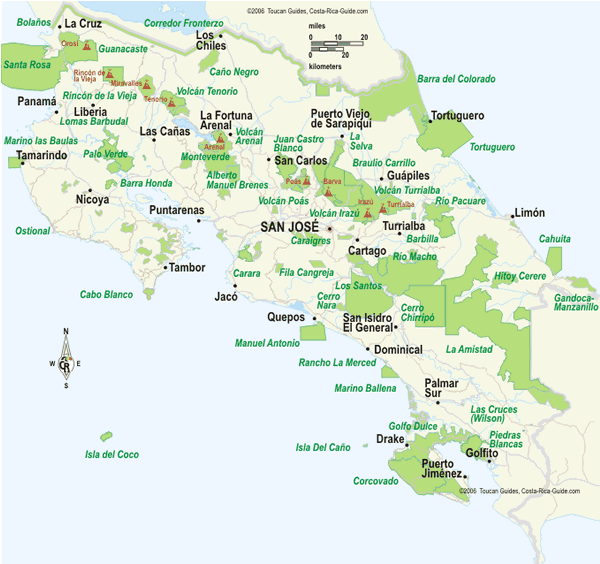
Costa Rica: "Potential for Developing Geothermal Energy Projects Outside of National Parks Should be Fully Exhausted"

Costa Rican Legislature Scraps Geothermal Exploration in Natl Parks (The Costa Rica Star)

A proposal to open Costa Rica’s national parks to geothermal energy projects was dashed last week by the Legislative Assembly’s environmental commission.

After Libertarian Party legislators, Otto Guevara and Natalia Diaz, introduced the bill (number 19,339) in 2014, the initiative came under fire from a broad range of groups and also municipalities across the country, said the Costa Rican Ecological Federation, or FECON in Spanish, in a press release.

In a statement to the legislature’s agricultural committee in September, Jorge Lobo and Mauricio Alvarez, both from Fecon, said the potential for developing geothermal energy projects outside of national  parks should be fully exhausted before turning to disruption of protected lands.

Wednesday, November 2, 2016

Over 500 Photos from the Geothermal Energy Event of the Year

Photos from the GRC Annual Meeting & GEA GeoExpo+

Over 500 photos from the geothermal energy event of the year held in Sacramento, California, October 23-26.


Indonesia: Geothermal Working Area in North Sumatra Up for Auction

Indonesia energy ministry auctions Simbolon Samosir geothermal WK (Rambu Energy)

The Directorate General for New, Renewable and Energy Conservation at the Energy and Mineral Resources Ministry (ESDM) is launching the pre-qualification process for Simbolon Samosir geothermal Working Area (WK).

The Simbolon Samosir WK is located in five Regencies in North Sumatra province, namely Samosir, North Tapanuli, Humbang Hasundutan and Dairi, North Sumatra province.

Those who can participate in the pre-qualification process are those that have experience in geothermal, upstream oil and gas, mining and minerals or power plant development.

The government asks for registration between Nov. 2 and 22, 2016 online at: www.ebtke.esdm.go.id, beginning Nov. 3, 2016.

Bolivia: Japan to Help Fund Development of Geothermal Energy

Japan ties up with regional development bank to aid Jamaica and Bolivia (Japan Times)

(Courtesy CIA.gov)
The Japanese government and the Inter-American Development Bank said they will jointly support energy-related projects in Jamaica and Bolivia under a co-financing program.

Using a $3 billion co-financing program agreed on in April, Japan and the regional development bank will help Jamaica improve energy efficiency at public facilities and support Bolivia in developing geothermal power generation, a Finance Ministry official said Tuesday. The financing will be provided in the form of yen loans through the Japan International Cooperation Agency.

El Salvador, Bolivia: Countries Agree to Cooperate in Installation of a 5 MW Geothermal Pilot Plant

Bolivia y El Salvador acordaron cooperación energética mutua - Bolivia and El Salvador agree mutual energy cooperation (El Diario)

(Cortesy CIA.gov)
As part of a cooperative agreement, El Salvador will assist Bolivia with the installation of a 5 MW geothermal pilot plant. 

There is a possibility that the Salvadoran company LaGeo would help Bolivia with regards to the plant’s engineering and other technical specifications, as well as with its assemblage and monitoring. 

(Thanks to GRC Member Marcelo Lippmann, Staff Scientist (retired) at Lawrence Berkeley National Laboratory for the submission.)

USA, New Hampshire: The Granite State Could be Source for Geothermal Energy

Deep radioactivity means Conway is New Hampshire’s best bet to become a geothermal power (Granite geek)


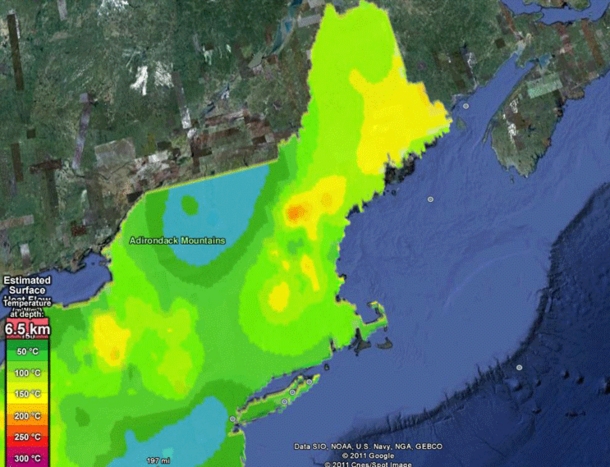
The East Coast, which is geologically quiet, has always been a geothermal dud. So it was a big surprise back in 2007 when an MIT report identified the Conway area as the one spot east of the Mississippi where true geothermal might be financially feasible – not due to underground magma, but to natural radiation from New Hampshire’s signature stone.

“That’s because of all the granite you have. The uranium, thorium and potassium act like a natural nuclear reactor and keep the rock warm,” Ron DiPippo, a former dean of engineering who was on the panel that wrote the report, said in an interview back then.

He also reminisced about how, during the 1970s oil shocks, “hot, dry rock” experiment was planned for Conway to determine the suitability of geothermal power. But oil prices went down and the panic subsided, so the study was canceled and we were left ignorant – as is too often the case with alternative energy research.

In 2011, a new analysis of the nation’s geothermal prospects once again showed Conway as the Northeast’s one bright spot (quite literally, when looking at the map on Google Earth software).

Ethiopia: 170 MW of Geothermal Energy in Development

Ethiopia plans to harness 5,000 MW of geothermal energy (Walta Information Center)

(Courtesy CIA.gov)
Ministry of Mines, Petrol and Natural Gas has made public Ethiopia’s plan to harness 5,000 Mega Watts (MW) of geothermal energy by 2037.

The newly appointed Minister, Motuma Mekassa, said that Ethiopia is intensively working to developing renewable energy sources like geothermal energy and expand its partnership with other African countries while addressing the opening of the 6th African Rift Geothermal Conference undergoing here in Addis Ababa today.  

According to Motuma, Ethiopia has identified 22 geothermal prospective sites so far. He said that the country has already started developing Aluto- Langano and Tendaho geothermal fields.

It was noted that the two sites respectively will generate 70 MW and 100 MW of energy by the time become fully operational.

USA: 22 Geothermal Patents Awarded in 2015

Clean Energy Patent Growth Index (CEPGI) - 2015 Year in Review


The Clean Energy Patent Growth Index (CEPGI), published quarterly by the Cleantech Group at Heslin Rothenberg Farley & Mesiti P.C. provides an indication of the trend of innovative activity in the Clean Energy sector from 2002 to the present.

The CEPGI tracks the granting of U.S. patents for clean renewable energy including geothermal. In 2015, 22 Geothermal patents were awarded, a decrease of just one from the year before.

Two Geothermal patents were granted in 2014 to McAlister Technologies, LLC while 21 others were granted one patent. Example grantees include Korea Institute of Geoscience and Mineral Resources, Board of Regents, The University of Texas System, and GA Drilling. Kalex, LLC continues to lead in Geothermal patents (eight) overall since 2002 despite not having any patents in 2008-2015. Ormat stays in second with seven. Canyon West has four, and GE three total Geothermal patents since 2002.

Read the Report.......

Serbia: Drilling for Geothermal Energy Project to Start Next Year

NIS and Betec sign a Co-Operation Agreement on developing Geothermal Energy in Serbia (News Release)


NIS Gazprom a Serbian energy company and Betec KS Orka a geothermal development firm in Belgrade have signed a Co-Operation Agreement on developing Geothermal energy in Serbia.

The companies will jointly develop geothermal active areas in northern Serbia by drilling new production wells and building power plants based on the well head power plant technology.

The drilling works are planned to begin in 2017 and the first power plant is planned to be commissioned within a year later. The projects will also include combined heat and power plants.

Read More.......

Kenya: GDC Reports Progress in Menengai Geothermal Projects

Geothermal company to generate Sh1.7bn from sale of steam in Menengai (Daily Nation)

Menengai fields are expected to generate at least 105 MW by 2018

The Geothermal Development Company (GDC) projects to generate Sh1.7 billion from sale of steam from its Menengai geothermal fields in Nakuru County.

According to GDC Corporate Communications Manager Ruth Musembi, the field is now ripe for electricity production, after three independent power producers were licensed to build power plants.

Each plant has a capacity to produce 35 megawatts of power. The power plants are expected to be operational in 2017 when the sale of steam is expected to kick off in earnest.

USA, California: Transmission Study Identifies Nearly 1,500 MW of New Geothermal Resources

Transmission Capability and Requirements Report - Renewable Energy Transmission Initiative 2.0 (California Energy Commission)

This report details the California transmission system’s current capabilities to interconnect and deliver 50% renewable energy to California consumers by 2030, and identifies the new transmission necessary to interconnect the potential generation in each Transmission Assessment Focus Areas (TAFA).

Collectively, the TAFAs include over 40,000 MW of potential generation, incorporating hypothetical development potential for wind, solar and geothermal resources.


The largest geothermal resource identified for this study is 1,000 MW in the Imperial Valley. In addition, 450 MW of potential geothermal energy resource is listed for the Lassen and Round Mountain study range that includes The Geysers.

USA, Idaho: Well Resumes Production at Raft River Geothermal Plant

U.S. Geothermal Inc. Provides Update On Development and Expansion Projects (News Release)

U.S. Geothermal Inc. announced today an update on two of its advanced stage
development projects at San Emidio II and El Ceibillo, and an update on the expansion opportunity at Raft River.

  • Flow testing completed at San Emidio II
  • Drilling and testing of first large diameter well completed at El Ceibillo
  • Testing completed and well RRG-2 resumes production at Raft River

“We are extremely pleased with the continued progress of our advanced stage development projects at El Ceibillo and San Emidio”, said Doug Glaspey, President and COO of U.S. Geothermal. “We remain very optimistic that the positive drilling and testing results at these development projects will allow
us to confirm their respective power generation potential in support of obtaining power purchase agreements.”


Photos from the Geothermal Energy Event of the Year!

GRC Annual Meeting - Awards Luncheon

GRC 2016 - Awards Luncheon

Tuesday, November 1, 2016

Turkey: World Bank Authorizes Over $289 Million for Geothermal Energy Development

Turkey to Expand Renewable Geothermal Energy Generation with World Bank Support (News Release)

The World Bank’s Board of Directors today approved an International Bank for Reconstruction and Development (IBRD) loan of US$250 million and a Clean Technology Fund Grant of US$39.8 million for  a Geothermal Development Project in Turkey which will help create renewable energy by tapping heat sources deep in the ground..

The Geothermal Development Project aims to encourage private sector investment in geothermal energy development in Turkey by reducing risks for investors through a Risk Sharing Mechanism (RSM) and by providing access to long term financing.

The project includes: Establishment of a Risk Sharing Mechanism for Resource Validation, to support the exploration and test drilling stages; and Setting up of a Loan Facility for Resource Development that will support the power plant development phase.

Photos from the Geothermal Energy Event of the Year!

GRC Annual Meeting - Poster Reception

GRC 2016 - Poster Reception

USA, Idaho: U.S. Geothermal Executive Jonathan Zurkoff

Update with U.S. Geothermal Inc. 

SNNLive caught up with Jonathan Zurkoff, Executive VP of Finance & Treasurer of U.S. Geothermal Inc. at the 2016 Aegis Growth Conference in Las Vegas, NV.

USA, California: Presentations From Geothermal Forum Now Available

California Geothermal Forum - A Path to Increasing Geothermal Development in California

On October 20, 2016, the National Renewable Energy Laboratory (NREL) organised a day-long meeting at the California Energy Commission (CEC), in Sacramento, California.

Sponsored by the U.S. Department of Energy (DOE), CEC, and the Geothermal Resources Council (GRC), the forum convened a diverse group of stakeholders from government, industry, and research to lay out solutions for new geothermal development statewide while remaining consistent with critical Federal and State conservation planning efforts, particularly at the Salton Sea in Southern California.

The GRC is proud to provide the presentations from the forum:

SESSION 1: Plenary Talks

Current Federal efforts related to renewable energy development and conservation in CA - Janice Schneider, Assistant Secretary for Land and Minerals Management, The U.S. Department of the Interior; Christine Harada, Chief Federal Sustainability Officer, White House Council on Environmental Quality; Jerome Perez, California State Director, Bureau of Land Management

California Energy Commission Research and Division of Oil, Gas & Geothermal Resources Responsibilities - CEC Staff; Charlene Wardlow, Geothermal Program Manager, California Department of Conservation

Salton Sea Management Program and Geothermal Energy - Bruce Wilcox, Assistant Secretary Salton Sea policy, California Natural Resources Agency

CA Legislative Perspectives on Geothermal - Jay Dickenson, Chief Consultant, California State Senate Committee on Energy, Utilities, and Communications

Foundation Perspectives on Geothermal - Morgan Snyder, Program Officer, The Walton Family Foundation

Science & Technology: A Method for Stimulating a Sub-Commercial Geothermal Well

Method and apparatus for stimulating a geothermal well (United States Patent and Trademark Office)

Date of patent: 1 November, 2016


A method for stimulating a sub-commercial geothermal well includes steps of drilling a stimulating well; isolating a corresponding zone in the stimulating well using vertically spaced swell packers that are swellable when contacted by subterraneously heated geothermal brine present in the stimulating well and are resistant to the high temperature of the brine; injecting stimulating fluid into the stimulating well such that it will flow only through a zone of the well that is not isolated; and allowing the stimulating fluid to exit the well from a non-isolated zone located at a desired depth into a surrounding geological formation. The fracture or system of fractures within the formation is thereby hydraulically reopened.

Read More........

Iceland: Reykjanes Geothermal Deep Drilling Project

Magma power: creating energy from water as hot as lava (World Economic Forum)

View from the MAR, by Robert Zierenberg. View from the Mid Atlantic Ridge spreading center where it come ashore on the Reykjanes Peninsula. The drill rig Thor in the distance is drilling the Iceland Deep Drilling Project - 2 drill hole, to a target depth of 5 km, in search of black smoker fluids formed under super critical T-P conditions.  
Iceland is about to tap into water as hot as lava. Several kilometres below ground, a drilling rig named Thor will soon penetrate the area around a magma chamber, where molten rock from the inner Earth heats up water that has seeped through the seafloor. This water – up to 1,000°C and saturated with corrosive chemicals – will eventually be piped up to the surface and its heat turned into usable energy.

It is a huge engineering challenge, and one which may usher in a new age of geothermal power production. Existing geothermal projects around the world need waters heated to less than 300°C, so why go to this extra effort and expense?

Read More........

USA: Scientists Recommend Geothermal Energy for Clean Energy Incentive Program

The Clean Power Plan’s Clean Energy Incentive Program (Union of Concerned Scientists)


Today is the comment deadline for the Clean Energy Incentive Program (CEIP), a voluntary component of the Clean Power Plan. The program encourages early investments in renewable energy and targeted investments in efficiency and renewables in low-income communities. In our comments, we urge every state to join the program and take advantage of the CEIP’s incentives, and also offer the EPA some recommendations to help improve it.

Which clean energy technologies should be eligible for the CEIP?

In our comments, we have emphasized the need for robust criteria for technologies that should be eligible for credits.

For the renewable energy project pool, we have proposed that the EPA allow wind, solar, hydro and geothermal projects to be eligible. These clean energy technologies can be quickly deployed, in the timeframe for the CEIP, and help cut emissions cost-effectively.

For the low-income project pool, we have proposed that the EPA include efficiency investments, solar projects (at the residential and community scale), and appropriately scaled geothermal, wind, small hydro, and combined heat and power (CHP) projects, where these resources have a similar ability to generate direct economic benefits for low-income communities.

Netherlands: 86 Degree Celsius Geothermal Waters Tapped for Greenhouse Project

Drilling to commence for geothermal heating project in the Netherlands (ThinkGeoEnergy)

Geothermal company, Daldrup & Söhne AG has announced having received a drilling contract in the Netherlands. The drilling is to be conducted for a geothermal direct use project that will provide heat for greenhouse operations.

Results of an earlier drilled test well were successful, confirming higher than expected results.

Daldrup & Söhne AG wants to tap hot thermal water in the Dutch drilling project Nature’s Heat in the municipality of Kwintsheul in the province of South Holland. According to Daldrup & Söhne, the capacity is at least 110 liters per second and the temperature of the thermal water is around 86 degrees Celsius. This value is well above the projected average value.

Read More........

Indonesia: PT. PLN (Persero) Likely to Withdraw Bid for Chevron Geothermal Assets

Indonesian electricity firm backs out of Chevron asset auction (Jakarta Post)

State-owned electricity company PT. PLN (Persero) is likely to withdraw its bid to take over two geothermal assets offered for auction by US-based energy corporation Chevron.

PLN claims that Chevron has not provided it with the audited financial reports of its subsidiaries Chevron Geothermal Indonesia and Chevron Geothermal Salak, which operate the two geothermal assets PLN has been eyeing.

To date, PLN is in the running to take over Chevron’s Mount Salak and Darajat geothermal fields in West Java, which are estimated to be worth a combined US$3 billion.