E.ON to build deep geothermal power plants to heat Swedish homes (ReCharge)
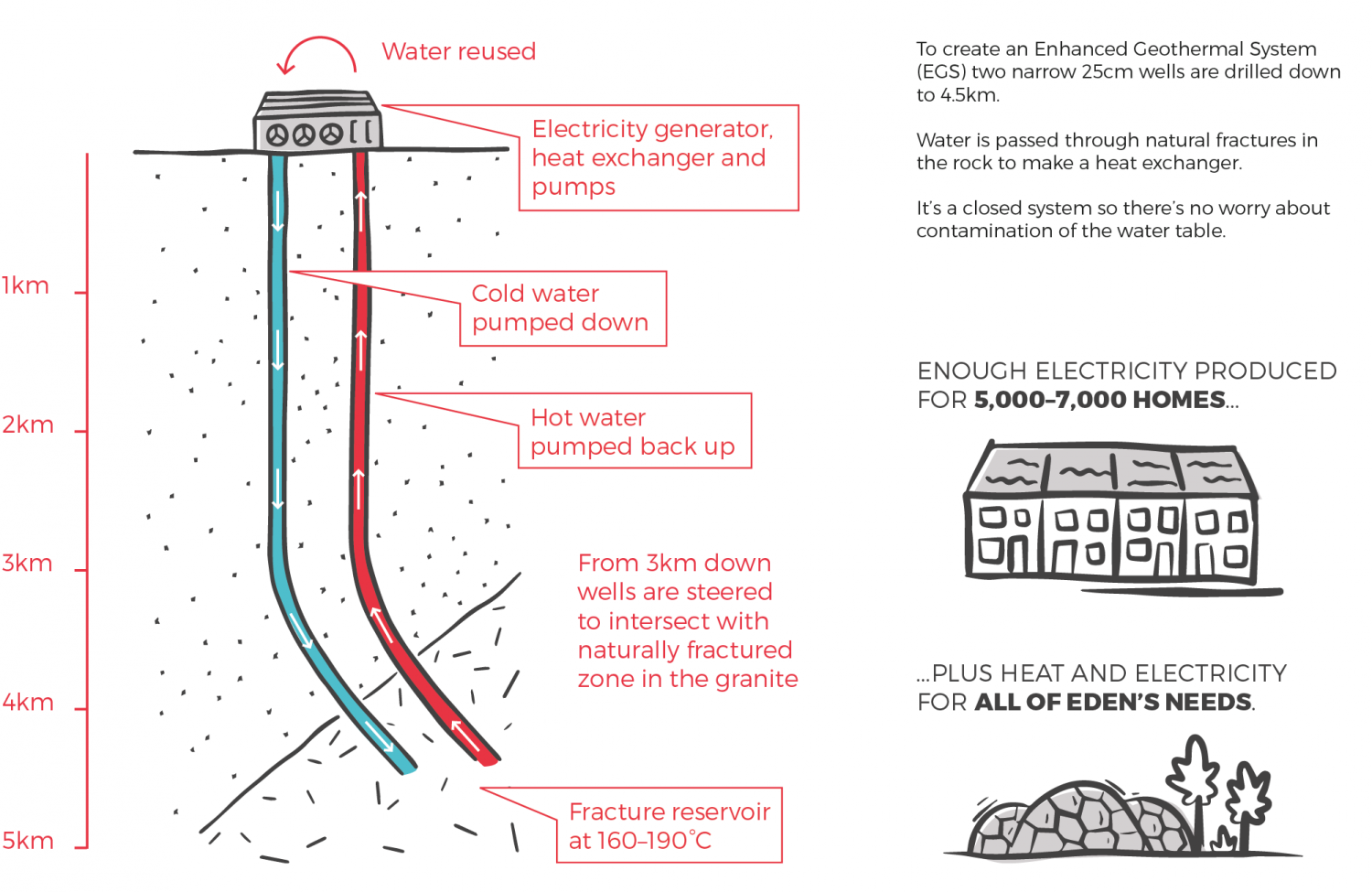
E.ON plans to drill five to seven kilometres into the ground at Malmö to tap into maximum temperatures of 160 degrees Celsius to be fed directly into the district heating network of Sweden’s third-largest city.
The German utility is currently investigating the geological conditions through test boreholes. If all goes according to plan, the plant will supply the renewable heat to district heating customers from 2022.
E.ON hopes to have built five geothermal power plants in Malmö by 2028, each with an installed capacity of 50MWth (thermal megawatt).
“E.ON’s goal is to supply Swedish customers with 100% renewable and recovered energy. With deep geothermal energy, we’re tapping into a new energy source that can ensure renewable production in the long term,” E.ON Sweden chief executive Marc Hoffmann said.
“Deep geothermal energy is resource-efficient, emission free, noise-free and space saving, making it one of the best solutions for urban energy systems of the future.”
E.ON claims its pilot project is among Europe’s first geothermal power plants to extract geothermal energy from depths of several kilometres on an industrial scale.
Read More...........
Showing posts with label district heating. Show all posts
Tuesday, March 3, 2020
Thursday, February 27, 2020
USA, Washington DC: American Energy Innovation Act Would Boost Geothermal Energy Development
Murkowski, Manchin Introduce American Energy Innovation Act (Senate Energy and Natural Resources Committee)
After a full year of hearings, business meetings, and bipartisan negotiations, U.S. Senators Lisa Murkowski, R-Alaska, and Joe Manchin, D-W.Va., today released the text of their energy innovation package.
The American Energy Innovation Act (AEIA) will modernize domestic energy laws to ensure the United States remains a global energy leader while also strengthening national security, increasing our international competitiveness, and investing in clean energy technologies.
Section 1203. Advanced Geothermal Innovation Leadership.
Section 1203 directs the U.S. Geological Survey (USGS) to
After a full year of hearings, business meetings, and bipartisan negotiations, U.S. Senators Lisa Murkowski, R-Alaska, and Joe Manchin, D-W.Va., today released the text of their energy innovation package.
The American Energy Innovation Act (AEIA) will modernize domestic energy laws to ensure the United States remains a global energy leader while also strengthening national security, increasing our international competitiveness, and investing in clean energy technologies.
Section 1203. Advanced Geothermal Innovation Leadership.
Section 1203 directs the U.S. Geological Survey (USGS) to
- update its geothermal resource assessment;
- establishes a program to transfer and adapt key oil and gas technologies for geothermal development;
- creates a prize competition for the production of critical minerals from geothermal brines;
- expands research into enhanced geothermal systems;
- establishes a research program for heat pumps and direct use;
- defines the thermal component of geothermal energy as renewable;
- reauthorizes DOE’s geothermal R&D program for five years;
- reauthorizes a program for geothermal development in locations with high utility prices;
- directs the Secretaries of the Interior, Energy, and Agriculture to establish national goals for geothermal development;
- allows noncompetitive leasing for geothermal energy on federal lands if it will be coproduced from an existing oil or gas well;
- provides for expedited geothermal energy exploration on public lands under certain strict, environmentally protective parameters; and
- directs the Bureau of Land Management (BLM) to coordinate with the Forest Service, Department of Defense, and EPA on permit processing.
Thursday, February 20, 2020
Australia: Geothermal Doublet Provides 2.6 MWth for Aquatic Center
Drilling Completed for Gippsland Aquatic Center Geothermal Heating Project (Rockwater PTY)
Rockwater, of Jolimont, Western Australia, has announced that the drilling and construction phase of a major new geothermal project in Traralgon has been completed. Rockwater designed, supervised and commissioned the geothermal bore duplet for the Latrobe City Council’s (LCC)’s Gippsland Regional Aquatic Centre (GRAC).
The 630 m production bore and 610 m injection bore were drilled by local drilling contractor Drilltec Pty Ltd. Geothermal temperatures (68 degree Celsius) exceeded expectations and will provide low-cost and low-carbon pool-water heating and space heating (about 2.6 MW) for the GRAC facility.
Read More.........
From the Global Geothermal News archives:
Rockwater, of Jolimont, Western Australia, has announced that the drilling and construction phase of a major new geothermal project in Traralgon has been completed. Rockwater designed, supervised and commissioned the geothermal bore duplet for the Latrobe City Council’s (LCC)’s Gippsland Regional Aquatic Centre (GRAC).
The 630 m production bore and 610 m injection bore were drilled by local drilling contractor Drilltec Pty Ltd. Geothermal temperatures (68 degree Celsius) exceeded expectations and will provide low-cost and low-carbon pool-water heating and space heating (about 2.6 MW) for the GRAC facility.
Read More.........
From the Global Geothermal News archives:
- Monday, December 16, 2019 - Australia: 65 Degree Celsius Geothermal Waters from 620 Meter Well to Heat Aquatic Center
- Monday, October 17, 2016 - Australia: Geothermal Energy Touted for Victoria
Friday, February 7, 2020
Canada: Geothermal District Heating and Direct Use Network Recommended for Abandoned Potash Mine
Geothermal Potential for Sussex Region Powerful (Town of Sussex)
An exhaustive study into the flooded depths of the decommissioned potash mine in Penobsquis has revealed an exciting opportunity to produce geothermal energy for the Sussex area.
It's been three years in the making, a process necessary to uncover the true viability of developing a lower cost, carbon-friendly heating and cooling source that has the potential to grow a region recovering from the loss of its potash mining activity, says Bill Thompson.
The study concludes the potential is very real, and would take an investment of about $14.4 million. With the savings in heating and cooling costs, it could pay for itself in just under 10 years.
After modelling 20 geothermal scenarios, Vernon Banks, senior hydrogeologist and project manager with Wood Environment & Infrastructure Solutions, determined an open loop system has the most potential. In that process water would be pumped to the surface, run through heat pumps to generate heating and cooling power, and then return below ground after use. The cost savings would be between 40-60 per cent, Thompson pointed out, which in businesses like hatcheries or those that run greenhouses for everything from cannabis to hot house tomatoes, the savings translates into big money.
Read More.........
From the Global Geothermal News archives:
- Friday, October 4, 2019 - Canada: Using an Abandoned New Brunswick Mine for Geothermal District Heating
- Thursday, March 22, 2018 - Canada: Abandoned New Brunswick Mine to Provide Geothermal Heating and Cooling for Community
Thursday, January 30, 2020
Finland: 40 MWth Espoo Geothermal District Heating Project Will Help Carbon-Neutrality Goal
Espoo and Fortum collaboration on the city's most significant climate action: Espoo Clean Heat project to discontinue coal combustion in 2025 (News Release)
Otaniemi geothermal plant to be commissioned this year
From the Global Geothermal News archives:
Otaniemi geothermal plant to be commissioned this year
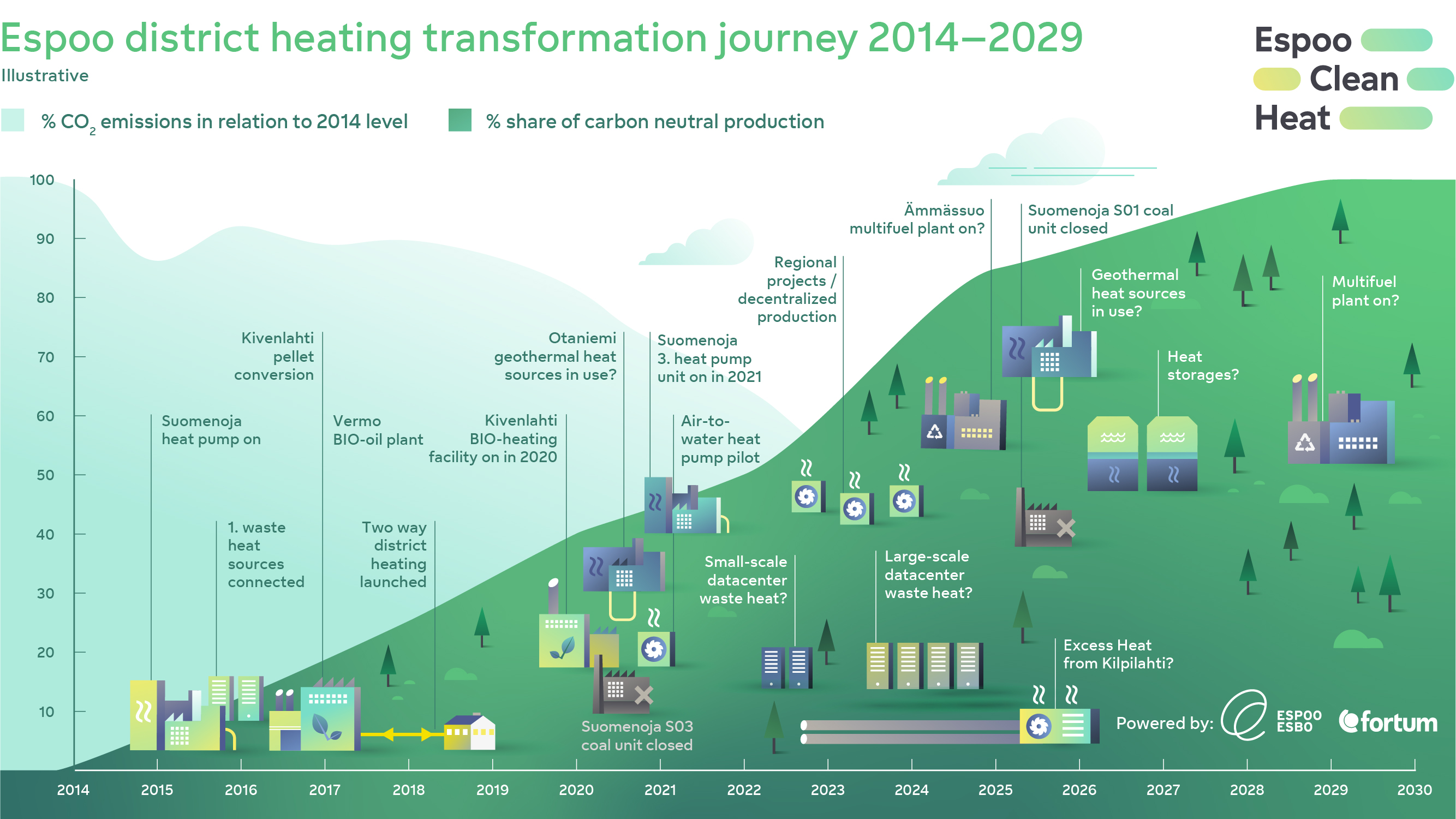
Fortum and the City of Espoo have committed to carbon-neutral district heating production in the district heating network operating in the Espoo, Kauniainen and Kirkkonummi regions in the 2020s. The district heating network supplies heat to 250,000 end users in homes and offices.
The development work that began in 2016 was accelerated last autumn when a new intermediate goal was set to discontinue the use of coal in 2025. The accelerated carbon-neutrality project is called Espoo Clean Heat.
On 29 January 2020, Espoo Mayor Jukka Mäkelä and Fortum CEO Pekka Lundmark signed a new agreement that continues the implementation of shared energy targets and the development of urban solutions.
The production of carbon-neutral district heating in Espoo made advancements during the last decade by using waste heat from wastewater, for example. Last year about one quarter of the production was already carbon-neutral, and this year the share will increase to 40% when the Kivenlahti bio-heating facility and the Otaniemi geothermal plant are commissioned and when one of the two coal-fired units is decommissioned at the Suomenoja power plant.
From the Global Geothermal News archives:
- Friday, September 27, 2019 - Finland: Testing at 40 MWth Espoo Geothermal District Heating Project Scheduled to Begin at Year End
- Thursday, September 26, 2019 - Finland: Drilling at 40 MWth Espoo Geothermal District Heating Project Scheduled for Completion in November
- Tuesday, September 3, 2019 - Finland: Drilling at 40 MWth Espoo Geothermal District Heating Project Reaches Final Phase
- Tuesday, July 24, 2018 - Finland: Stimulation Begins at at the Espoo Geothermal Deep Heat Project
- Monday, April 23, 2018 - Finland: Drilling at 40 MWth Espoo Geothermal District Heating Project Reaches Final Depth of 6,400 Meters
- Tuesday, May 10, 2016 - Finland: Drilling Starts for 40 MWth Espoo Geothermal District Heating Project
Wednesday, January 29, 2020
Netherlands: In Dutch - Brochure on Role for Geothermal Energy in Heat Networks
Aardwarmte in warmtenetten: startpunt voor uw gemeente - Geothermal heat in heat networks: starting point for your municipality (Stichting Warmtenetwerk)
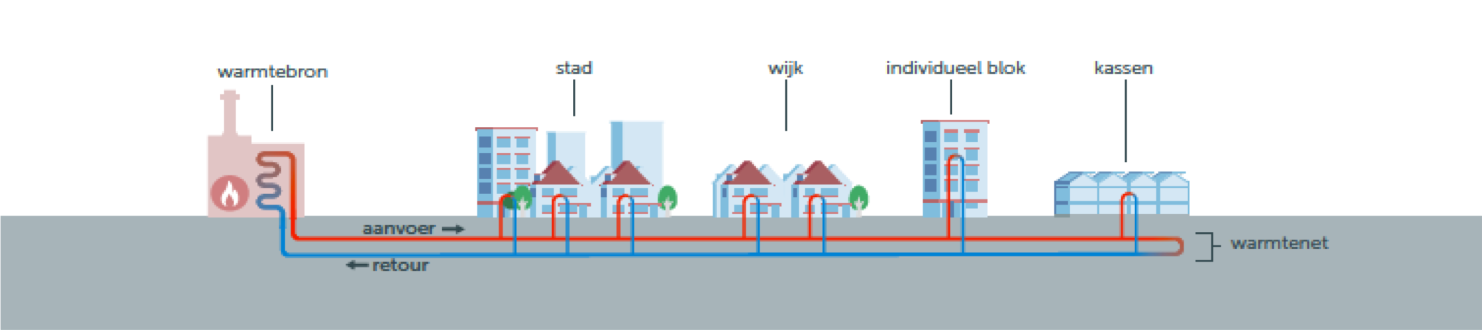
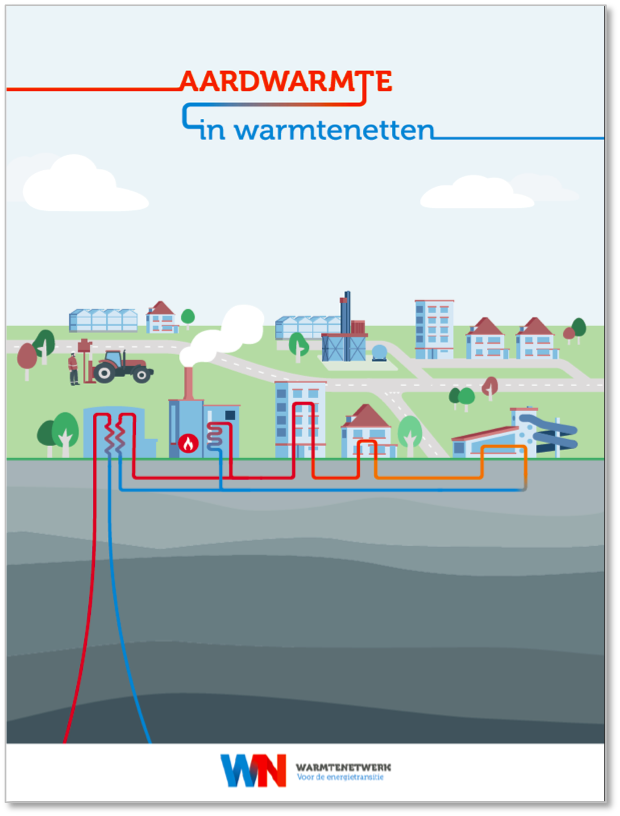
Voor het verduurzamen van de gebouwde omgeving en het realiseren van de warmtetransitie is er een rol weggelegd voor aardwarmte in warmtenetten. Daarom hebben alle betrokken partijen een informatieve brochure samengesteld.
(From Google Translate) For the sustainability of the built environment and the realization of the heat transition, there is a role for geothermal energy in heat networks. That is why all parties involved have compiled an informative brochure.
Tuesday, January 28, 2020
Switzerland: Geothermal Heat to Help Expand District Heating Network in Davos
La géothermie à moyenne profondeur à Davos – un schéma pour l’espace alpin ? - Medium-depth geothermal energy in Davos - a blueprint for the Alps? (Geothermie Suisse)
La commune de Davos mise sur l’énergie indigène et renouvelable ainsi que sur l’efficacité énergétique. Une part importante de la stratégie politique en matière d’énergie est l’utilisation accrue de la géothermie. Dans ce but, Davos, en sa qualité de Cité de l’énergie, a déjà lancé un projet pilote voilà une dizaine d’années. Les enseignements tirés lors de cette décennie sont désormais disponibles sous forme de rapport.
(From Google Translate) The municipality of Davos relies on indigenous and renewable energy as well as energy efficiency. An important part of the political energy strategy is the increased use of geothermal energy. To this end, Davos, as the City of Energy, already launched a pilot project some ten years ago.The lessons learned during this decade are now available in the form of a report.
Lire la suite......... Read More.........
La commune de Davos mise sur l’énergie indigène et renouvelable ainsi que sur l’efficacité énergétique. Une part importante de la stratégie politique en matière d’énergie est l’utilisation accrue de la géothermie. Dans ce but, Davos, en sa qualité de Cité de l’énergie, a déjà lancé un projet pilote voilà une dizaine d’années. Les enseignements tirés lors de cette décennie sont désormais disponibles sous forme de rapport.
(From Google Translate) The municipality of Davos relies on indigenous and renewable energy as well as energy efficiency. An important part of the political energy strategy is the increased use of geothermal energy. To this end, Davos, as the City of Energy, already launched a pilot project some ten years ago.The lessons learned during this decade are now available in the form of a report.
Lire la suite......... Read More.........
Labels:
direct use,
district heating,
energy,
GRC,
renewable
Location:
Davos, Switzerland
Monday, January 6, 2020
Poland: 12 MWth Geothermal District Heating Network Provides 30% of Heat for Stargard Municipality
Geotermia może dać plus. Stargard pokazuje, jak to się robi - Geothermal energy can give a plus. Stargard shows how to do it (Portal Samorzadowy)
Rozmawiamy z Arkadiuszem Biedulskim, prezesem zarządu G-Term Geotermia Stargard, wiceprezesem Polskiego Stowarzyszenia Geotermicznego. Geotermia Stargard jest drugą największą ciepłownią geotermalną w Polsce, jedną z dwóch sprzedających wyłącznie ciepło geotermalne. Roczna produkcja ciepła wynosi ok. 200 tys. GJ i pokrywa ponad 30 proc. zapotrzebowania sieci miejskiej. W przyszłości będzie to 70 proc.
(From Google Translate) We talk to Arkadiusz Biedulski, president of the board of G-Term Geotermia Stargard, vice president of the Polish Geothermal Association. Geothermal Stargard is the second largest geothermal heating plant in Poland, one of two selling only geothermal heat. The annual heat production is about 200 thousand GJ and covers over 30 percent urban network demand. In the future it will be 70 percent.
Labels:
direct use,
district heating,
energy,
geothermal,
GRC,
renewable
Location:
Stargard, Poland
Wednesday, December 18, 2019
Europe: Presentations from Decarbonising Cities with Geothermal District Heating Workshop
Decarbonising cities with geothermal district heating: how to finance it? (GEORISK project)
This seminar was organised as a partnership between the European geothermal industry and European local authorities committed to the energy transition to facilitate the uptake of this clean renewable energy technology. In particular, this workshop was organized in the framework of the GEORISK project and the HeatNet NWE project in association with the Covenant of Mayors has aimed at best answering the following issues:
- Role of local planning in enabling RES investments, notably for heating and cooling
- Impact of local authorities in enabling the business model of geothermal projects
- Barriers to deploying geothermal district heating and cooling projects
- Policy solutions for facilitating deployment of geothermal district heating and cooling
- Financing geothermal projects
- Presentation of the GEORISK Project: Philippe Dumas, EGEC
- Presentation by Covenant of Mayors: Fréderic Boyer, Energy Cities – Head of Covenant of Mayors Office
- Heating and cooling master planning, example from the HotMaps project – Julien Joubert, Energy Cities
- Presentation of geothermal market report, Thomas Garabetian, EGEC
- Assessing the risks associated with geothermal DH, Christian Boissavy, AFPG/GEODEEP
- Case study: Case study of Strasbourg Eurométropole – Gerard Pol-Gili
- Presentation GEORISK conclusions on geothermal risk mitigation schemes, Katharina Link, Geothermie Schweiz
- Presentation of business models for DH schemes from HeatNet NWE project – focus on Mijnwater example – Benoit Hofer, Cap Construction
- Roland Schultze, EIB
- Case study on crowdfunding – Lorraine Devouton, Engie
Monday, December 9, 2019
China: New Geothermal District Heating Network Launched in Shaanxi Province
Geothermal heating system activated in China (Energy Global)
A non-interference geothermal heating system has been activated at the Western China Science & Technology Innovation Harbour in Fengxi New City, Xixian New Area, Shaanxi Province, according to the Party Committee of Fengxi New City, China.
Six of these integrated energy supply stations will be providing heating, cooling and hot water for buildings totalling 1.59 million square m to meet the energy needs of Xi'an Jiaotong University's 25,000 researchers and 10,000 faculty members in the Innovation Harbour.
The project utilises non-interference geothermal heating technology and medium-deep geothermal energy to provide a clean heat source. Using metal conduit and a heat exchange medium, heat (but not water) is taken from deep underground (two to three km in depth) where there are stores of geothermal energy at a temperature of 70°C – 120°C.
Compared with conventional coal-fired boilers this geothermal technology can reduce CO2 emissions by 68,000 tpy and other emissions such as sulphur dioxide and nitrogen oxide by 850 tpy.
Tuesday, December 3, 2019
United Kingdom: Webinar on Geothermal Heat from Abandoned Coal Mines in Scotland
Minewater Geothermal in Scotland: An international opportunity (Scottish Enterprise)
Wednesday, January 29, 2020. 6:00 AM - 7:30 AM PST
The decarbonisation of heat in Scotland is a major opportunity for international trade and inward investment. Heat currently accounts for 52% of Scotland’s energy demand and 41% (indicative) of carbon emissions. As a result, meeting the target to reach zero by 2045 will be largely dependent in progress on decarbonising heat. By 2032, the Scottish Government target is for 35% of heat for domestic buildings and 70% of heat and cooling for non-domestic buildings to be supplied using low carbon heat technologies, where technically feasible.The combination of high heat consumption (as a proportion of total nation energy consumption) and highly ambitious greenhouse gas targets means that Scotland has an earlier and greater need for low carbon heating solutions than other countries.
Minewater geothermal is potentially a crucial technology for the decarbonisation of Scotland's heat supply. 600km3 of flooded mineworkings sit under Scotland's populated Central Belt region, potentially providing between 8-40% of national heat demand.
This webinar will provide an overview of Scotland's net zero ambitions, introduce a world leading geothermal testing facility in Glasgow, and provide an overview of Scotland's unique minewater geothermal investment opportunity.
The following speakers are confirmed:
Wednesday, January 29, 2020. 6:00 AM - 7:30 AM PST
The decarbonisation of heat in Scotland is a major opportunity for international trade and inward investment. Heat currently accounts for 52% of Scotland’s energy demand and 41% (indicative) of carbon emissions. As a result, meeting the target to reach zero by 2045 will be largely dependent in progress on decarbonising heat. By 2032, the Scottish Government target is for 35% of heat for domestic buildings and 70% of heat and cooling for non-domestic buildings to be supplied using low carbon heat technologies, where technically feasible.The combination of high heat consumption (as a proportion of total nation energy consumption) and highly ambitious greenhouse gas targets means that Scotland has an earlier and greater need for low carbon heating solutions than other countries.
Minewater geothermal is potentially a crucial technology for the decarbonisation of Scotland's heat supply. 600km3 of flooded mineworkings sit under Scotland's populated Central Belt region, potentially providing between 8-40% of national heat demand.
This webinar will provide an overview of Scotland's net zero ambitions, introduce a world leading geothermal testing facility in Glasgow, and provide an overview of Scotland's unique minewater geothermal investment opportunity.
The following speakers are confirmed:
- Andy McDonald, Head of Low Carbon at Scottish Enterprise
- Professor Zoe Shipton, Professor of Geological Engineering at the University of Strathclyde
- Dr Alison Monaghan, Geologist at the British Geological Survey
Labels:
direct use,
district heating,
energy,
geothermal,
geothermal power,
renewable
Location:
Scotland
Wednesday, November 20, 2019
Germany: Call to Develop Geothermal District Heating Networks from Deep Resources
Industry associations call for masterplan to boost deep geothermal energy (Clean Energy Wire)
Germany needs a masterplan for deep geothermal energy in order to reap the technology's unused potential to lower CO2 emissions from heating, four industry associations have said in a joint paper.
The 37 deep geothermal plants in operation today produce 1.2 terawatt hours (TWh) of climate neutral heat per year. The Leibniz Institute for Applied Geophysics (LIAG), however, estimates that deep geothermal energy - mostly using boreholes that are 2,000 to 3,000 metres deep - has the potential to provide Germany with 100 TWh of heat per year by 2050 – almost 17 percent of the country's expected demand for heating at the time.
Channeling geothermal energy through the country's district heating network would be a "logical" and efficient path – and could in the future replace coal-fired heating, write the German Association of Local Utilities (VKU), German Renewable Energy Federation (BEE), the German Geothermal Association (BVG) and Energy Efficiency Association for Heating, Cooling and CHP (AGFW). The associations propose that the current framework conditions for geothermal energy should be developed in order to make projects more attractive.
Friday, November 15, 2019
Poland: Pilot Geothermal District Heating Project to Start in Pyrzyce
Geotermia pomoże w walce ze smogiem? Rusza pilotaż w Pyrzycach - Geothermal energy will help fight smog? Pilot starts in Pyrzyce (Biznes Alert)
Wypracowanie w Pyrzycach modelowego programu wykorzystania zasobów geotermalnych jako narzędzia wsparcia lokalnej społeczności w walce z niską emisją jest celem porozumienia zawartego między NFOŚiGW, spółką Geotermia Pyrzyce, gminą Pyrzyce, WFOŚiGW w Szczecinie oraz Pełnomocnikiem Premiera ds. programu „Czyste Powietrze”. Dokument, inaugurujący projekt „Laboratorium Pyrzyce”, podpisano 14 listopada w Dniu Czystego Powietrza.
(From Google Translate) The development of a model program in Pyrzyce to use geothermal resources as a tool to support the local community in the fight against low emissions is the purpose of the agreement concluded between the NFEPWM, Geotermia Pyrzyce, the commune of Pyrzyce, WFOŚiGW in Szczecin and the Prime Minister's Plenipotentiary for the Clean Air program. The document, inaugurating the project "Pyrzyce Laboratory", was signed on November 14 on Clean Air Day.
Labels:
district heating,
energy,
geothermal,
geothermal power,
GRC,
renewable
Location:
Pyrzyce, Poland
Wednesday, October 23, 2019
Canada: Overview of Kitselas Geothermal Project in BC
Kitselas Geothermal & Borealis GeoPower: Geothermal District Energy (Clean50.com)
This project is a novel approach to geothermal energy development for base-load electricity and renewable heating/cooling alternatives. Important rare earth elements (minerals and metals) can also be dissolved in geothermal brines, thus opening new avenues to ethical mining in the well-established BC mining industry. Resource permitting and conceptual engineering design for geothermal and mining development have been completed.
Once the flow rates of the geothermal wells are established, the resource can be matched to the energy needs for electricity and heating/cooling.
As the first company in British Columbia to undergo this process, Kitselas Geothermal Inc. has made some breakthroughs associated with permitting. They have successfully navigated the many government policies and programs before them, setting a course for other geothermal companies to seek permits and begin projects of their own.
Read More.........
From the Global Geothermal News archives:
This project is a novel approach to geothermal energy development for base-load electricity and renewable heating/cooling alternatives. Important rare earth elements (minerals and metals) can also be dissolved in geothermal brines, thus opening new avenues to ethical mining in the well-established BC mining industry. Resource permitting and conceptual engineering design for geothermal and mining development have been completed.
Once the flow rates of the geothermal wells are established, the resource can be matched to the energy needs for electricity and heating/cooling.
As the first company in British Columbia to undergo this process, Kitselas Geothermal Inc. has made some breakthroughs associated with permitting. They have successfully navigated the many government policies and programs before them, setting a course for other geothermal companies to seek permits and begin projects of their own.
Read More.........
From the Global Geothermal News archives:
- Wednesday, March 15, 2017 - Canada: New Project Partnership Logo for Kitselas Geothermal Project
- Thursday, November 10, 2016 - Canada: Funding Provided for 15 MWe/135 MWth Geothermal Energy Development
- Wednesday, March 12, 2014 - Canada: B.C Geothermal Project Gets Traction
Labels:
district heating,
energy,
geothermal,
GRC,
renewable
Location:
Terrace, BC, Canada
Monday, October 21, 2019
Monday, October 14, 2019
United Kingdom: Employment Opportunity Exploring Innovative Uses of Geothermal Energy in Abandoned Coal Mines
Vacancy: Hydrogeologist - Mine Energy (The Coal Authority)
Salary: £30,283 - £42,160
Deadline: 1 November, 2019
Do you want to be part of a team exploring cutting edge technology and the innovative uses of geothermal energy in abandoned coal mines?
Our Innovation team are moving forward with a mine energy programme which has the potential to heat 180 million homes across the UK. Mine water could be a real contribution helping the UK achieve its ambitious target of net zero greenhouse gas emissions by 2050.
Working as a hydrogeologist in this team, you'll be developing knowledge of underground mine water levels, mine gasses and thermal behaviours throughout the coalfields of UK. We'll use this data to advance commercial opportunities related` to water, geothermal energy, energy storage and cooling.
More Information and Apply.......
Salary: £30,283 - £42,160
Deadline: 1 November, 2019
Do you want to be part of a team exploring cutting edge technology and the innovative uses of geothermal energy in abandoned coal mines?
Our Innovation team are moving forward with a mine energy programme which has the potential to heat 180 million homes across the UK. Mine water could be a real contribution helping the UK achieve its ambitious target of net zero greenhouse gas emissions by 2050.
Working as a hydrogeologist in this team, you'll be developing knowledge of underground mine water levels, mine gasses and thermal behaviours throughout the coalfields of UK. We'll use this data to advance commercial opportunities related` to water, geothermal energy, energy storage and cooling.
More Information and Apply.......
Labels:
direct use,
district heating,
energy,
geothermal,
GRC,
renewable
Location:
United Kingdom
Friday, October 11, 2019
United Kingdom: Southampton Geothermal Heating Company Connects to Local Sports Center
ENGIE secures Solent University Sports Complex deal (News Release)
Solent University’s new sports complex has been successfully connected to Southampton Geothermal Heating Company’s (SGHC) pioneering district energy scheme after signing a £2.8 million deal with energy and services specialist, ENGIE, over the next 20 years.
The SGHC is a working partnership between ENGIE and Southampton City Council, launching more than 30 years ago. The scheme supplies heat, chilled water and electricity to commercial and residential energy users across Southampton – currently serving a 2km radius of the energy centre.
Users already included TV studios, a hospital, shopping centre, student accommodation, residential buildings and hotels; with Solent University tasking ENGIE with the implementation of a new heating connection which would link up existing assets, as well as a new state-of-the-art sports centre.
Tuesday, October 8, 2019
Netherlands: New Data Made Available for Ultra Deep Geothermal Energy Resources
Five new SCAN studies for ultra deep geothermal heat (Scan Aardwarmte)
In September, several research studies were completed and five research reports published. These studies are primarily focused on Ultra Deep Geothermal Energy (UDG). This concerns geothermal heat with a temperature of 120 degrees Celsius or more found in the Dutch subsurface at depths of 4 kilometers or more.
Geothermal heat with these high temperatures can be used in various industrial processes and, as residual heat, for heating the built environment.
Limestone layers from the Dinantien, from the so-called Lower Carboniferous period, may possibly serve as a source for UDG. Because these layers are quite deep in the Dutch subsurface, few drillings have been done and there is limited seismic data available. As a result, there is great uncertainty up to now for this form of geothermal energy extraction. That is why SCAN carries out 12 research studies focused on these deep layers and on the suitability for UDG.
Read More.........
In September, several research studies were completed and five research reports published. These studies are primarily focused on Ultra Deep Geothermal Energy (UDG). This concerns geothermal heat with a temperature of 120 degrees Celsius or more found in the Dutch subsurface at depths of 4 kilometers or more.
Geothermal heat with these high temperatures can be used in various industrial processes and, as residual heat, for heating the built environment.
Limestone layers from the Dinantien, from the so-called Lower Carboniferous period, may possibly serve as a source for UDG. Because these layers are quite deep in the Dutch subsurface, few drillings have been done and there is limited seismic data available. As a result, there is great uncertainty up to now for this form of geothermal energy extraction. That is why SCAN carries out 12 research studies focused on these deep layers and on the suitability for UDG.
Read More.........
Labels:
direct use,
district heating,
energy,
geothermal,
geothermal power,
GRC,
renewable
Location:
Netherlands
Monday, October 7, 2019
United Kingdom: Penzance Lido Makes a Comeback! Thanks to Geothermal
Seeking New Energy, an English Town Digs Deep (The New York Times)
The county of Cornwall hopes that tapping an underground rock formation will bring electricity, economic stimulus and year-round swimming.
Five years ago.... the Art Deco pool was run down after decades of neglect and a major winter storm that struck the southwestern English coast in 2014.
Now it’s tapping an energy source that its creators hope will give new life to the county of Cornwall. By next year, despite some snags, the pool is expected to be available year-round, and a new geothermal plant nearby could provide a fresh source of electricity for a region that has suffered economic decline.
Now, on a small patch of land adjacent to the pool, a bore hole has been drilled into the rock on which the lido is built. Starting next year, it is expected to provide geothermal energy to help heat the lido’s new wintertime section, allowing locals to swim in any weather.
France: Good Progress for Geothermal District Heating Networks
Le sous-sol, une mine de chaleur à creuser avec la géothermie - The basement, a heat mine to dig with geothermal (L'usine Nouvelle.com)
Bordeaux Métropole s'apprête à mettre en place un nouveau réseau de chaleur à partir de la géothermie pour alimenter la plaine Rive droite. Confié à Storengy et Engie Cofely, ce chantier, qui se déroulera pendant tout le second semestre 2019, consistera à réaliser deux puits: l'un pour la captation et l'autre pour la réinjection. Ils plongeront à 1,700 m de profondeur dans les aquifères de la nappe jurassique où, selon les études, la température avoisine 70°C et où le débit de pompage pourrait atteindre 300 m3/h. Long de 25 km, le réseau de chaleur sera constitué de deux canalisations principales : l'aller et le retour.
(From Google Translate) Bordeaux Métropole is preparing to set up a new geothermal energy heat network to supply the "Rive droite" plain. Entrusted to Storengy and Engie Cofely, this project, which will take place throughout the second half of 2019, will consist of two wells: one for production and the other for reinjection. They will be drilled to 1,700 meters deep to the waters of the Jurassic aquifer where, according to studies, the temperature is around 70°C and the pumping rate could reach 300 m3/h. 25 km long, the heat network will consist of two main pipes in a loop.
Subscribe to:
Posts (Atom)